The Cutting Room
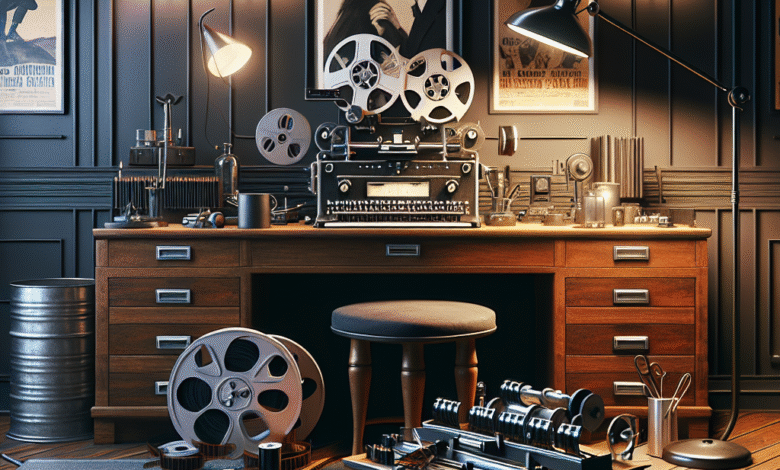
The cutting room buzzed with anticipation, the air thick with the faint scent of sawdust and aged timber. Tucked away within the dimly lit corridors of an old film studio on the outskirts of London, it was a place where creativity festered into madness. A layer of dust coated the vintage editing machines, their whirring sounds a haunting symphony to those who dared to enter its confines.
Among the crew, Oliver Grey had the distinct honour—and terror—of being the studio’s newest director. Tasked with piecing together footage for a horror film that no one quite believed in, he spent his days buried amidst reels of celluloid, drowning in scenes that became increasingly grotesque and unsettling. As he sifted through countless takes, he could feel something unfurling in the darkness, a presence that loomed behind each frame, as though the shadows knew of the horrors that lay ahead.
His lead actress, Lydia Mae, was enchanting yet unpredictable. Feisty and fiercely talented, she bore a charming smile that often veiled a deeper intensity. Their rapport was electric; Lydia had a knack for bringing characters to life, but lately, a hint of disquiet shadowed her every move. As production progressed, Oliver noticed the changes. Her once mechanical confidence started to fray at the edges, giving way to a palpable fear that crept into her performance.
On a particularly bleak Thursday afternoon, as grey clouds rolled ominously overhead, the crew gathered in the cutting room for a viewing of the day’s rushes. Oliver set the projector in motion, and the images flickered to life. Blood-curdling screams ricocheted off the walls, reverberating with a sickening depth as footage unspooled—a tableau of terror crafted from Lydia’s nightmarish dedication to her role. But something was awry; the clips stuck unnaturally together, leaving Oliver grappling with an inexplicable discomfort.
“Cut it!” someone shouted, and it jolted Oliver from his trance. The editing assistant, a jittery young man named Marcus, fiddled nervously with the buttons, sweat dotting his forehead.
“What’s going wrong?” Oliver demanded, though he felt the answer lurking just beneath the surface.
“Nothing, I… It’s just that some of the scenes… They feel off. It’s as if the film is alive,” Marcus stammered, his voice barely a whisper.
Ignoring Marcus’s rising panic, Oliver pressed on. The rushes grew darker, scenes merging into another in grotesque displays—Lydia thrashing about, her face twisted in terror, the shadows morphing and elongating as if straining to escape from the strip of light. The haunting images gripped Oliver’s mind, a noose tightening around both his creativity and sanity.
In the days that followed, Oliver found himself retreating into the cutting room more frequently. He studied the footage like an ancient manuscript, convinced that if he deciphered its meaning, he could free them all from what lay within. Yet, every time he watched, a creeping sense of dread enveloped him. Each roll came with the dark air of portent, whispers of the past echoing through the gears of the projector.
One evening, Lydia approached him, her eyes glistening with something unrecognisable. “You’re seeing it too, aren’t you? The fear lurking behind the lens?”
Oliver hesitated, contemplating the notion of sharing his own dread. “The footage…” he began, but the words stuck in his throat.
“It’s not just footage anymore,” she pressed, her tone sharp and urgent. “The stories we tell here—what we capture—they become real. We’re damned if we don’t acknowledge it.”
“Why would they become real?” he asked, bewildered.
“Because, Oliver, the cutting room has a mind of its own,” she replied, lowering her voice as though the walls might listen. “It’s like a mirror to our fears, and if we’re not careful, it might reflect something unspeakable back at us…”
Though he dismissed it as early-stage hysteria brewing among the cast, Oliver couldn’t shake the weight of her words from his mind. He returned to the cutting room, his heart thrumming erratically in his chest. As he populated timelines with varying takes, he caught fleeting glimpses of details he had missed earlier—dark figures creeping at the edges, disembodied whispers threading through the soundtracks.
With each screening, Oliver felt a grip around his psyche tighten, moments of clarity slipping away. His nightmares began to bleed into his waking hours, shadows creeping into his corners of perception, warping reality into something sinister and unrecognisable. Lydia often sat with him, the tension pulsating between them as they stared into the screen.
One fog-laden night, a storm brewed outside, rattling the studio windows. Thunder rumbled like the growls of some ancient beast, and Oliver was struck with an urge to call it a night. But as he prepared to leave, an overwhelming urge pulled him back. He had to watch one more reel, he thought, to confront what haunted him.
As he started the projector, the flickering light illuminated Lydia’s face—it was a tableau of fear and rage. The footage unfurled, but instead of the planned scenes, a different story unfolded, one Oliver had never filmed. He watched in horrified fascination as the images warped into chilling realism; an unedited version of terror that gripped every nerve. Lydia appeared, but her performance had transformed into something raw, anguish etched in every frame. Blood seeped through her skin, and the world around her pulsed like an aching heart.
Oliver felt the rush of adrenaline at the edges of panic as his dream and waking life converged. The cutting room itself reeked of decay, and a visage of shadows took shape, crawling from the corners. A muffled scream escaped from his lips as the shapes slithered closer, melding with the unholy images projecting from the screen.
“Help me!” Lydia’s voice echoed in the frenzy of imagery. Her face twisted as reality fractured, becoming a grotesque caricature of her once charming self. These frames were alive with torment, while the cutting room sickened under a palpable pressure. Fear trickled into Oliver’s veins, drowning out rational thought.
He tried to switch off the projector, but the damn thing had taken the decision away from him, the whirring becoming an ominous chant echoing through his mind. The room swallowed him whole, its spirit desperate to feed on his despair and regrets. Shadows surged toward him, grasping at the very edges of his existence, promising the unthinkable.
“Oliver!” Lydia’s voice twisted into a wail, drowning the sound of thunder and the beating of his heart. “You have to finish it!”
In a final act of desperation, he lunged for the film reel, gripping the burning canister with both hands. This scream was unmistakable, the agony of losing her filling his bones with lead. In an explosion of resolve, he tore the reel from its coil, yanking it loose from its moorings. An insurmountable darkness swallowed the scene as the projector sputtered and stalled.
The cutting room darkened, but still it pulsed with unspeakable energy. Lydia’s echoing cries morphed into waves of malevolence, shaking him to his core. As he hastily exited into the muted hush of the corridor, Oliver stumbled into the shadows, moving as fast as he could away from that chamber of nightmares, vowing never to return.
When the storm passed, and dawn broke over the city, Oliver resurfaced as though from a waking nightmare. The cutting room lay silent, untouched by the world outside. But deep within him, a saga lay dormant—a tale woven into the very fabric of his mind.
Weeks later, still haunted by remnants of that night, he received an unsettling call. Lydia was missing; she had vanished without a trace. The cutting room, they insisted, was contaminated, poisoned by a darkness that seeped into everything it touched.
For years, the tales would circulate—a parable of terror whispered in hushed tones amongst filmmakers and storytellers—a cautionary tale about the cutting room that had consumed them. And beneath the grey skies of London, a chilling truth lurked: even bringing a story to life could lead to its ghastly resurrection, and some realms were never meant to be traversed.