Final Cut

In the heart of a fog-laden village, where the crumbling stones whispered tales of old, stood an abandoned film studio, its once-bright signs now faded to ghostly echoes. Weathered cameras lay strewn about like scattered bones, and the rafters creaked ominously as though they were sharing their secrets with the stagnant air. This was no ordinary studio; it bore the weight of an infamous legend—a reclusive director, Jonathan Harker, vanished during what would have been his magnum opus, a film titled “Final Cut.”
For decades, tales of the lost film spread like wildfire among the locals. They spoke of ill-fated aspiring actors and technicians who had dared to enter the studio after the director’s disappearance, never to return. The locals avoided the place, sharing disjointed stories over pints about the shivering shadows and flickering lights that betrayed the secrets of its final reel.
Curiosity had a way of consuming the uninitiated, and Amelia, a film student with ambitions that often overshadowed her caution, was captivated by the legend. Her classmates had dismissed it as mere folklore, but the more they scoffed, the more determined she became. Amelia dreamed not only of uncovering the truth surrounding Jonathan Harker but also of completing “Final Cut.” She believed the film held the key to understanding the passion and darkness that had driven the director to madness.
On an unassuming Thursday afternoon, Amelia gathered her gear: an old camcorder she’d inherited from her grandfather, a notebook filled with hastily scribbled ideas, and a flickering lantern. With a deep breath, she set off, the chill of an early autumn breeze slithering through her coat as she approached the storied studio. It loomed over her like a giant, sagging spectre, its glassless windows resembling hollow eyes watching her every move.
Inside, dust motes danced in the beams of her lantern. The scent of mildew was pervasive, and cobwebs clung to the walls like forgotten memories. She found herself enveloped in a suffocating silence, the kind that could swallow any sound whole. Setting up her gear, she initiated her camcorder, the red light blinking like a heartbeat against the stillness.
“Day one,” she murmured to the camera. “I’m here at the location of ‘Final Cut.’ I plan to explore the studio and hopefully find traces of Harker’s work.” Her voice trembled but she masked it with a confident smile.
As she wandered deeper into the labyrinthine corridors, her heart raced with both fear and exhilaration. Photographs from a bygone era hung crookedly along the walls, their subjects—actors and crew members—frozen in a moment of optimism that seemed to mock her present reality. She reached a part of the studio that revealed itself as the film’s set. It was grotesquely beautiful; the flickering light revealed fragments of crumbling façades and tattered curtains that had once shimmered with grandeur.
Her heart skipped as she stumbled upon a half-destroyed storyboard pinned to the wall, its edges frayed and yellowed with age. “Final Cut” was scribbled in bold letters, accompanied by sketches that depicted unsettling figures and nightmarish landscapes. This was it—this was what she had come for. But something about the drawings sent a shiver up her spine. The figures seemed to contort, as if they were alive, their shadows undulating in the corners of her mind.
As dusk descended, she decided to explore the studio’s depths, capturing every chilling nook with her camcorder. The light flickered, and she paused to grip her lantern tightly. The air grew dense, and an inexplicable heaviness seemed to settle on her shoulders. It was then that she heard it—a whisper, so faint and yet disturbingly clear. Her blood ran cold.
“Turn back…”
Amelia felt her heart seize, the whisper unfurling itself into a sinister cacophony of warnings. She shook her head, dismissing it as a figment of her imagination, but the weight of the air pressed insistently against her. She pushed through, her resolve strengthening with each step.
In a dimly lit chamber, she stumbled across a collection of yellowed scripts littered across the floor, their ink fading as if struggling to maintain its grip on reality. Amongst them lay a battered film reel, slick with tarnish but brimming with potential. With a quick series of motions, she popped it into the old projector resting against the wall, the mechanism groaning in protest before it miraculously whirred to life.
The film flickered, revealing haunting fragments of shadows and silhouettes, a flicker of dread bleeding through her senses. Disjointed images whirled on the screen; actors’ faces morphed from genuine joy to panic within seconds, their laughter turning into desperate screams. Like echoes of long-buried terror, the screams rose until the room vibrated with their urgency.
Without warning, the projector sputtered, and the lights above her flickered violently. Panic snagged at her gut as she wanted to turn it off. But she couldn’t—the images were mesmerizing and horrifying in equal parts. It was disjointed art, blending chaos and beauty, almost as if it had been calling to her through the years.
Then, she saw him. Jonathan Harker stood there, framed in the shimmering light, eyes wide with an unsettling intensity that penetrated her very soul. She felt a connection, a sorrowful resonance, but also something sharper—a warning she could not yet decipher. The film cut abruptly, plunging her into darkness.
Alone in the lap of darkness, the whispered voices became louder—haunting confirmations of her worst suspicions. “You shouldn’t have come,” they hissed. Panic clawed at her throat as she fumbled to turn on her lantern, but something—an intangible force—snuffed it out.
In the dim ambiance, she grasped for her camcorder, but as she flipped the screen on, what greeted her sent a shockwave of terror through her veins. The familiar face of Jonathan Harker stared back at her, not from the screen but standing flesh and blood in the corner of the chamber, dripping in shadows, twisted yet transfixing.
“Help me…” he whispered, his voice barely above a breath, seeping with despair.
Overwhelmed, Amelia backed away, her heart drumming against her ribcage; she knew better than to trust the residue of past souls. But as she stumbled into another room, she found herself drawn to an old mirror—a cruel joke in this den of despair. Peering into its surface, she felt the film’s dark presence seep into her psyche.
The reflection transformed. To her horror, she saw not just herself but an audience of distorted faces—people twisted and contorted, forever trapped in their roles, appearing as if caught in the throes of a tragic performance. With screams echoing in her ears, she turned on her heel and fled, hearts pounding. The studio morphed around her, hallways stretching into impossible distances, closing in with every step as if it possessed a will of its own.
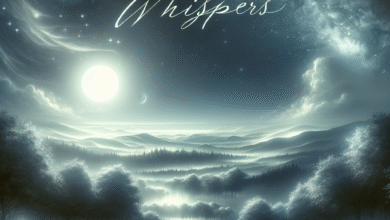
“Help me…” The voice was louder now, more insistent, demanding her attention. She tore through rooms, finally bursting out into a courtyard overgrown with foliage, blanketed in creeping shadows. The moon hung suspended in the night sky, casting pools of silver light, illuminating paths that seemed to be leading her away from her torment.
Just as she thought she’d escaped, a hand clamped down on her shoulder, icy and firm. She turned, heart crashing against her ribcage, expecting to see Harker’s ghostly visage. Instead, it was the shadows—an amalgamation of the souls she had seen. “You will finish what he started,” they whispered, a chorus of mournful agony echoing in the cold night.
“No!” she cried, swinging her camcorder in desperation, as if it were a weapon. But it felt useless against the tide of energy closing in. They stepped closer, whispering her name, wrapping her in cold tendrils of despair. “You must bring life back to the end…”
In a dizzying whirl, the shadows drew closer until they swallowed her whole. All at once, the sensation of falling gripped her. She fell deeper into oblivion, a void of silence enveloping her.
Suddenly, she awoke on the cold floor of the abandoned studio, sunlight streaming through the broken windows. Panic surged through her; the camcorder lay beside her, recording. She placed her trembling hands on it and evaluated the footage.
The screen displayed her, yes, but beside her, Jonathan Harker’s face flickered again, only this time, it was smiling—a disturbing triumph gleaming in his dark eyes. As she attempted to stand, the studio murmured with echoes of laughter and applause, the shadows retreating momentarily as if her fate had yet to unfurl.
The film studio remained silent, but the blood of lost souls kept weaving its story deeper into the fabric of the building. Amelia felt the tingle of their despair wrap around her. With the gruesome realisation dawning within her, she understood she was no longer a mere visitor; she was tied to Jonathan Harker’s broken legacy. As the sun dipped below the horizon, she glanced back at the set, the yellowed drawings still yearning to be completed.
With her heart pounding, she stepped forward once more; the reel of “Final Cut” was now hers to finish—a curse and a thrill melding into one. The echoes of the past remained almost palpable in the air, a call to arms for an artist consumed by their own zeal. With the remnants of shadow and whispered dread enveloping her, Amelia gripped her camcorder tightly. In the depths of the night, the story was far from over—it had just begun.