The Echo of Lost Souls
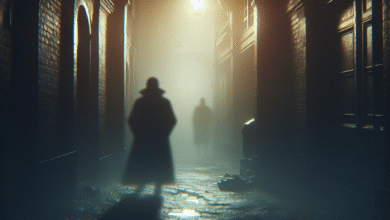
In the damp, cobbled streets of a forgotten corner of London, an unsettling tale whispered through the narrow alleyways and hidden corners of the city. It was a story that wrapped itself around the city like the morning mist, persistent and chilling. Locals knew of it as The Echo of Lost Souls.
The legend began centuries ago, tracing its roots to the grim realities of London’s past. In the late 19th century, when the Thames ran thick with the refuse of an industrial age, the city was a place of despair for many. Among the destitute, there was a cluster of families who found refuge in the shadowy nooks of the city. One particular dwelling, an old Victorian house on the corner of Whitechapel, served as a shelter for the lost and the desperate.
As the story goes, the matriarch of this family, a woman named Eliza Holloway, was known for her kindness. She would take in orphans, the sick, and the weary, offering them a place to stay and a meagre meal, despite her own precarious situation. However, darkness loomed over the Holloway household. For with each kindness she showed, a piece of her soul seemed to depart, leaving her a shell of the vibrant woman she once was.
One fateful night, during the harsh winter of 1872, a fierce storm swept across London, leaving the streets in chaos. Eliza, hearing desperate knocks at her door, opened it to find a ragged girl, not older than ten, soaked to the bone and shivering uncontrollably. Without hesitation, Eliza welcomed the child in, dried her off, and wrapped her in a warm blanket. But little did she know that this act would spell doom for the Holloway family.
The girl, who called herself Lottie, seemed to have an unnatural aura about her. As days turned into weeks, strange occurrences began to plague the house. Silhouettes flickered in the corners of the rooms, the temperature would drop dramatically, and the once-lively laughter that echoed through the modest home turned to whispers woven with sorrow. Eliza had unwittingly invited a darkness that she could not comprehend.
As Lottie settled into the home, she became increasingly withdrawn. Her eyes possessed a haunting depth, as if she carried with her the weight of countless lives. One evening, Eliza stumbled upon Lottie in the attic, mumbling to herself in a language she could not understand, her gaze fixed on an odd, antique mirror that hung on the wall. The moment Eliza approached, Lottie turned, her face twisted in a mixture of fear and anger. “You shouldn’t have taken me in,” she hissed, her voice lower than a whisper.
Disturbed, Eliza retreated, but she felt powerless to abandon the girl who seemed so broken and lost. From that day forward, Lottie began to change. The light of life faded from her eyes, replaced by something darker — something that tugged at Eliza’s very soul. Eliza couldn’t bear to watch the transformation unfold, desperate to save the child, yet overwhelmed by the foreboding presence that seemed to inhabit the house.
As winter deepened, the neighbourhood grew restless. The once warm and welcoming home of Eliza Holloway was now a site of fear and foreboding. Parents warned their children to stay away, and whispered tales of the “Holloway Girl” spread like wildfire. They said that Lottie was a wraith or perhaps a mischievous spirit, feeding off the souls of the living. On particularly dark nights, neighbours would claim to hear Lottie’s mournful cries curling through the chill of the air, a haunting echo that seemed to rise from the very earth below.
One frigid night, driven by desperation, Eliza decided to confront the truth. She found Lottie in the attic again, her fingers tracing the edges of the mirror. “What are you?” Eliza pleaded, tears rolling down her cheeks. “Why are you doing this?”
The girl turned her gaze to Eliza, eyes dark and soulless. “I am neither living nor dead,” Lottie whispered, her voice a chilling caress. “I was cast aside, left to wander. And now you shall understand what it feels like to lose everything.”
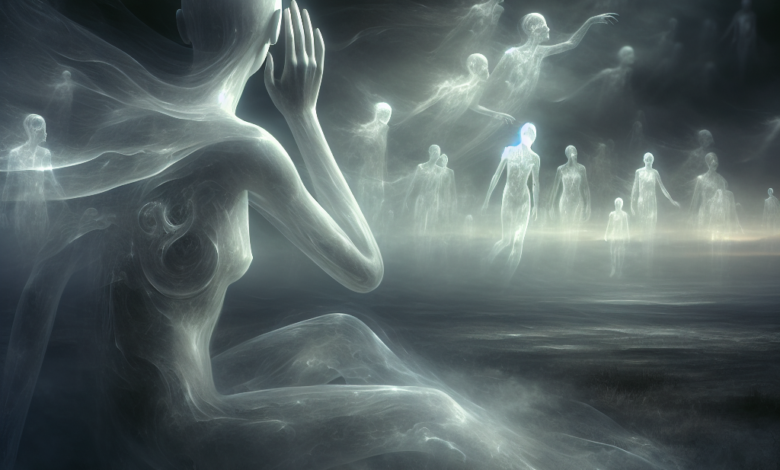
With a swift motion, she gestured to the mirror, which began to glow with a strange, ethereal light. Eliza watched in horror as shadows began to emerge, faces contorted in agony and despair. They reached out with ghostly hands, the echoes of their sorrow reverberating through the air like the tolling of a distant bell. The souls of all those lost, the forgotten, and the forsaken poured forth, filling the room with their ancient lament.
Eliza collapsed to the floor, overwhelmed by the cacophony of anguish. “No! Stop!” she screamed, but it was too late. The echoes of the lost souls filled her mind, every sorrow, every regret entwining with her essence. The warmth of her heart extinguished, leaving behind only a hollow shell.
The next morning, the house stood silent. The townsfolk, growing increasingly concerned, sent a small group to check on Eliza and Lottie, but as they approached the Victoria house, an eerie chill enveloped the air. The door creaked open to reveal a home seemingly untouched by time, the dust settled thick and the silence deafening. They could not find Eliza nor Lottie, only the mirror, still glowing softly in the attic, its surface shimmering with whispers of the lost.
Days turned into weeks, and the legend of the Holloways grew. People would speak of the “Echo of Lost Souls,” warning each other not to venture too close. Lottie, the girl who had ensnared the matriarch in despair, became a spectre of urban folklore. Stories spread of those who dared to approach the abandoned house, claiming that the mournful wails of souls echoed from within, pleading for release, their voices merging with the winds that swept through the streets.
Time moved on, yet the legend persisted, morphing as it passed from mouth to mouth. The Holloway house stood quiet, growing more dilapidated with every passing year, while new buildings rose around it, defying its once-present spirit. It became a local dare, a rite of passage among teenagers looking for thrill and intrigue. Many returned with tales of chilling whispers that sent shivers down their spines, while others claimed they had glimpsed fleeting figures in the cracked window panes.
A generation later, a young woman named Clara, drawn by the legends, made her way through the cobbled streets one fateful autumn evening. With raven-black hair and a heart filled with curiosity, she sought the truth behind the myth. As she neared the Holloway house, a dense fog descended, wrapping itself around her like a shroud. Undeterred, Clara pushed open the creaking door, and a wave of cold air rushed forth, accompanied by the faint sound of weeping that echoed through the corridors like a sorrowful melody.
Hearts racing, Clara ventured further inside, the floorboards creaking beneath her feet. Shadows danced in the corners of her vision, and she swore she could hear whispers calling her name. Driven by an inexplicable force, she climbed the stairs to the attic, her heart pounding like a drum. There, the mirror stood, its surface rippling as if it were alive.
As she approached, the whispers grew clearer, reverberating in her mind. “Help us…” they pleaded. She felt an overwhelming sense of compassion, a connection to the souls trapped within. Steeling herself, Clara reached out to touch the mirror. Its surface felt like ice, and in an instant, the sorrow of ages crashed over her as the souls flooded her consciousness. She could see them — fragments of lives lived long ago, snippets of laughter, pain, love, and loss, all intertwined in hopelessness. She understood their longing for release.
Entranced, Clara closed her eyes and began to chant an incantation she had learned from old folklore, recalling stories of protection and release. With each word, she felt the mirror resonate, the whispers growing louder, more frantic. The room around her intensified in energy, vibrating with the echoes of countless souls yearning for freedom.
The mirror shattered, an explosion of light and sound erupting in all directions. Clara fell to the ground, enveloped in a blinding luminescence. When she finally dared to open her eyes, the attic was empty, the shards of the mirror scattered around her like glittering stars. But the cries, those mournful echoes, were gone. In that moment, she’d set the lost souls free.
In the years that followed, the legend of The Echo of Lost Souls transformed yet again. Stories of Clara, the brave girl who liberated the trapped spirits, spread through London’s fog-laden streets. The shadow of the Holloway house faded into the backdrop of modernity, becoming a memory, an echo in its own right. Yet still, when the winds howled through the streets on stormy nights, some would claim to hear the faint whispers of gratitude carried on the breeze, a haunting reminder of the darkness that once loomed over that forgotten corner of the city. The tale of the Echo of Lost Souls would linger, twisted and altered, forever woven into the very fabric of a city that never forgets its ghosts.