Harvest of the Unyielding Crops
The harvest approached, painting a vivid picture of promise beneath the vibrant autumn sun. In Stapleton, a village straddling the line between tradition and modernity, old ways lingered like overripe fruit on a vine. Alison trembled beneath that weight as she traced her fingers through the remnants of her grandmother’s journal, its pages brittle and yellowed. The old woman had always warned her of the rituals tied to the land, of how the earth had a throbbing heart that needed tending.
“Respect the soil, respect the season,” she had said, her words laced with a haunting urgency that Alison had long ignored. Still, as she surveyed her small plot—once her grandmother’s pride—she felt unease settle into her bones. The crops grew tall and lush, but their verdant majesty masked an unsettling perfection; they flourished too well, too quickly.
While her neighbours prepared for the harvest festival, the air around her felt thicker, rivalling the humidity of a summer storm. Farmers donned their best smiles for the upcoming celebration, but she could see the tightness in their eyes, the way their laughter rang hollow. A gathering storm of uncertainty loomed, and it wrapped around Alison like a whispering fog.
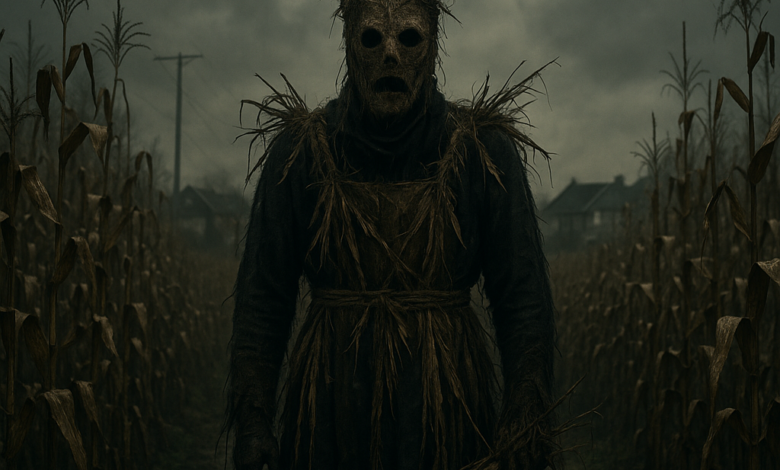
One late afternoon, she decided to walk the fields. The sunlight cast long shadows, stretching like fingers across the furrows. As she moved deeper into her crops, a peculiar unease prickled the back of her neck. The cornstalks towered unnaturally high; they created a false sense of security, towering like sentinels around her. But as she plucked an ear from the nearest plant, its touch sent her skin crawling. The silk was too sticky—overripe, glistening black as it clung to her fingers, refusing to yield to her gentle tug.
The ground beneath her feet felt unsteady, the soil shifting slightly as if welcoming some dark presence. She stepped back, unease flooding her with every breath as she fumbled through the chatter of laughter and music coming from the village ahead. Yet when she turned to leave, she heard it—a low murmur, closer than she expected, rising from the depths of her crops.
“Help us,” it begged, the voice both a child’s and an old man’s, mingling together in an unsettling amalgamation. Alison’s heart raced, pulse pounding as the gale-force of anonymity surged over her. She shook her head, turned away, and filled her lungs with the clear autumn air, willing the discomfort to dissipate.
A week passed, the villagers bustling with preparations, but Alison’s mind remained clouded. She expressed her fears to Henry, an old friend and fellow farmer. “It feels wrong, Henry. The way they grow… it isn’t natural,” she murmured, studying the rows of corn through the window of the pub.
“Don’t go hating the harvest,” he chuckled, yet his smile faltered before she could notice. “What’s a little strange? We’ve all been doing well with these crops. Just enjoy the festival.”
Weeks before, she might have believed him. But each time she walked among the unsettled landscape, its strangeness suffocated her. She sensed something other than life in those fields—something demanding.
As the harvest festival approached, tickets were drawn for the ceremonial ‘Hunger Games’, where participants would face each other amidst the harvested crops, the last one standing dubbed the ‘Champion of Stapleton’. An ancient tradition flourishing in the modern era, it sent a shiver through her. “You should enter, Alison,” Henry said, excitement dancing in his eyes. “You might discover something about yourself.”
With no desire for glory, Alison felt the itch of necessity; her reluctance morphed into fear. If she declined, would things worsen? The weight of expectation bore down on her like a boulder the whole community shared. Forced to confront her choices, she signed up.
On the eve of the festival, as darkness threaded through the village like a creeping vine, odd happenings began to unfold. Searing warmth swept through the fields, the air thick with an acrid scent that soured the sense of impending festivity. The winds mocked her, howling through the corn like the laughter of unseen watchers. She ventured among the crops once more, unable to shake the feeling of being ensnared, pulled unwittingly into a game whose rules twisted with the shadows.
Then night fell, enveloping Stapleton in a shroud, and the first competitors stepped into the fields. Good-natured excitement had turned to discord as laughter morphed into shrieks. Alison drove a tendency toward dread deep within; it clawed at her insides, this primal instinct that linked her to the very earth she had neglected.
The very air shifted; an unsettling silence claimed the field for itself. Suddenly, a competitor stumbled from the rows, eyes wide, blood pulsing from a gash on his forehead.
“They’re alive! The crops—help!” He fell, writhing in agony before glancing back into the sea of corn, screaming for God. As the others rushed to his side, shadows coiled around them; the corn rippled, agitated as if responding to their fear. It was too much—words failed, and Alison fled, heart thundering in her ears.
Like veins in decay, the crops reached for the moon, and with it, the night darkened further. Alison’s breath turned shallow, the urgency mounting as figures moved in clusters through the stalks—an unholy dance, a harvest of bodies, the writhing shapes of lost lives yearning for redemption.
She stumbled into a clearing, the cornstalks closing around her like a maw, sticky tendrils brushing against her skin. It wasn’t mere soil she stood on but a pulsing, living mass, groaning beneath her feet. She whipped around, teetering on the brink of hysteria, desperate for escape. A familiar voice broke the silence—a melding of her grandmother’s tones and the echoes of those lost in the night, urging her to join them.
But something else lingered, a clarity of awareness. The very crops she had nurtured now called for her as if the harvest demanded a greater toll—sacrifice. The remaining competitors were snuffed out, drawn into the hungry ground, and with their demise came nourishment, their stories merging with the rest for some contiguous nightmare.
Alison’s heart, the relentless drum of panic, coaxed her forward until she collided with a figure, Henry—transformed by the carnival of death. His eyes glistened, void of recognition, filled only with longing for the crops.
Terror unfurled, tearing through her chest. She screamed, but it was too late. As she turned to run, a tendril lashed out and seized her ankle, yanking her down. The last of the festival echoed in distant howls; the villagers were no more than husks, absorbed into the land, and she could peer into the maw of their fate.
Her soul, gripped by the unyielding earth, began to twist. The crops swallowed her screams, intertwining her essence with those who had come before.
As the awakening of autumn continued,iseergrowing larger, flourished with unholy tenacity, bemoaning her betrayal even as her heartbeat matched the earth’s pulse—a symbiotic dance with the harvest she had sought to escape.
Unyielding crops, a never-ending cycle of hunger, would flourish now all the more in her absence.