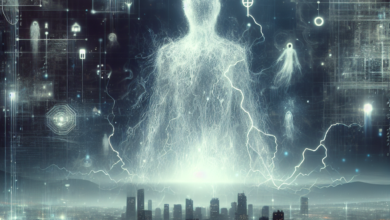
The Whispering Screens

In the heart of an industrial town in England, nestled among grey tenements and soot-stained factories, lay a peculiar electronics shop known as Tennyson’s. The shop was a relic of the past, its wooden floors creaking under the weight of time, shelves lined with items that had long been deemed obsolete. Old televisions, radios, and monitors filled the cramped space, collecting dust like forgotten memories. It was here that an unsettling urban legend took root—a tale whispered among locals that would send shivers down the spine of even the bravest soul.
As the story goes, it all began with a new shipment of second-hand television screens, rumoured to come from an abandoned estate in the countryside. The owner of Tennyson’s, a wiry man named Arthur, was a tech enthusiast with a knack for bringing life to obsolete gadgets. He was once the pride of the town, his shop a hub for both enthusiasts and those looking for a bargain. But the arrival of those screens changed everything.
One dreary December evening, as the sun dipped behind the horizon, a thick fog rolled in, draping the town in a ghostly cloak. Arthur, busy sorting through the recently arrived screens, decided to plug one in to test its functionality. The screen flickered to life but not with static or the distant sounds of a cricket match; instead, it emitted a low, whispering hum, almost like a voice trying to form words. Arthur leaned closer, his eyes wide with curiosity. But the whispers grew louder, echoing through the shop, and each word seemed to twist and turn into incomprehensible mumbling, barely audible yet deeply unsettling.
Consumed by curiosity, Arthur spent hours listening to the whispers. He recorded the sounds, playing them back repeatedly, seeking to decipher the enigmatic message. But each attempt revealed only more confusion, blending eerily with the ambient noises of the shop. Over the next few days, other patrons began to notice the peculiar behaviour of the screens. They, too, would hum softly and speak in hushed tones, drawing people in like moths to a flame. Word quickly spread, igniting a mix of fascination and dread.
The legend took hold of the town—some claimed that the whispers were those of the deceased, trapped within the screens; others asserted that they were warnings from another realm. Once friendly neighbours began to argue over interpretations, drawn into heated discussions about the meaning behind the murmurs. Some claimed the whispers foretold tragedies, while others swore they were pleas for help. Children gathered outside the shop, wide-eyed, daring each other to enter and listen, while their parents warned them away.
The local council, initially dismissive, became increasingly worried about Tennyson’s newfound notoriety. Despite their efforts to shut down the shop, Arthur adamantly refused, asserting that he was merely a custodian of these strange devices. However, the controversy had taken a toll on his mental state. He found himself losing sleep, drawn deeper into the whispers, which now seemed to invade his dreams, where shadowy figures echoed the cryptic phrases.
Days turned into weeks, and the whispers intensified. Arthur became convinced they were trying to communicate something urgent, but whatever message they held remained maddeningly out of reach. At night, he would sit alone in the shop, listening, hunting for clues. The townsfolk began to notice his dishevelled appearance, his once-bright eyes now dull and haunted.
In the corners of the town, fear took root. Parents forbade their children from visiting Tennyson’s, while some even protested outside the shop, claiming Arthur was channeling dark powers. Shunned and isolated, Arthur remained fixated on the screens, the whispered promises spiralling into obsessions. He began to grow a strange bond with the twisted screens, convinced that only they possessed the answers he sought. With no one to confide in, he turned to the whispers for companionship.
One fateful evening, amidst a thunderstorm, Arthur stood alone in his shop, electricity buzzing wildly from the outlets. He decided to take the plunge and attempt one final communion with the screens. He set up a makeshift séance, holding a séance board he’d discovered in a dusty corner. He believed it could help him connect with whatever forces were lying behind the whispers. As the storm raged outside, he spoke to the air, coaxing the entity within the screens to reveal itself. Strangely, the whispers harmonised into a single, powerful tone that resonated through the shop, and he felt an otherworldly presence ripple past him.
In that moment, things turned inexplicably dark. The screens flashed violently, and the voices surged into a cacophony of screams filled with panic and sorrow. Arthur collapsed to the ground, clutching his head, desperately trying to block out the noise. Yet, he could not escape the relentless stream of sound echoing off the walls. It was as if the spirit of the elusive entity had manifested, angry that it was being forced into the light.
The next morning, when the townsfolk awoke, they were greeted by an eerie silence that had replaced the persistent whispers. An unsettling tranquillity filled the air, each passerby seeking a sense of normalcy. But as they drew closer to Tennyson’s, they noticed something strange—the shop was locked, and the air held an unusual heaviness. Rumours began to swirl as crowds formed outside, attempting to catch a glimpse of Arthur. When the door remained unyielding, they called for help.
Eventually, a group of concerned locals forced the door open, revealing the shop in disarray. Screens lay shattered on the floor, wires hanging limply like snakes in a sunbeam. In the centre of the chaos, Arthur lay unconscious, surrounded by the remnants of the once-coveted screens. He appeared as though he had aged a decade overnight, his skin pallid, and dark circles adorning his sunken eyes.
After a frantic call to emergency services, Arthur was transported to the local hospital. The townsfolk stood by helplessly, each wondering what had driven their once-beloved shopkeeper to madness. The legend of the Whispering Screens transformed from a tale of curiosity into something evoking collective dread. Stories were exchanged in quiet tones about the supernatural forces believed to have been unleashed.
While in the hospital, the whispers continued to haunt Arthur’s dreams, manifesting in horrific visions that left him gasping for breath. It became clear to him that the whispers were not simply the voices of the dead but rather entities waiting to be freed, an assembly of tortured souls trapped behind the screens. Though his body remained in the hospital, his mind wandered far away, spiralling into a labyrinth of despair.
Several weeks had passed when Arthur finally awoke, frail but alive. However, the whispers had not ceased and persisted in plaguing his mind. He became a recluse, avoiding the gaze of those who had once been his friends. Eventually, Tennyson’s was boarded up, the windows blackening with dust and neglect, further embedding the legend into the fabric of the town. Shops came and went, but the story of the Whispering Screens remained, enshrined as a local cautionary tale.
Years later, curious adolescents would dare each other to approach the abandoned shop, convinced that if they listened intently enough, they could still hear the remnants of whispers echoing through the broken glass. They would crouch down near the entrance, trying to catch the faintest hint of a sound, but only silence would greet them—a deafening quiet thick with the weight of history.
Those who dared to venture closer than most spoke of an almost imperceptible hum, a haunting reminder of something lost. And, as legends often do, the tale wove itself into the town’s identity, a phrase passed down through generations: “Beware the Whispering Screens; for they hold echoes of lost souls, waiting for the living to listen.” A mixture of fear and intrigue would stir among those who heard it, ensuring that the legend remained alive, reverberating in the hearts of all who had once called Tennyson’s home.