
Freaks Among Us
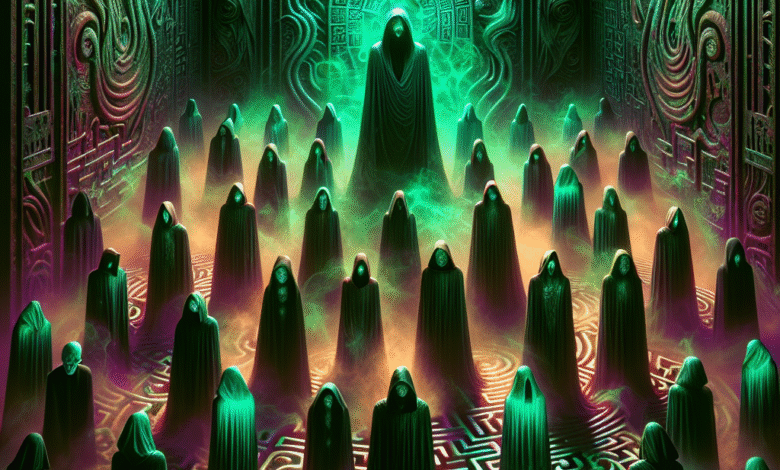
In the dark corners of Brighton, where the vibrant streets faded into shadowy alleyways and the cries of seagulls were swallowed by the deep rumble of the sea, an unsettling presence lurked. Most residents were oblivious, lost in the rhythm of their own lives, but for a select few, the truth was far more disturbing than the picturesque façade of the seaside town.
Clara Dawson had lived in Brighton her entire life. She was a creature of habit, finding solace in her routines. Every Saturday, she strolled through the bustling Lanes, admiring the quirky shops and boutiques, her eyes occasionally straying to the performers who painted the street with their talents. There was something charming about the artistry, the way it often masked the underlying darkness each performer carried. But Clara was no artist; she was just a simple museum curator, lost in the layers of history that spoke to her from long-abandoned artefacts.
One rainy Saturday, as she ducked into a café to escape the downpour, she overheard a conversation that ignited her curiosity. Seated nearby were two men, their voices low but conspiratorial. “I swear, it’s true! They’ve been spotted near the beach again,” one said, shivering slightly as he sipped his espresso.
“Freaks, I tell you! There’s something unnatural about them,” the second replied, his eyes darting around as if expecting the very subjects of their discussion to appear. Clara leaned in, intrigued. She had always been fascinated by folklore and the bizarre, but this was different. There was fear in the men’s demeanour that piqued her curiosity.
“Can’t be real,” the first man scoffed, though Clara sensed doubt beneath his bravado. “Just a bunch of drunks, if you ask me.” There was a pause, then the second man replied, his voice barely above a whisper. “You can’t explain the disappearances. People have gone missing. It’s the freaks. They take them.”
Clara tried to focus on her coffee, but her mind whirred with questions. Disappearances? Fearful rumours? She had encountered darker tales while curating exhibits, but never had she imagined them spilling onto the streets of her beloved town. A grim thought lodged itself in her mind; what if there were indeed strange beings lurking amidst the city’s underbelly? She dismissed it quickly, rationality taking hold. Surely, it was just another urban legend, a story woven to entertain, not frighten.
Yet, Clara found herself drawn to the folklore, her research deepening with every whispered tale she could unearth. The Old Town archives revealed fragments of sinister disappearances throughout history — misfits and outcasts who vanished without a trace. As she perused musty records, she stumbled upon a series of articles that described a group of drifters who had arrived in Brighton in the late 1800s. They were called “The Gloom Chasers,” a name that echoed eerily in her mind. Rumours claimed they were, in truth, dehumanised outcasts, bearing strange deformities and abilities that frightened the townsfolk into silence.
Clara became obsessed, her evenings consumed by research and her days haunted by the thought of what lay hidden beneath the surface of her home. She spoke to locals who had ventured too close to the seedy underbelly of the town — those who frequented dimly lit pubs and back-alley markets. They told tales of “the Undercroft,” an old series of tunnels beneath the town where the freaks were said to gather.
One fateful evening, against her better judgement, Clara decided to investigate. Armed with a flashlight and her steadfast determination, she slipped away from the warm embrace of her home and made her way to the entrance of the tunnels. It was a dilapidated structure, hidden behind graffiti and shadowed by overgrown foliage. A sense of dread nagged at her, urging her to turn back, but curiosity outweighed her fear as she stepped inside.
The air grew damp and stale as she descended into the gloom. Shadows danced along the walls, flickering as her light slid over them. Clara struck out deeper, her heart racing with anticipation. She expected the long-forgotten remnants of the past, but what she found instead was something far more chilling. The walls were adorned with grotesque murals — depictions of twisted figures, half-human and half-beast. They seemed to leer at her, their eyes seeming to follow her every move.
A faint sound echoed through the tunnels, a rhythmic thumping interspersed with guttural whispers. She hesitated before pressing on, her footsteps barely making a sound as she quietly approached the source of the disquiet.
As she turned a corner, the beam of her flashlight illuminated a gathering. The sight struck her as both magical and terrifying. A crowd of figures moved in a strange dance, their bodies contorted in ways she thought impossible. Some appeared almost human, while others were nightmarishly altered; limbs too long, faces too wide, and eyes that gleamed with an otherworldly light. The air crackled with a sense of energy, a visceral connection amongst them that was both alluring and terrifying.
Clara’s presence did not go unnoticed. The music faded as heads turned toward her, eyes narrowing in suspicion. Instinctively, she stepped back, but before she could retreat, a figure emerged from the throng, stepping into the flickering light. It was a woman, her skin mottled and uneven, but her eyes were kind, shining with intelligence and curiosity.
“Who are you?” the woman asked, her voice smooth yet laced with an edge of caution. Clara’s throat went dry.
“I—I’m Clara,” she stammered. “I didn’t mean to intrude.”
“Curiosity is a dangerous thing,” the woman replied, taking a step closer. “You’ve wandered where few do, and it seems you seek answers too.”
Clara felt a mixture of fear and intrigue. “I want to know about you… all of you. What are you?”
“We are the forgotten,” the woman said, gesturing to the others standing at the edges. “The ‘freaks’ you’ve heard about. We dwell here, hidden beneath the world that would turn us away.”
Clara’s heart raced as the woman continued. “They say we take, but it is they who cast us aside. Those who vanish… it is not our doing, but their own fears that swallow them whole. Brighton is alive with secrets, and we are merely a part of its tapestry.”
The grotesque dancers resumed their movements, filling the air with a haunting melody, as Clara stood, captivated. She was no longer an outsider; she was entranced by the humanity among the monstrosities. These beings, these ‘freaks’, were more real than she had ever imagined. They were not the villains of whispered stories but the victims of a society that judged by appearances alone.
As she spent more time among them, Clara learned their stories — tales of betrayal, abuse, and misunderstanding. They shared laughter, sorrow, and a profound sense of kinship that resonated with her own experiences of feeling othered, like a peculiar piece that never quite fit in the grand puzzle of life.
But as the hours slipped by, a creeping sense of dread returned to Clara. She had ventured into their world, but what if their lives were tangled with the darker edges of Brighton’s secrets?
“Stay with us,” the woman urged as Clara prepared to leave. “Join us in the Undercroft.”
Clara hesitated. The warmth of their acceptance was intoxicating, but something within her stirred a warning. “I can’t,” she replied softly. “I have my life above. I have my work at the museum…”
“What you seek is right here,” the woman countered, her gaze piercing through Clara’s resolve. “You wish to preserve history, but you will only find echoes in the past. We are the present — we are the living history, and we need someone like you to help us be seen.”
The pull of the underground became almost magnetic, yet Clara felt the enormity of the decision pressing down upon her. In that moment, she glimpsed the line separating acceptance and denial, the horrifying realisation that the lives above would only treat the beings below as relics to be scorned or feared.
“I can’t abandon my life,” she said, the words tasting bitter. “But…”
As she turned to leave, a roar of anger erupted from the crowd. Confusion and hostility churned within the Undercroft. The kindling of rage sparked a tumult among the figures, the once harmonious gathering fracturing under the weight of her departure. Fear streaked through Clara, the shadows creeping in out of the corners of her mind.
She stepped back and raised her flashlight. “I’m sorry,” she uttered, the words almost drowned by the clamor. As she retreated towards the tunnel’s entrance, the woman’s voice echoed through the darkness. “You will find us again, Clara. Be careful in the world above.”
Emerging back into the world of solace and sun, Clara gasped for air as the weight of what she had witnessed settled heavily upon her. The truth lingered just outside her grasp, taunting her with questions of acceptance and rejection. In the weeks that followed, she felt the echoes of the Undercroft in every crevice of Brighton. The freaks were not merely stories born from fear; they were living, breathing reminders of how society handled its outcasts.
Still, she couldn’t shake the feeling that something sinister woven within the fabric of her town lay just beneath the surface, a darkness threatening to rise if the truth remained concealed. As she returned to her duties at the museum, she felt the past whispering in her ear, urging her to find a way to bridge the worlds. The freaks among them were alive, each carrying stories begging to be shared.
Clara’s heart held a resolve that had been forged in the depths of her experience. That judgement day was looming as she dedicated herself to amplifying the voices buried beneath ignorance. She began gathering stories, digging deeper into the layers of history, entwining the grotesque and the beautiful, the ‘freaks’ of the Undercroft now woven into Brighton’s extensive tapestry.
Each article, each exhibition, became a tribute to those who had previously vanished into the void of fear. Clara became a storyteller, a curator not only of history but of humanity; her home now a sanctuary for the forgotten. The monsters among them would no longer be contained in darkness but would step into the light, illuminating not just the mistakes of the past, but the potential for a future where all were welcomed home.


