Whispers of the Vengeful
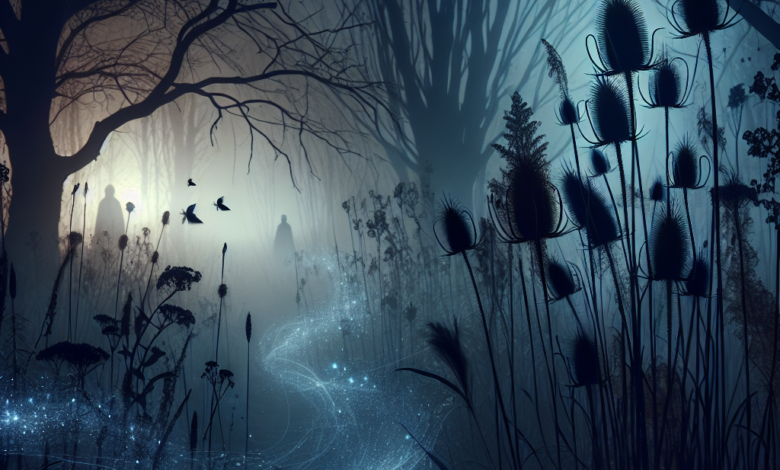
The chill of autumn settled over the village of Eastwyke, a quaint hamlet nestled deep within the English countryside, shrouded in an eerie mist that seemed to cling to the ancient stone cottages like a veil. Leaves turned to fiery hues of red and gold, carpeting the ground in whispers of decay, while the skeletal branches of the trees loomed ominously overhead. It was a time when shadows lengthened, and a sense of foreboding filled the air, especially as dusk descended.
Alice Lockwood had lived in Eastwyke all her life, in the same house where her ancestors had resided for over three centuries. The cottage, with its creaky floorboards and timeworn walls, had seen its share of sorrows and joys. But it was the tales of old that gnawed at Alice’s mind, tales of vengeful spirits and restless souls said to haunt the moors beyond the village. Villagers would gather at the local pub, sharing chilling stories of those who had met untimely ends, their vengeful whispers echoing through the mists.
One particularly blustery evening, as Alice was preparing for bed, she caught sight of a fleeting shadow flitting past her window. She turned her head sharply, her heart racing, but it had vanished as quickly as it had appeared. Dismissing it as a trick of the dying light, she nevertheless felt a gnawing unease creeping into her bones, the chill of the night making her shiver deep within.
As sleep took her, Alice dreamt of the moors. She wandered through the dense fog, the ground beneath her feet damp and treacherous. Whispers filled her ears, growing louder until they became a cacophony, filled with anguish and rage. She woke with a start, her heart pounding, the whispers still lingering in her mind. It felt as though they were calling to her, summoning her to the desolate hills that loomed like sentinels in the distance.
The following day, curiosity gnawed at her, and she decided to venture to the moors. Bundled in layers against the biting wind, she set off, determined to explore the haunting landscape. The sky above was a tapestry of grey, the sun a mere memory obscured behind thick clouds. As she walked, her surroundings grew increasingly desolate; gnarled trees broke through the earth like twisted fingers reaching out for the sky. The air was heavy, thick with an otherworldly presence that made her skin prickle.
As she wandered deeper, the whispers returned, gentle at first but quickly growing more insistent. “Help us,” they pleaded. “Remember,” they cried. Alice’s heart raced. The sound was as if the very Earth beneath her feet was alive with voices, echoing the pain of forgotten souls. She pressed on, driven by an inexplicable desire to uncover the source of the commotion. The chill in the air intensified, wrapping around her like a shroud.
Then she saw it: an old stone well, half-hidden by brambles and tangled vines. It seemed an ordinary enough relic from another time, but there was something strange about it—an aura of sorrow that surrounded it, as if it had absorbed decades of grief. She approached cautiously, her heart racing as she peered into the dark depths. The air felt charged, electric with the remnants of something long suppressed.
A sudden gust of wind swept through, scattering leaves like confetti, and Alice stumbled back, her breath caught in her throat. The whispers surged, now a torrent of anguished cries. “Free us!” they implored. The desperation in their voices gripped her, and an overwhelming urge to help surging through her veins. As she stood at the edge of the well, she felt a force within pulling her closer, beckoning her to look deeper.
“Alice,” a voice shattered through the chaos. “Do not look away.”
She gasped, spinning around, but found no one. Only the whispering winds greeted her. Heart pounding, she felt compelled to return to the well. Driven by a yearning she could not name, she leaned over the edge. Below, the darkness seemed alive, swirling and churning in a way that chilled her to the bone. “What do you want?” she cried into the void. The winds stilled, and a soft, mournful voice emerged from the depths.
“To remember,” it echoed, filled with sorrow. “To seek justice.”
Alice felt the atmosphere shift, heavy with sadness. Memory flooded her mind, images of the village and its history unfolding—tales of betrayal and betrayal that history had shrouded in silence. She had heard whispers of a widow, wronged by her kin, who had been cast out and met her end at the base of these very hills. The villagers had spoken of her forlorn spirit, a figure in white invariably seen wandering the moors at twilight. But Alice sensed there was more to the tale—layers of anguish tangled with fury.
“What happened to you?” she called out, her voice trembling.
Another gust of wind arose, swirling around her like an angry tempest. “They cast me aside while I was alive; I cannot lay to rest until justice is served.” The voice trembled with bitterness, and the volume of whispers increased, layering over each other in a cacophony of anguish. “Only in truth can we be free.”
With that revelation, Alice felt the ground shift beneath her—her purpose crystallising within her mind. She needed to uncover what had been hidden beneath the foundations of her home, the truth buried within the wells of memory that had slipped through the fingers of time.
Returning to Eastwyke, she summoned the courage to visit the village’s records, hidden in dusty archives replete with old tomes and journals. Days turned into nights as she delved deeper, revealing secrets that lay dormant for years. The widow’s tale unfolded before her: betrayal and deceit—the love of a man transformed into hatred, leading to accusations of witchcraft. The villagers had turned their back, sealing her fate.
With each piece of information unearthing dark realities, the whispers grew in intensity, guiding her touch on the parchment as if it were their lifeline. “Remember us!” they wailed, every page breathing life into the injustices of the past.
Armed with knowledge, Alice returned to the moors, emboldened yet fearful. Under the pale light of the moon, she approached the well once more. “I remember you,” she proclaimed, her voice firm. “I know your truth.”
The air thickened as the wind howled around her, rippling the moors like water. Shadows coalesced, forming the figure of a woman in white, her face etched with sorrow. Alice’s heart ached at the sight. “You have heard our pleas,” the apparition whispered, a reflection of both despair and hope.
“I will share your story,” Alice vowed. “The world will know what they did to you.”
The figure stepped closer, her eyes glistening with unshed tears. “In truth lies our freedom,” she whispered, her form shimmering like mist. With that, the winds surged, swirling around Alice, a euphoric warmth filling her heart. The whispers of the vengeful millions transformed into soft sighs of gratitude, intertwining with the autumn breeze until they finally faded into the night.
In the days that followed, Alice spoke out, sharing the widow’s harrowing tale with the villagers. Some dismissed her as carrying wild tales, but as she recounted the truth, a pulling recognition settled over them, awakening long-buried memories and misgivings. Slowly but surely, the villagers began to atone for their shared past, gathering at the moors to commemorate the lives lost through ignorance and betrayal.
One evening, as Alice wandered the moors once more, she felt a gentle breeze wrap around her, carrying with it a sense of peace. The air was still; the cries of the vengeful were now but distant murmurs, gone but not forgotten. In honouring the lost, Alice had woven their legacy into the tapestry of life.
The cottage felt lighter, and as the years rolled on, the whispers became a cherished memory, a reminder of the power of truth and human connection. Through her courage in the face of past injustices, Alice Lockwood not only freed the echoes of the vengeful, but brought her village closer, forging a bond with the spirits who had once lingered as shadows.