The Shadow at the Crossroads
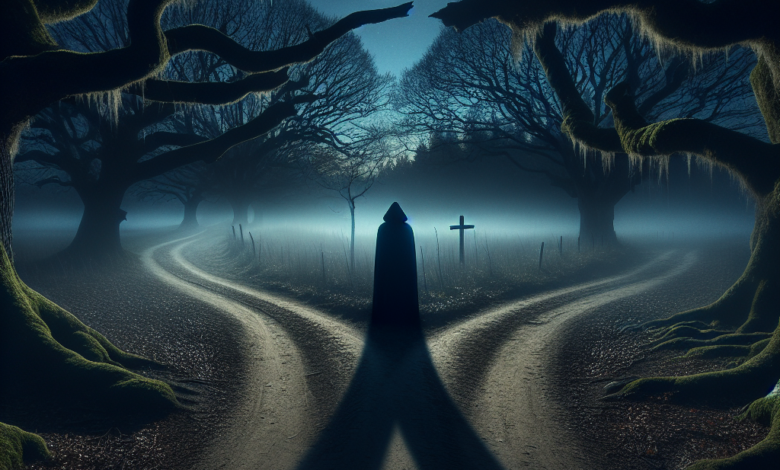
In the small, rain-soaked village of Wainsbrook, there lay a crossroads shrouded in myth and whispered tales. Locals spoke cautiously of the Shadow at the Crossroads, a figure said to manifest at dusk, lurking in the fringes of the woods that bordered the road. Though the details varied, the essence remained the same: those who encountered the shadow rarely returned unchanged.
The legend wove through conversations in the pub, where the scent of ale mingled with the earthy aroma of damp wood. “Don’t go there after dark; not unless you want a taste of regret,” old Mrs. Penrose would warn, her gnarled hands clutching her tea. Some scoffed, dismissing it as mere stories to frighten children, but others, with shadows darkening their eyes, would nod solemnly.
It was said that the crossroads had an uncanny ability to lure the desperate. Every few years, someone would vanish after an evening stroll, leaving a trail of unanswered questions. Yet, some who returned spoke of bargains struck—a shadowy figure thrusting forth tempting offers, preying on hopes and dreams. Still, the villagers eyed these returnees with suspicion, for it was known that a deal with the shadow often came at a price.
Among the villagers, there lived a young woman named Eliza. Bright-eyed and spirited, she was a dreamer, filled with ambitions that stretched beyond the cobbled streets of Wainsbrook. She had ambitions of becoming a writer, of capturing the essence of life in ink and paper. Yet, as her dreams danced just beyond her grasp, the stifling weight of her reality grew heavier; a family burdened with financial woes and a future that seemed more certain by the day. The whispers of the crossroads grew increasingly alluring.
One evening, after a particularly disheartening day spent churning through rejection letters, Eliza found herself wandering down to the crossroads. The sun dipped low, casting long shadows that intertwined with the branches of ancient trees. As she approached the ominous intersection, a chill raced down her spine. Though she had long scoffed at the tales spun by the villagers, she couldn’t shake the sense that she was being watched.
Just then, the world around her seemed to still. The rustling of the wind faded into silence, and a figure began to take form. Cloaked in darkness, the shape twisted and turned, obscured by the dim light. Fear tugged at Eliza’s heart, yet curiosity pushed her forward. With each cautious step, the figure solidified—gaze penetrating, yet impossibly hollow.
“What do you seek?” The voice reverberated, low and echoing through the trees.
Eliza hesitated, her mind racing. In that moment, she could feel the weight of all her hopes—the stories yearning to be told, the escape from the mundane reality of her life. “I want to be a writer,” she found herself saying, emboldened by something she could not quite identify. “I want the world to know my name.”
The figure seemed to consider her words, an aura of darkness swirling around it. “And what are you willing to pay for your dreams?”
The question hung in the air, heavy and oppressive. Eliza hesitated. What was she willing to sacrifice? The tales warned her of the consequences—the lost souls who had given too much in exchange for fleeting fame. Yet the fire within her raged on, drowning her fears. “I will give you… my time,” she declared, her voice wavering but resolute.
With a nod, the figure raised a hand, and a chill slithered through Eliza, engulfing her very being. The shadow smiled, a twisted smile that spoke of stories unfolding and lives entangled. “Then let it begin,” it whispered, dissolving into the dying light.
Though uncertain of what had transpired, Eliza felt invigorated. Ideas coursed through her veins like wildfire, igniting her imagination. She rushed home, and in a frenzy, she poured her heart onto the pages, crafting tales that soon captivated anyone who laid eyes upon them. In no time, she found herself invited to literary gatherings, and her name spread like ripples in a pond.
But with every story published, Eliza felt the weight of her choice settle upon her. The more successful she became, the less she recognised herself. There were nights of insomnia where the words wouldn’t come, and a hollow sensation replaced the thrill of creation. There were moments when she would gaze in the mirror and see not merely Eliza but fragments of the shadow’s darkness lurking behind her smile. Was it her time slipping away, she wondered, or something far more sinister?
As weeks turned to months, Eliza became a local legend in her own right. Her name was celebrated, yet her spirit began to wither. She no longer cared for the laughter of friends or the warmth of family. All that mattered was the next masterpiece, the next accolade—a relentless pursuit that consumed her.
One fateful night, compelled by a force she could neither understand nor resist, Eliza returned to the crossroads. The familiar chill greeted her, but this time the air was thick with despair. A storm loomed, dark clouds swirling as if echoing her turmoil. The shadow emerged once more, its presence as unsettling as ever.
“Have you come to negotiate?” it queried, a malicious glint in its void-like eyes.
“I need more time,” she replied breathlessly, clutching the pages of her latest manuscript, taut with desperation. “I feel… I feel as if a part of me is missing. Please, I can’t create without it.”
The figure leaned closer, a smirk adorning its dark countenance. “Time is but a fleeting concept. What you seek now resides far beyond your grasp.”
Fear gripped her heart. “What do you mean?”
“Every word you write steals more of your essence. You’ve traded your years for success without realising its true cost. The applause of the world cannot replace the warmth of connection, nor can it fill the void you’ve forged in your wake.”
As a dreadful weight settled in her gut, Eliza felt the pieces of her identity slipping away, unravelled by her own ambition. “What can I do?” she cried, desperation clawing at her throat.
“Your thread is both delicate and strong. To gain back what you’ve lost, you must forfeit your fame. You can have your old life—but only if you are willing to confront the pain you’ve sown.”
The prospect terrified her. Would she truly abandon everything she had worked for? Yet, as she glanced at the shadows of the trees surrounding her, imprinted with memories of simpler times, she recognised the sacrifice she must make.
“I…I will return to where I began. I’ll tell the stories of those I’ve overlooked,” she stammered, accepting the cost that lay before her. “Let me go back.”
The shadow nodded, its expression now unreadable. “Your path is not without its trials. Remember that the essence of who you are exists not within the applause of strangers but in the love and fight for the stories that dwell amongst you.”
In a blink, Eliza found herself back in Wainsbrook, home at last but stripped of her newfound fame. The darkness within her lifted, but so too did the admiration she had garnered over time. Though she felt an emptiness clinging to her, it was nothing compared to the weight of longing and unfulfilled dreams.
Yet slowly, the familiar sights of the village began to stir her soul. With each passing day, she wrote not for the world but for the stories pressing against her heart—tales of ordinary lives in an extraordinary world. She penned parables of the villagers—each character etching a vibrant landscape across the pages. It was within these words, filled with tenderness, that she rediscovered the essence of herself.
As the seasons turned, the legend of the Shadow at the Crossroads prevailed—tales warning the unwary of temptation. But Eliza, now a keeper of those stories, understood that every choice held the power of transformation. And while the whisper of darkness remained, she learned to embrace the light; for in that balance lay the true craft of the storyteller.
In the heart of Wainsbrook, where shadows still danced across the pathways, a new legend unfurled—a soft, glowing reminder that dreams could flourish, not from recklessness, but from empathy, connection, and the stories woven upon the fabric of everyday life.