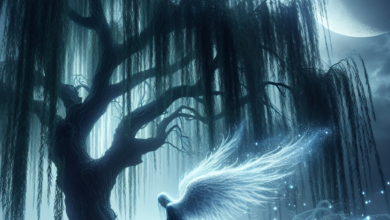
The Shadows of Silence

In the heart of an old industrial city, where the soot of the past clung stubbornly to the crumbling brickwork of abandoned factories, emerged a tale that echoing whispers insisted was true: The Shadows of Silence. It began long ago, in a neighbourhood known as Tredwell. Once a bustling community, Tredwell had fallen to ruin, its streets overrun by weeds and its buildings draped in a thick layer of gloom. The locals spoke of a darkness that lingered in the alleys, as if the very shadows possessed a will of their own.
The legend would tell of a time when the air in Tredwell crackled with life — families huddled around fires, the sounds of laughter and music wove through the alleys. It was said that the pubs overflowed with warmth and cheer, a reprieve from the cold bite of winter. But as the industry that had sustained the community began to falter, the laughter faded and the streets became desolate. Few remained to tell the tales of the past, but for those who did, the true horror of Tredwell lay not in the echoes of memories but rather in the presence of the Shadows.
It was old Mrs Trabner, the last remnant of her family, who claimed to have seen them first. Every morning, as she meticulously tended to her herb garden, she would peer through her window, casting a wary glance into the alleys that snaked through the heart of the neighbourhood. “There’s something there,” she would declare to anyone who would listen, her voice quaking slightly with age. “Watch the shadows! They move, and they whisper.” The sceptics would brush off her warnings, attributing her vivid imagination to senility. Yet, as wretched as her eyesight was, they couldn’t help but notice the air would grow still whenever she spoke of them, a noticeable chill slithering through the cracks.
As the months rolled on, more were compelled to share their experiences, though instead of bolstering her claims, these stories merely added to the growing air of fear. Sleepy-eyed children returning from school spoke of silhouettes lounging under lampposts, their features obscured but their presence palpable. Some claimed they felt a strange tugging at their shirts, as though invisible fingers sought to draw them into the depths of the shadows. Parents worried as their children began to vanish, although not completely. They would find their faces pressed against the windows, gazing eerily into the night, entranced by something only they could see.
In time, this unusual behaviour would yield a pervasive dread, yet it wasn’t until the first disappearance that the name ‘The Shadows of Silence’ began to circulate among the fearful community. Young Timothy Holloway was taken while playing in the park, just a stone’s throw from the dilapidated swings that had long since rusted. The story goes that he was playing tag with his friends when he paused near the edge of the trees. The laughter that once peppered the air dimmed as everyone turned to see Timothy standing still, gazing into the shadows like a moth drawn to a flame. Terrified, his friends called for him, but he could not hear them. He stepped backward into the dark, and just like that, he was gone.
The very next day, the search commenced, but no signs of Timothy emerged. Days turned into weeks, each tick of the clock embedding the community deeper into despair. The police were baffled, insistent that children simply did not vanish into thin air. Yet, even the hardened cynics among them couldn’t shake the sensation of being watched, a palpable tension enveloping them as they scoured the winding streets.
As the adults grew more anxious, the children’s fear transformed into fascination. A group of local youths, a ragtag collection known as ‘The Tredwell Crew’, resolved to unravel the mystery of the Shadows of Silence. They spent countless nights gathering by the flickering light of the streetlamp outside Mrs Trabner’s home, exchanging stories of the voices they claimed to hear near the abandoned buildings and the eerie hum that sometimes filled the air at dusk. They called upon the courage of their youth, convinced that if they were to confront the shadows, they must first gather the tales of those who had seen them, whether in dreams or half-remembered tales from their parents.
It was during one such gathering that young Clara, a girl with an untamed mane of curls and a penchant for the fantastical, infused the air with excitement. “I heard my mum talking about the Wailing Wall,” she began, her eyes shining. “She said that years ago, when Tredwell was full of life, there was a partition where the broken-hearted would come to mourn. At twilight, the shadows would dance and whisper the names of those longing to be reunited.” The group hushed, drawn into her narrative, as a shimmering path unfolded before them. If the very wall itself was the origin of the shadows, it was there that their curiosity led them.
Through a thick curtain of night, the crew swarmed into the heart of Tredwell, armed with flashlights and mismatched courage. Twisting their way down forgotten pathways, they reached the Wailing Wall, its stones mottled and slick with moss, bearing the burdens of countless tales long buried. The air grew thick with an inexplicable weight, a silence so cavernous it seemed to inhale their very breaths. Clara placed a hand against the wall, a timid attempt to connect with the feelings it had witnessed. “If anyone is there, we’re not afraid! We’re here to listen!” she shouted, her voice ricocheting into nothingness.
At first, nothing stirred but the occasional rustle of the branches and the distant croaks of frogs. Then, with alarming suddenness, shadows flitted across the rough surface of the wall, as though curious, reaching out to join the gathering. A chill enveloped them, or perhaps it was simply the goosebumps rising on their arms. Yet just as quickly as they’d arrived, the shadows retracted, leaving the children alone once more, hearts racing.
But Clara was undeterred. “Tell me your stories, show us who you are!” she beckoned, her voice wavering yet resolute. In that moment, they believed they were seeing the essence of those lost. A flicker danced within sight—a woman’s outline, garbed in a flowing gown, her face at once distant yet achingly familiar. The figure appeared to reach toward them, and with a flash of warmth, they felt a rush of sorrow, an emotion that surged through them like a tidal wave. Their hearts constricted; there were stories trapped within the shadows, stories that yearned for an audience.
Moments melted into minutes. “We must go back, they need to know!” cried Jacob, the most adventurous of the crew. “We have to warn them!” And as they hurried back, a commitment formed amongst them to share not just the legend but the urgency of listening—an understanding that recognition brought hope to the silence that permeated Tredwell. Meanwhile, the shadows awaited their reckoning, waiting to bind their history, to bridge the eternal divide.
Yet each testament would summon forth unyielding fear. Soon after their return, new whispers circulated among the adults. It was as if the shadows, once playful and curious, now bore an insidious menace. On the streets, children would stride worryingly close to the remnants of the industrial district, drawing glares from paranoid parents. Some recalled voices gently luring them in, promising hidden treasures and secrets. Others heard the disquieting din of many voices merging into one; a choral lament for those who had been lost to the depths of silence.
A pall hung over Tredwell, and the cries for understanding grew too loud to ignore. Mrs Trabner, although frail, took up her mantle once more. It was she who called for a public gathering one stormy evening, branding it a “Ritual of Reckoning” to confront the shadows that roamed their lives. Families gathered in droves, a mix of hesitance and determination woven into their expressions.
Clara and her friends stood before the throngs, recounting their experiences, their belief that the shadows were not to be feared, but rather embraced for the stories they held. In turn, the elders spoke of their own encounters, unearthing long-buried memories of despair entwined with the song of life that once resonated through the alleys. As the rain drummed softly against the cobbled path, the crowd’s collective voice bloomed into a harmonious crescendo of stories, lament and hope intertwined.
And then, in a breathtaking moment, a sound rose from the shadows—a low, resonating chime, as if the very air itself had conspired to amplify the truth seeping through their collective grief. They felt the presence of the shadows weave among them, forging a bond rooted in understanding. Families grasped one another’s hands tight, and for the first time in generations, silence bore witness to catharsis.
When the dawn broke over Tredwell, its light sprawled across the edge of the ruined city, a change swept through the community. It is said that the shadows transformed from mere observers into guardians, retelling the tales of those who had been lost and celebrating the resilience of those who remained. As time rolled forward, The Shadows of Silence became the storytellers, a bridge woven between the living and those lost, a reminder that every tale must be heard, every whisper cherished.
In Tredwell, the whispers may never entirely fade, for shadows cast long on the human heart. Yet together, the community faced the dark with open arms, embracing the pain, and breathing life into stories that once lay silent. And so, The Shadows of Silence became a legend not only of fear but of connection, a testament to the unyielding spirit of those who dared to listen.