Renovation of Forgotten Bonds
The warm summer sun poured through the windows of the old textile mill, casting an array of patterns on the wooden floorboards. Samantha, in her late thirties, had finally decided to transform her grandfather’s long-abandoned property into a cafe. There was something therapeutic about renovation, peeling back layers of history, and revealing the bones of the structure underneath. The mill, located on the outskirts of Little Harrow, held memories of her childhood visits, when her grandfather, a taciturn man with a twinkle in his eye, shared stories of weaving and dying fabric.
But those stories were less vivid than the building’s decay. Old machinery lay dormant, covered in dust, while rusted tools jutted awkwardly from the walls. Soon, with enough paint and polish, she envisioned a bustling café, filled with the chatter of patrons enjoying freshly brewed coffee amidst the nostalgia of the past.
Yet something felt amiss. As she began to strip the layers of wallpaper in the front room, a chill nipped at her fingertips, despite the warmth outside. Samantha shrugged it off; drafts were to be expected in a place over a century old. A murmur of unease fluttered in her stomach, but she pushed it aside, focusing on the task at hand. That evening, as her tools lay scattered on the floor, she found herself unnerved by an unexpected noise echoing through the mill—a clang, sharp and definitive, as if something long buried had been unearthed.
The following days were plagued by more occurrences—a faint squeaking as if the old loom had come alive, fleeting glimpses of movement in the periphery of her vision, yet every time she turned to look, she found nothing. Friends who volunteered to help shared Arthur’s penchant for nerves; they felt the atmosphere press down upon them, leaving a tangible unease that drove them away, each promise to return followed by texted assurances that they were too busy.
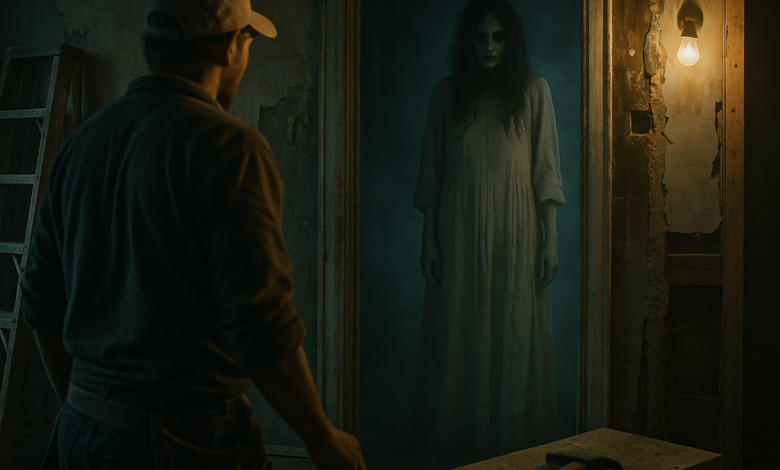
One evening, as she tore down the remnants of the old ceiling tiles, the air grew thick, the temperature dropping suddenly and painfully. It was hard to concentrate as shadows danced just beyond her line of sight, stirring an unsettling mixture of fear and intrigue within her. That night, as she sat on the floor, going over her plans by the flickering light of a single bulb, she heard a whisper.
“Help me.”
The voice was soft yet insistent. It slithered into her bones, awakening something she couldn’t articulate. Samantha had always considered herself a sceptic, not one to entertain the notion of spirits; yet doubt wormed into her mind. It would not leave without a trace.
Over the coming days, the disturbances escalated, the air thick with unnameable tension. Metal on metal clashes rang out, flooring tiles shifted beneath her feet. Images began weaving into her thoughts—memories she didn’t remember experiencing played out; a small hand clasping her own, laughter ringing out. She found herself questioning her own childhood, attending family gatherings where her grandfather had stories to tell, but now they felt warped. Who was the child in those fleeting recollections?
Determined not to let this haunt her, Samantha dove into research. The mill’s archives revealed a lengthy history of local textile mills, but not much on her own familial ties. Only one name surfaced repeatedly: Lydia Moreau, the original owner. She was the spirit of the mill, a well-regarded woman who had mysteriously vanished, leaving her livelihood—and her children—behind.
As the sun cast long shadows across the landscape, Samantha sought out old newspapers, digging for more on Lydia. Each article unveiled a tragic narrative—financial ruin and a child lost, possibly the one entwined in Samantha’s forgetful memories. Had Lydia sought solace in the mill, her safe haven, before vanishing without a trace? Each piece she uncovered made her heart pummel against her ribs, as though Lydia were calling upon her more insistently.
In the midst of all this turmoil, Samantha started to feel overwhelmed, more entrenched in Lydia’s despair than her own. Her dreams became haunted by memories that were not her own: threads running between two women, a sliver of longing, rage, and helplessness. Day by day, Samantha wrestled with her growing connection to Lydia, slipping into her thoughts, her memories, stealing her very essence.
Then, on a particularly dark evening, Samantha watched as the old loom in the mill creaked to life. The once still threads began to twist and weave themselves into patterns no one would recognise. The soft whispers now flooded the air—a chorus of sorrow. The warm light of the bulb fought against the darkness encroaching from the corners of the space, but it felt as though the shadows beckoned, dark seduction etching into her.
With a mix of fear and compulsion, Samantha stepped closer, reaching towards the loom. Could she somehow free Lydia? Did she dare? The wood beneath her hand felt slick, alive in a way that frightened her to her core. The threads of the fabric began to tighten, pulling at her.
“Find me,” the voice surrounded her, laced with desperation.
In that moment, Samantha understood too late the tether that had connected them was more than memories; a sacrificial bond. She had awakened something dangerous. The air crackled around her, threatening escape as the weight of Lydia’s memory pressed down. With panic consuming her, she yanked her hand away. The loom clattered, the threads snapping violently, sending a shockwave through the room.
In a scream, she stumbled back, but the pain came too quickly, thrumming through her very being. The visions boomed like a thunderous symphony—seeing through Lydia’s eyes, feeling her anguish over the lost child, the desperation for connection. When her own mind took over again, Samantha was overwhelmed, engulfed by darkness, the mill and its haunting presence solidifying into something unforgiving.
When morning light fought harshly against the remnants of the night, Samantha woke sprawled on the cold floor of the mill. The fabric lay at her feet, tangled and unmoving. All at once, the chill of the previous nights had disappeared, leaving her with a disquieting warmth—a sense of connection, yet the feeling of loss swirled around her.
Something fundamental had shifted. The restoration that begun as her dream now felt like a gaping wound. As weeks passed, loyalty towards her endeavor eroded, replaced by an unsettling understanding that she’d made an irreversible decision. It dawned upon her slowly that Lydia had not been a mere spectre; she was entwined in Samantha now, living through her, the moments spent at her side, twisted memories resurfacing, blurring lines of identity. The more time she spent in the mill, the more Samantha felt herself fraying at the edges.
As local businesses began to take notice, they hesitated to welcome her with open arms; whispers of Lydia and her tragic fate lingered uncomfortably in the air. Unable to connect meaningfully with anyone, Samantha felt thrust onto a lonely path. The connection to Lydia morphed from a bond into an infection, clawing at her spirit until any glimmer of who she once was disappeared.
On an otherwise banal afternoon, she caught a glimpse of her reflection in a dusty window—the slight upturn of her lips, the sparkle in her eyes had vanished. In their place lay a hollowed visage, a stranger staring back. Panic surged through her, but she couldn’t pull away. There was a deep, agonising understanding settling deep within.
She scrambled to the loom, intent on severing that accursed thread once and for all. But the mill vibrated beneath her touch as a familiar presence overtook her; she yielded. Embracing Lydia’s history, her pain blended, rendering her trapped within the layers of faded fabric, spun thoughts, losing herself in a life that no longer was.
The café opened just weeks later, a veneer of vibrancy shrouding the malignant connection. Patrons trickled in, finding warmth, laughter, and comfort, blissfully unaware of the truth that lay lurking in the mill’s shadows. Samantha moved through the space, laughter spilling from her lips—yet, they were not her own. The threads bound her, memories reconfigured, an identity no longer clear.
For the present, she was Lydia, as Lydia once was. Bound to the mill by invisible threads, a quiet emptiness lingered as she wove futures for others, gilded in past bonds destined to remain unspoken.