
Routine of the Unseen
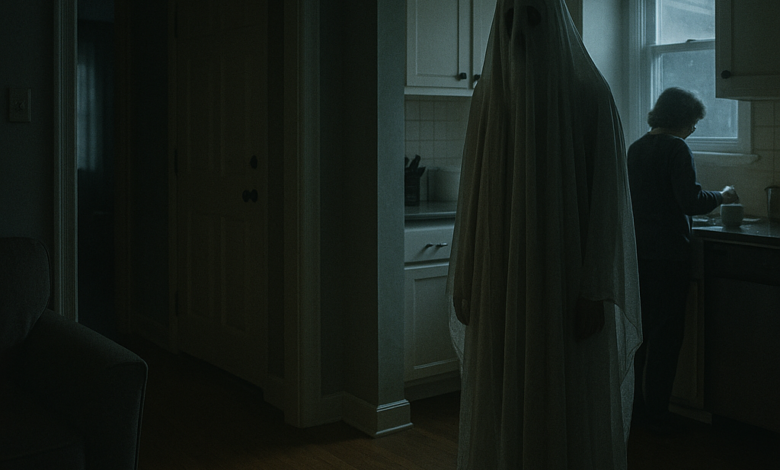
Early one damp Tuesday morning, the post slid through the letterbox, rustling the quiet that filled the lower flat of 17 Birch Street. Tilda, still wrapped in her soft white robe, shuffled into the hallway, her hair a dishevelled nest. She recognized the sound of the first post only because it had become a part of her daily routine, one she relied on amidst the chaos of her life.
She flicked on the kettle and padded in her slippers to the living room where sunlight struggled to stream through the narrow windows. The flat was simple, furnished with comfortable mismatched pieces—a second-hand sofa, a crowd of plants that were surprisingly hardy given her apathy for domestic duties, and a tiny table cluttered with unpaid bills. Tilda wiped sleep from her eyes and bent to collect the letters that had gathered, her heart skipping its habitual beat at the sight of an unmarked envelope.
It was heavier than the others and had an unsettling quality, like the thrum of an electric current humming beneath the surface. Tilda set it aside, unnerved, and went about her morning.
For days, the envelope sat abandoned on the table, while life pushed its way forward. The kettle boiled. She made toast, burned the edges slightly as she often did, and forced herself to read a novel she had borrowed months ago but never had the heart to finish. She found herself irritated when the book slipped from her hand, hitting the floor with a thud that echoed in the silence of her flat as if it had disrupted something.
Then, a strange phenomenon began, subtle and unnerving. Tilda noticed that her coffee mug, once a solid presence of chipped pottery, vanished. Not just once, but multiple times. She would set it down and return only to see it had been replaced by a teacup she hadn’t touched for several years. The first time she dismissed it as absent-mindedness, but the fourth time, her irritation morphed into fear. Who or what was engineering this shift in her modest environment?
Weeks rolled into a blur, and Tilda wrestled with the odd occurrences: the silent hum of reminders echoing in her skull about things she’d never planned to do, the phantom sounds of laughter ringing long after she’d finished speaking on her solitary calls. Each morning unfurled like the last, and yet somehow, her routine felt frantic and decidedly off-kilter.
It was a Friday – the sky reflecting the gritty mood of the week – when the shifting took a sinister turn. Tilda returned home late from work, a sprinkle of rain lashing at her face as she hurried along the street. Her heart sank when she opened the door to find the letters she’d long ignored now collected neatly on the table, the unmarked envelope prominently positioned across the expanse of wood, its weight seeming to grow tenfold.
Curiosity wrestled with dread as she reached for it. The moment she touched the envelope, her mouth felt dry, as though something mournful had seeped through the paper. Inside was an exquisite piece of stationery, the handwriting elegant yet frantic. “They’re watching,” it read, “stay in and don’t allow them to know you’re aware.” Below the scrawl, eight circular symbols, the likes of which Tilda had never seen, scattered across the page, like a sigil gone wrong.
A wave of dizziness crashed over Tilda, a clammy cold creeping between her bones. She dropped the letter as if it burned, scrambled away, and stumbled into her bedroom. She was dry-mouthed and panting, her instincts screaming that she needed to leave—to flee this suffocating sense of intrusion. But the door wouldn’t open. Metal grinding against wood, it refused to budge.
As the hours passed without relief, Tilda’s chest pounded beneath the crushing weight of an unseen presence pressing down against her spirit. She couldn’t escape. Chained to her own absence of action, she awaited a danger that loomed, ever closer.
Then it escalated. Late that night, while staring blankly at the flickering television screen, the lights dimmed abruptly. The air cooled around her, and she felt the prickling sensation of being completely observed. With a heavy heart, she turned her gaze to the wall, and for the first time, she beheld the figure. A distorted semblance of something she might have once known: the silhouette of a woman dressed in faded clothing, hands clasped around her neck, mouth slightly ajar, frozen in anguish.
“Help me,” the figure implored silently, a wave of urgency washing over Tilda.
The next day, as the ghost had instructed in the letter, she stayed home. She skirted around the flat, avoiding mirrors and dark corners, convinced the entity wanted something—clarity, resolution, maybe even companionship. But as each hour drifted by in its agonising crawl, paranoia sank into her resolution, transforming her vigilance into madness.
That night, Tilda grasped the envelope with the eerie symbols, hoping to deduce its meaning. She laid them on her bed, scrutinizing the letters until they began to swirl and pulse with familiarity. Within strange schemes, her thoughts glimmered—memories splintering into sharp shards of déjà vu.
“Mother?” she whispered, awareness piercing through muddied memories. An echo of the past drifted, the smell of sandalwood from her childhood, the sound of soft hums coaxing her to sleep. The bitter memories of failure and loss welled up within her, woven into her identity like an old cardigan that had seen too many winters.
With each passing day, Tilda found herself caught in an inescapable loop, living in time devoured by her mother’s tragic tether. An urgent need to help the trapped figure commanded her attention, gnawing at her conscience. She numbly followed the spectres of her childhood dynamic—organising the flat with the capricious whims of her mother’s remembered requests.
It transpired that every choice was a small step toward convergence, each rearranged trinket or dusted shelf pulling her deeper into a world that felt tangible yet fragile. But it also cascaded into the warnings embedded in her letter; Tilda’s relationships with those outside began to falter—her colleagues questioned her distracted behaviour, and friends withdrew from her orbit as she became consumed by memories.
Finally, the confrontation erupted violently. One afternoon, she returned from a fruitless outing, the last shred of connection to the living fallen away when she found the flat transformed. The walls swelled with an ominous dread—the shadows hanging in corners grew thicker, the air buzzing low with malignant intent. With her heartbeat ringing in her ears, she crossed over the threshold of her living room.
Her mother appeared again, this time more solidified with a resonant despair that forced Tilda to her knees. “You need to let me in,” whispered the figure whose presence had once brought comfort. “Only then will you understand.”
And Tilda, bound by a desperate desire to uncover the truth, stepped forward. Just as she seized her mother’s intangible hand, sharp light flooded her vision and the world plummeted into white chaos. When it blinked back, Tilda found herself alone, tumbling in darkness with a cracked reflection of her former self flickering like a cheap filament. The flat, preserved in the state of her mother’s regiment of rules, twisted grimly in the pained reminder of a life erased.
After a week, neighbours smelled decay seeping from 17 Birch Street. Inside, the walls still echoed with the implications of despair—a routine binding Tilda irrevocably to the shadows. The visage of mother and daughter layered endlessly, an eternal cycle of loss encased in unwilling remembrance, forever condemned to haunt the living as they spiralled into their own routines, unaware of the dangers lurking just behind the seams of reality.


