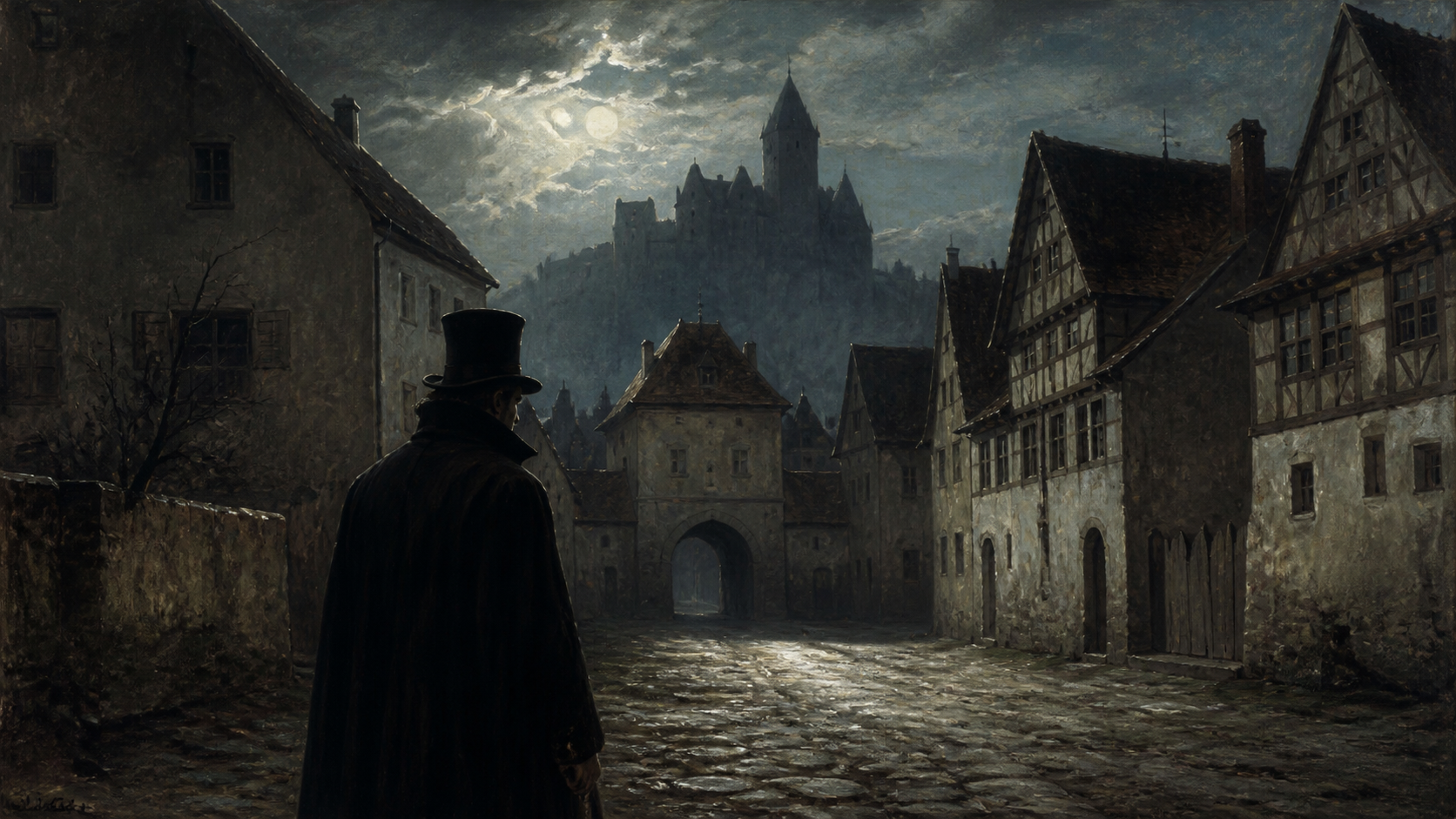
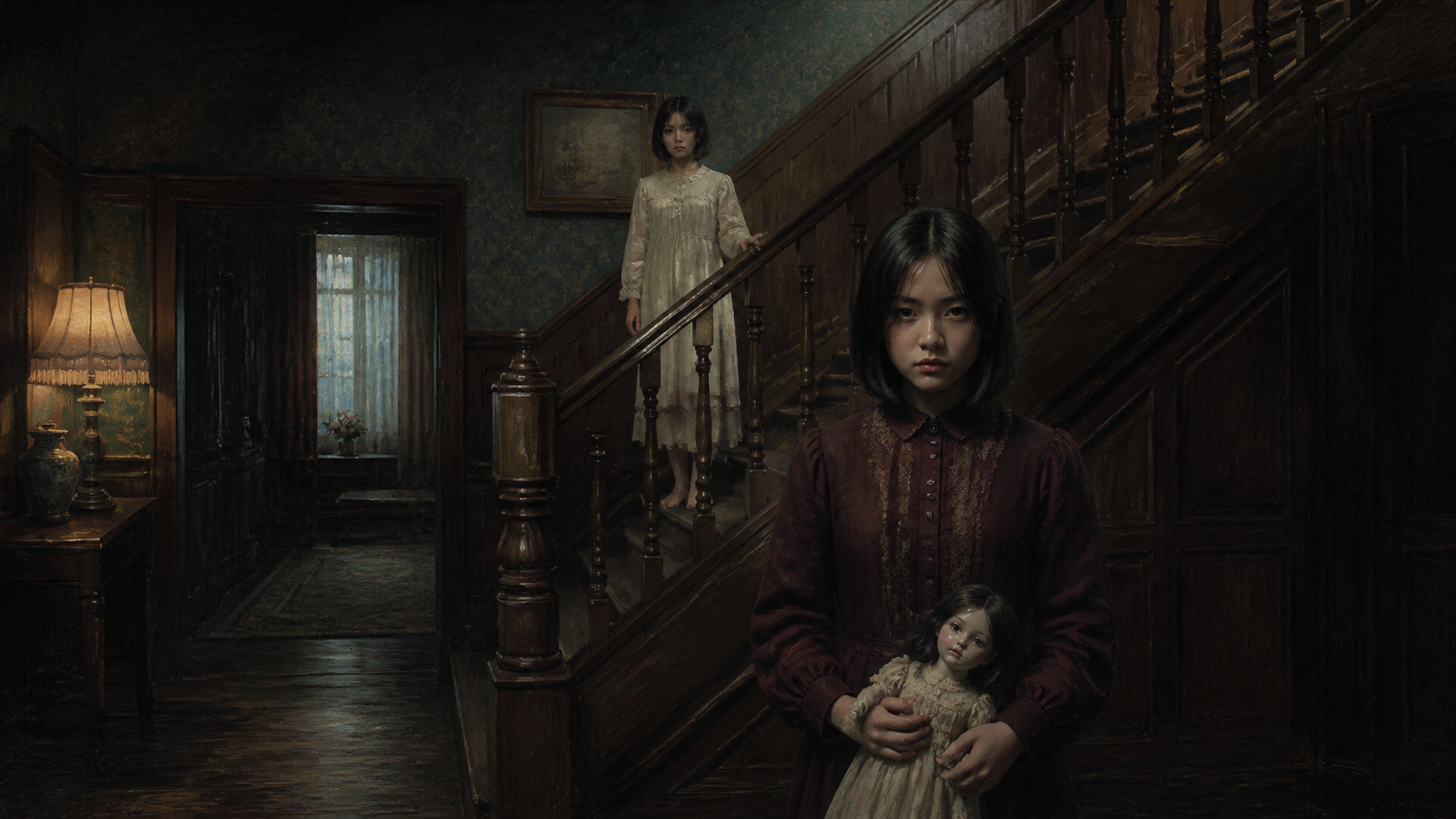
The Others is a 2001 gothic supernatural horror film set in a sealed country house on the fogbound Channel Island of Jersey, where a devout mother and her photosensitive children live under strict rules of darkness while unsettling disturbances suggest they may not be alone. Alejandro Amenábar’s appeal here lies in restraint rather than spectacle: it is a haunted-house story built from atmosphere, dread and moral pressure, with the pleasures of a puzzle box horror film that keeps most of its secrets intact until the right moment.
The Film File
- Original release year: 2001
- Director: Alejandro Amenábar
- Writer: Alejandro Amenábar
- Principal cast: Nicole Kidman as Grace Stewart; Christopher Eccleston as Charles Stewart; Fionnula Flanagan as Mrs Bertha Mills; Alakina Mann as Anne Stewart; James Bentley as Nicholas Stewart; Eric Sykes as Mr Edmund Tuttle; Elaine Cassidy as Lydia; Renée Asherson as the Old Lady
- Approximate runtime: 101 minutes
- Country of production: Spain, United States
- Relevant horror subgenres: gothic horror, supernatural horror, psychological horror, haunted house film
Behind the Screams
The Others was Amenábar’s first English-language feature, but it was not born as a Hollywood project. Contemporary reporting made clear that he originally developed the script in Spanish and intended to film it in Chile, before the project was reshaped for an English-speaking market after Tom Cruise championed Amenábar’s earlier work and became involved through Cruise-Wagner Productions. The shift in setting to Jersey and the wartime period was not a superficial relocation. It gave the film a more recognisably British Gothic frame, something Amenábar himself said he felt close to through his childhood reading of authors such as Agatha Christie and Enid Blyton.
The film’s clearest formal and narrative inheritance is Henry James, especially The Turn of the Screw, though the influence is broader than a single source. The BFI has described The Others as owing more to Henry James than to novelty, and as part of a late-1990s revival of understated supernatural horror alongside films such as The Blair Witch Project, Ring and The Sixth Sense. That matters because Amenábar is not chasing gore, nor is he parodying ghost-story conventions. He is working in a tradition of repression, ambiguous sightings and domestic unease, then tightening it into a modern studio production with a strong emphasis on performance and design.
Established production details are straightforward: Amenábar wrote and directed the film, also composing its music; Javier Aguirresarobe handled cinematography; and the principal cast was headed by Nicole Kidman, Christopher Eccleston and Fionnula Flanagan. The film’s production context is often discussed in terms of its transatlantic financing and its unusual route from a Spanish creative origin to an English-language international release. Less reliable are the more sensational anecdotes that sometimes cluster around the project, so the safest reading is to stick to what is firmly documented: a cross-border production that used a Spanish auteur’s sensibility to make a very British ghost story for a global audience.
Into the Dark
The story begins with austerity and fear. Grace Stewart keeps her children in near-total darkness because sunlight is dangerous to them, and the household runs on strict routines, locked doors and heavy curtains. The house is large, remote and oddly underpopulated, which is ideal territory for a horror film that wants every sound to feel loaded. When three new servants arrive, Grace attempts to restore order, but the house soon seems to generate its own disturbances: unexplained noises, doors that open, piano keys that sound, glimpses of figures where no one should be. Her daughter Anne insists she can see ghosts, while Grace struggles to decide whether she is confronting intruders, grief or something more uncanny.
What keeps the film moving is not action but escalation. Amenábar gradually enlarges the sense of threat by making the house itself feel like an argument between faith and doubt, control and exposure. Grace is not simply a frightened mother. She is rigid, devout and deeply convinced that she must protect her children at any cost, which turns ordinary domestic routines into matters of survival. That emotional structure gives the film a sharper edge than a generic haunted-house tale. Even before the supernatural elements fully assert themselves, the film has already established a tense moral atmosphere in which love and cruelty are uncomfortably close.
Spoilers ahead: the following paragraphs discuss major plot developments.
As the story progresses, the film reveals that its mysteries are not merely external. The servants’ presence, the family history and the house’s eerie manifestations all feed into a larger reconfiguration of what the audience has been led to believe. Grace’s certainty begins to collapse, and the film reorients its ghost story around revelation rather than discovery. By the end, the house is no longer just a setting but a chamber of recognition, where the living and the dead are forced to understand their positions in relation to one another.
The ending works because it does not simply spring a twist for its own sake. It recasts the earlier scenes in a way that changes the emotional meaning of Grace’s behaviour and the children’s terror. What initially reads as a fight against haunting becomes something sadder and more unsettling, a story about self-deception, denial and the difficulty of letting go. The film’s final movements are designed to make the audience reconsider where the real horror has been all along, and for viewers open to that kind of structural reveal, it is one of the film’s most effective qualities.
What Gets Under Your Skin
The film’s great strength is atmosphere. The Others is not trying to overwhelm you with mechanical shocks or elaborate creature effects. Its horror comes from enclosure, silence and the suspicion that rules designed to keep danger out may actually be trapping danger in with the family. Amenábar uses the old house formula with confidence, but the result is not a museum piece. The film feels disciplined, patient and emotionally driven, and that makes the scares land more cleanly when they arrive.
Nicole Kidman’s performance is central to this effect. Grace is written as severe, controlling and increasingly brittle, yet Kidman never plays her as a one-note tyrant. She lets the character’s fear, grief and religious conviction remain legible at the same time, which keeps the film alive even when the plot becomes more evidently schematic. Christopher Eccleston has less screen time than the film’s advertising might suggest, but his presence matters because the story is anchored in absence as much as presence. Fionnula Flanagan gives the film a different sort of authority, one that feels worldly and patient rather than defensive, and the children help the domestic stakes feel immediate rather than decorative.
Visually, the film is committed to darkness, but not in a lazy sense. The muted interiors, foggy exterior spaces and severe use of light and shade support the premise rather than merely illustrating it. This is a film about thresholds, and its production design treats doors, corridors, curtains and rooms as active parts of the drama. The house feels inhabited by memory as much as by apparitions, which is why the film’s supernatural elements have so much traction. It is not only asking whether ghosts exist. It is asking what people hide from themselves inside the architecture of family life.
Sound is equally important. The film relies on creaks, distant knocks, sudden silence and the uneasy rhythm of things almost, but not quite, explained. Amenábar’s own score contributes to the mood without overwhelming it. The horror is restrained, but that restraint is a choice, not a limitation. This is a film that trusts implication, which suits adult horror fans who enjoy suspense, thematic depth and a slow tightening of dread more than constant jolts.
If there is a limitation, it is that the film’s elegance can sometimes make it feel more controlled than shocking. Some viewers will find the pacing measured to the point of deliberation, and those expecting a more ferocious supernatural film may be left wanting sharper turns or broader emotional release. But within its chosen mode, The Others is impressively exact. It knows what kind of fear it is pursuing, and it pursues it with discipline.
The Film’s Afterlife
On release, the film was strongly received and became a sleeper hit in the United States, with contemporary coverage noting Oscar attention for Kidman and Amenábar. Its later reputation has settled into something more durable than a mere twist-ending curiosity. The BFI has placed it among notable haunted-house films and framed it as part of a broader revival of atmospheric supernatural horror. That seems apt. It is not the sort of title that changed horror forever, but it remains a widely discussed example of how a classical ghost story can be made to feel sleek, intelligent and unsettling without losing its old-fashioned pulse.
Horripilations Verdict
A beautifully controlled haunted-house chiller that turns restraint into tension and melancholy. It is most effective as atmosphere-first Gothic horror, strengthened by Kidman’s performance and Amenábar’s disciplined storytelling.
What works
- Rich, sustained atmosphere
- Strong central performance from Nicole Kidman
- Elegant use of Gothic mystery and emotional unease
What holds it back
- Measured pacing may feel too restrained for some viewers
- The film’s precision can make the scares feel less visceral than its reputation suggests