The Strangers is the 2008 home-invasion horror film written and directed by Bryan Bertino, a lean, nasty piece of stalking-terror cinema built around the simple nightmare of a couple trapped in a remote house and harried by three masked intruders. Its appeal lies in how little it explains and how much it withholds: the film turns ordinary domestic space into a place of helpless exposure, using mystery, silence and sudden violence rather than supernatural lore or elaborate mythology.
The Film File
- Original release year: 2008
- Director: Bryan Bertino
- Writer: Bryan Bertino
- Principal cast: Liv Tyler as Kristen McKay; Scott Speedman as James Hoyt; Gemma Ward as Dollface; Kip Weeks as The Man in the Mask; Laura Margolis as Pin-Up Girl; Glenn Howerton as Mike
- Approximate runtime: 86 minutes for the theatrical cut; 88 minutes for the unrated cut
- Country of production: United States
- Relevant horror subgenres: home invasion, slasher, psychological horror, mystery thriller
Behind the Screams
The Strangers was Bertino’s feature directorial debut, and it comes from an original screenplay rather than an adaptation. The film was marketed with the provocative claim that it was inspired by a true story, but that phrasing should be understood as a dramatic framing device rather than a literal reconstruction of one case. Bertino has said the material grew out of childhood memories of a home break-in attempt near where he lived, alongside broader fears about random intrusion and the kind of violence that feels both arbitrary and intimate. The finished film carries that source of anxiety into a stripped-down narrative structure: no elaborate criminal conspiracy, no occult explanation, no heroic countermeasure waiting in the wings.
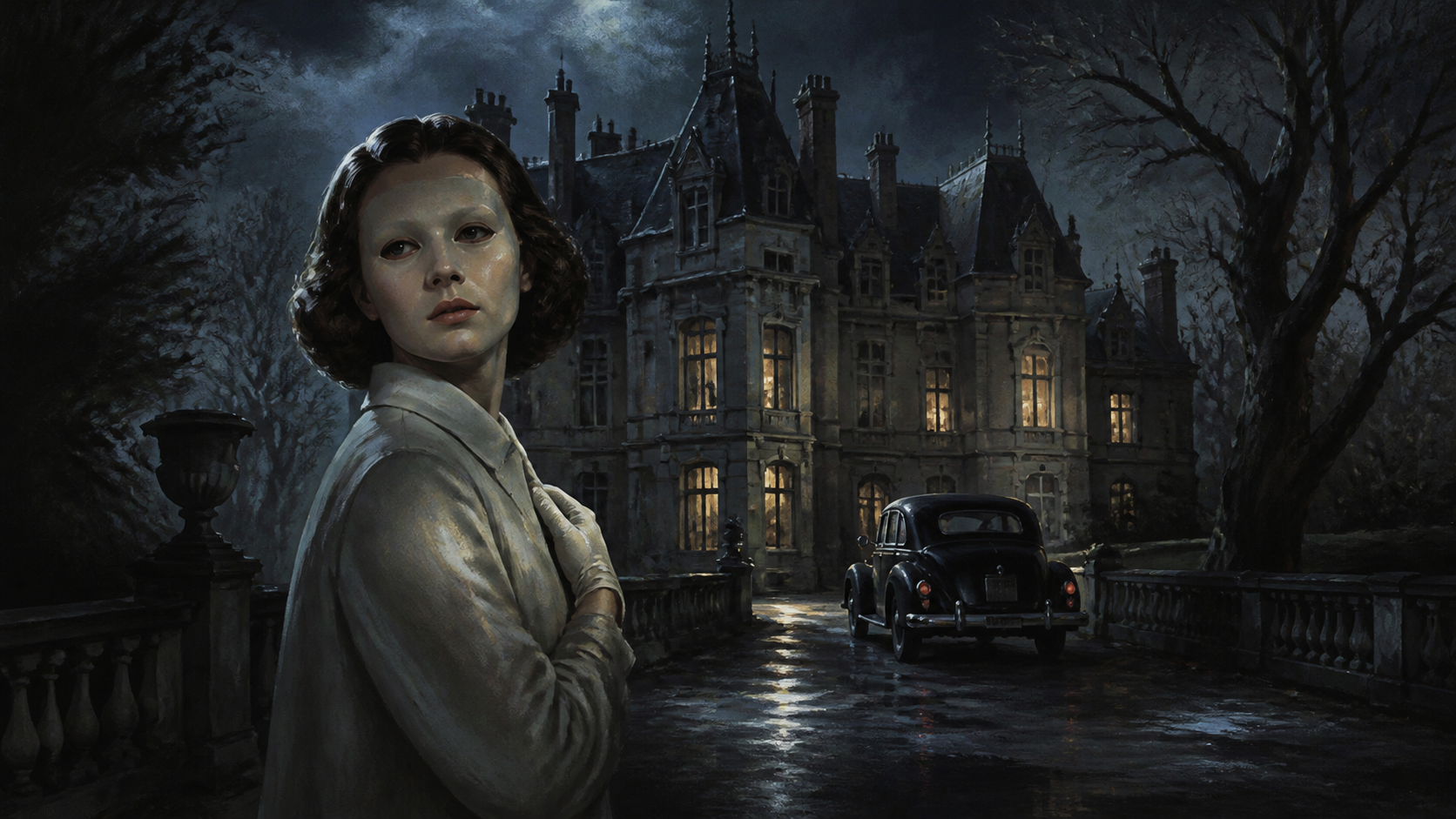
The production also makes a notable creative choice in withholding the intruders’ backstory. That decision is not a lack of world-building so much as the film’s governing principle. By refusing to over-explain the attackers, Bertino keeps the focus on the couple’s increasing isolation and on the sheer fact of being selected for harm. The film’s masked figures are not treated as puzzle pieces to be solved; they function as agents of random threat, which is a different kind of horror from the more detective-like mysteries common to the genre. The masks themselves, especially the doll-faced and pin-up imagery, give the violence a grotesque, impersonal theatre, stripping the attackers of recognisable identity while making them more unnerving.
The casting is central to the film’s effect. Liv Tyler and Scott Speedman anchor the story as an ordinary couple whose relationship has already been bruised before the terror begins, which gives the invasion an extra layer of emotional fracture. The film also uses the presence of a small supporting cast with precise, functional roles to keep the narrative tight. There is little spare exposition, and that economy is part of the design: the film is built to move from domestic awkwardness to dread to siege without detouring into procedural logic or rescue-fantasy comfort.
Into the Dark
Kristen and James arrive at a secluded holiday house after a strained evening, hoping for a quiet break that never quite settles into ease. Before long, a masked woman begins appearing around the property, and the couple’s discomfort turns into alarm as the house reveals itself to be exposed, isolated and vulnerable. What starts as an uneasy interruption becomes a prolonged invasion of privacy and control, with the attackers testing boundaries, cutting off normal avenues of help and forcing the pair into a state of panicked improvisation.
The film works because it keeps the conflict simple and comprehensible. The couple are not fighting a supernatural force or an abstract evil. They are trying to survive a targeted, physical assault in a setting that ought to feel safe. As the night progresses, the attackers repeatedly reassert dominance over the space, and the house itself becomes a trap: a place whose doors, windows and corridors offer only temporary advantage. The story’s tension comes from the gap between what the characters can understand and what they can do about it. They do not know who the intruders are, why they have chosen them, or whether the violence has any limit.
Spoilers ahead: the following paragraphs discuss major plot developments.
One of the film’s cruellest turns is that the couple’s sense of danger is constantly reshaped by confusion. After a friend arrives and is mistaken for a threat, the resulting violence only deepens the couple’s vulnerability, because it proves how quickly fear can become irreversible action. The intruders then return with more direct force, and the film converts the house from a place of hiding into a place of ordeal. Kristen is left to endure repeated assaults and manipulations, while James’s efforts to help collapse under the sheer imbalance of power and the intruders’ control of time, space and noise.
What matters about the ending is not a puzzle-box solution but the emotional aftermath of arbitrary violence. The attackers do not arrive with a moral lesson or a clear vendetta. Their cruelty is precisely what makes them frightening: they seem to attack because the victims are there, available and defenceless. That bluntness is thematically important. It leaves the characters, and the audience, with no satisfying explanatory frame, only the experience of vulnerability and survival by accident rather than design.
What Gets Under Your Skin
The film’s atmosphere is its strongest weapon. Bertino understands that home invasion horror becomes most effective when the ordinary and the unsafe are almost indistinguishable, and he lets the house sit in that uneasy middle ground for a long time. The result is not a barrage of shocks but a sustained pressure. Quiet stretches matter here because they force the audience to sit with the possibility of intrusion, and when violence arrives, it feels less like a twist than the fulfilment of an already established fear.
Performance is crucial to that effect. Tyler does a great deal with uncertainty, irritation and growing panic, making Kristen feel like a person whose composure is gradually worn away rather than someone engineered to be resilient. Speedman gives James a more reactive energy, which suits a character whose attempts at control are repeatedly undercut by bad timing and escalating fear. Their dynamic helps the film avoid turning into a generic prey-and-predator exercise. Even when the characters make bad decisions, the performances preserve their recognisable human frustration.
Visually, the film leans on clear spatial logic rather than decorative excess. The masked figures are effective because they are seen in a context that feels plausible and domestic, not because they are surrounded by stylised spectacle. That restraint matters. The imagery is memorable without becoming flamboyant, and the film’s horror comes from the contrast between mundane surroundings and abrupt violations of that mundanity. Sound design does much of the heavy lifting too: the film repeatedly uses absence, interruption and the threatening possibility of off-screen movement to create unease. The attacks often feel closer than they look.
As horror, the film is notably unsentimental. It does not try to make the violence meaningful in a therapeutic or mythic sense, and that refusal can be bracing. At the same time, its stripped-down approach means that character depth is intentionally limited. The couple are sketched effectively, but the film is interested less in psychological excavation than in the mechanics of fear under siege. For viewers who want a richer emotional or social texture, that can feel slight. For viewers who want a clean, tense home-invasion nightmare, the simplicity is the point.
The Film’s Afterlife
The Strangers was a commercial success relative to its modest scale and developed a strong reputation as a compact, grim home-invasion film. Critical response at the time was mixed, with praise commonly directed at its tension and performances, and criticism often aimed at the thinness of its narrative. Over time, however, it has become one of the more frequently cited modern home-invasion titles, in part because its premise is so stripped to essentials that it remains easy to remember and easy to invoke when talking about domestic vulnerability in horror.
The film also generated a franchise, with sequels extending the premise in different directions. That continuation matters because it underlines how durable the original concept proved to be, even if the first film’s power lies partly in its refusal to over-explain itself. Its legacy is therefore less about lore than about a very specific brand of fear: the sense that safety can be interrupted by strangers who need no reason you can understand.
Horripilations Verdict
A stripped-down home-invasion thriller that understands how to turn domestic space into a sustained nightmare. It is strongest when it trusts silence, performance and spatial uncertainty, and it remains disturbing precisely because it refuses to dress its violence in elaborate explanation.
What works
- Lean, controlled suspense
- Strong central performances
- Memorable masked intruders and clear horror concept
What holds it back
- Character psychology is intentionally limited
- The minimalism may feel slight to viewers wanting deeper narrative elaboration