Released in 1960, Eyes Without a Face is Georges Franju’s unsettling French horror film about a surgeon who becomes obsessed with restoring his daughter’s ruined appearance. The premise sits between medical dread, gothic melodrama and body horror, but what gives the film its distinctive pull is the way it pairs surgical cruelty with a strangely mournful, almost dreamlike mood. It is not built around shocks alone. Instead, it turns obsession, guilt and the fragility of identity into something cool, elegant and quietly horrifying.
The Film File
- Original release year: 1960
- Director: Georges Franju
- Credited writers: Jean Redon, Pierre Boileau, Thomas Narcejac
- Principal cast: Pierre Brasseur as Dr. Génessier; Alida Valli as Louise; Edith Scob as Christiane Génessier; François Guérin as Jacques Vernon; Juliette Mayniel as Edna Grüber; Alexandre Rignault as Detective Parot; Béatrice Altariba as Paulette Mérodon
- Approximate runtime of this version: 90 minutes
- Country of production: France
- Relevant horror subgenres: body horror, gothic horror, mad scientist horror, psychological horror
Behind the Screams
Eyes Without a Face comes from a 1959 novel by Jean Redon, whose story supplied the basic framework of a surgeon driven to extreme measures in pursuit of medical restoration. The screenplay was credited to Redon, Pierre Boileau and Thomas Narcejac, the crime writers later associated with Vertigo and Diabolique, while Georges Franju shaped the material into something more austere and uncanny than a straightforward shocker. Maurice Jarre’s score, Eugen Schüfftan’s black-and-white cinematography and Edith Scob’s performance all became central to the film’s identity rather than decorative additions.
Franju was already known for work that moved between documentary observation and lyrical unease, and that tension is important here. The film’s famous mask and clinical imagery are not merely sensational props. They are part of a precise visual strategy that keeps the body at once present and denied. The production also drew on practical effects and makeup work that had to support a story about facial reconstruction, disfigurement and operating-room procedures without tipping the film into comic excess. That balance is one reason it still feels distinct from both lurid exploitation and more conventional prestige horror.
Several later accounts have treated the film as a precursor to a whole strain of elegant European horror, and that is reasonable as an influence claim, but the more concrete historical point is simpler: Franju and his collaborators made a film that joined genre material to art-cinema form in a way that was unusual for its time. The result was not a compromise between seriousness and horror, but a horror film whose seriousness is part of the unease.
Into the Dark
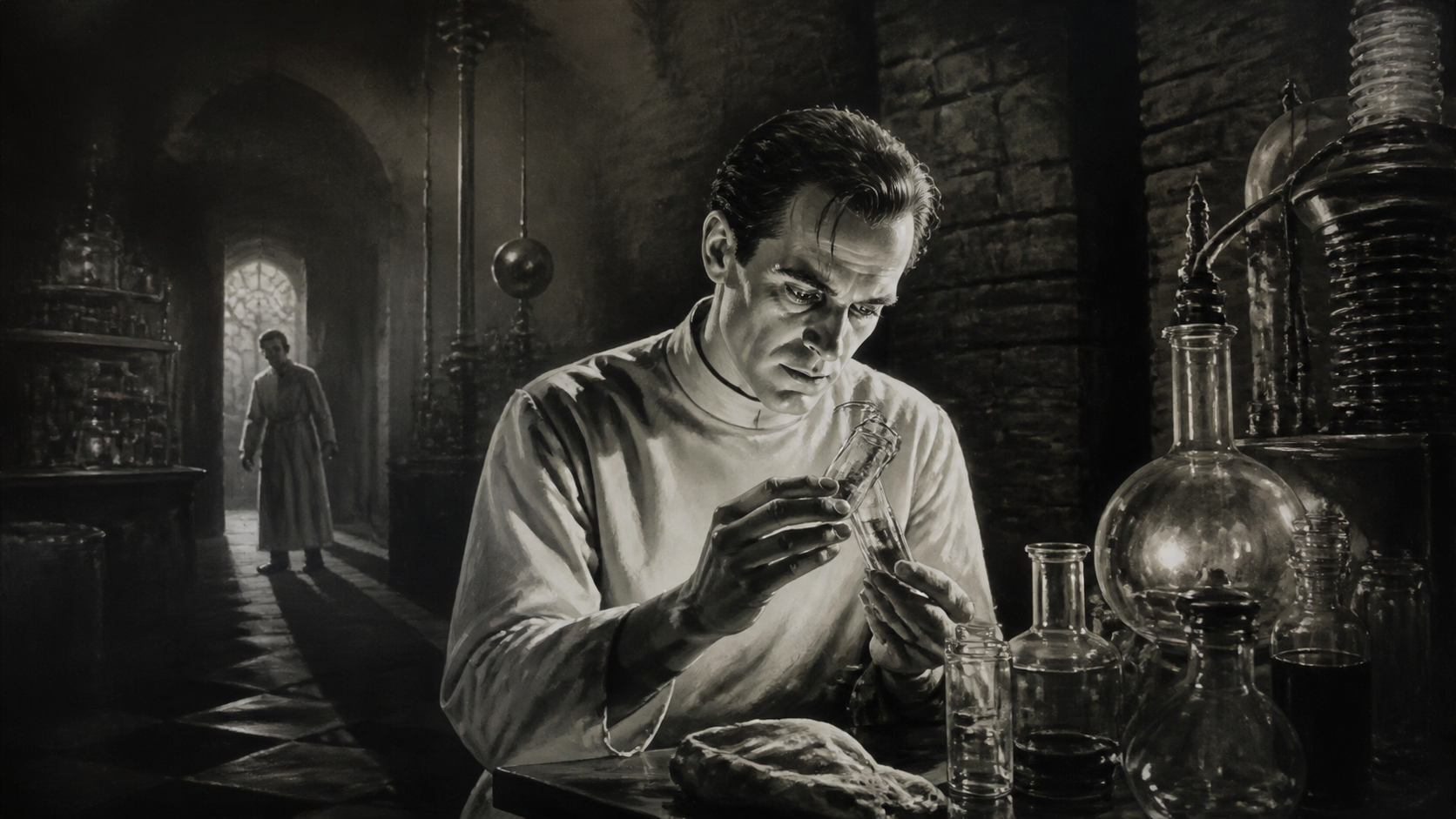
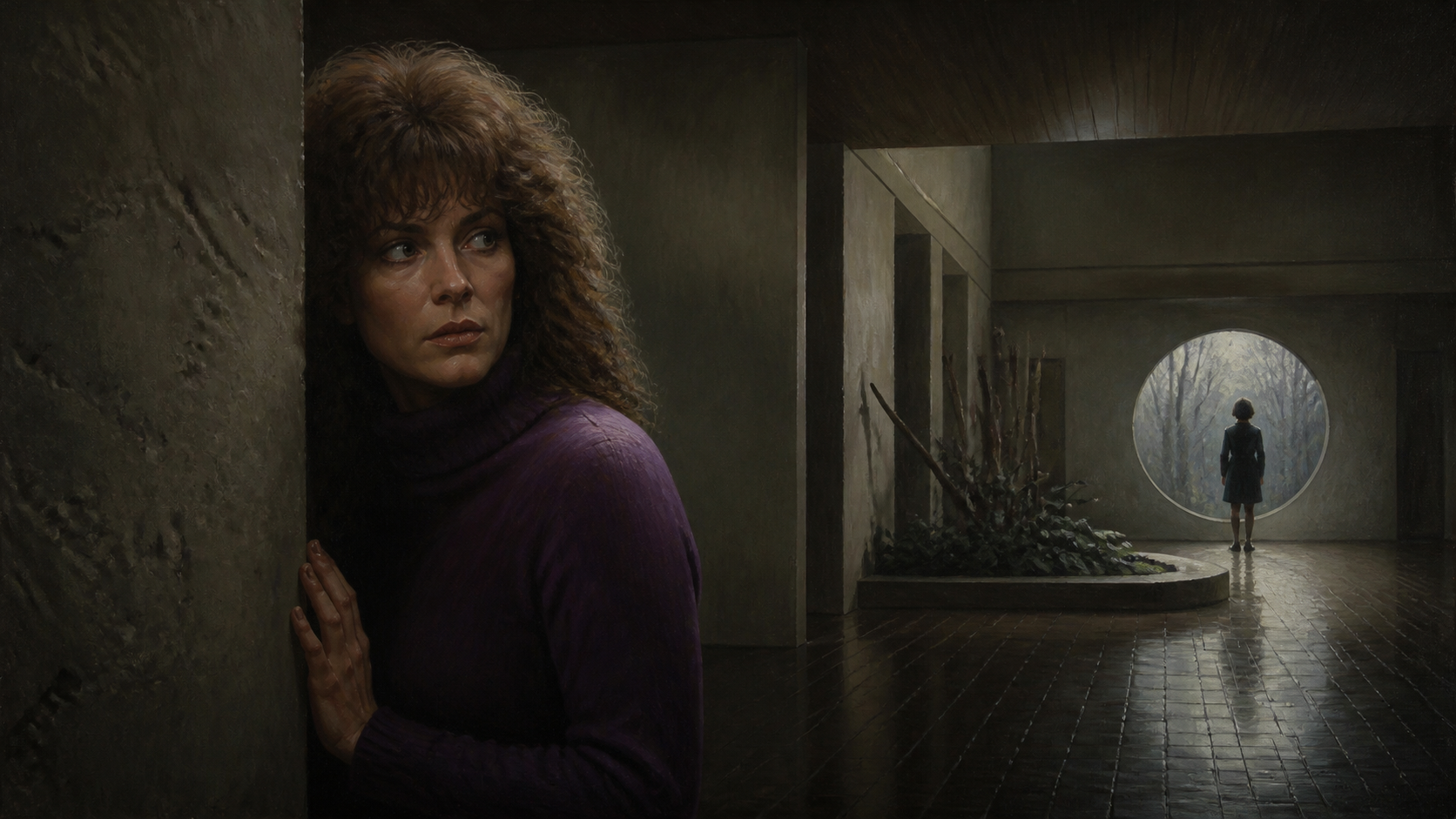
Dr. Génessier is a celebrated surgeon whose professional authority conceals a private fixation. His daughter Christiane has been disfigured in a car accident, and he has gone to extraordinary lengths to repair her face. Those efforts involve the help of his assistant Louise, who assists him in a pattern of kidnapping young women so that he can attempt skin grafts and transplants in secret. Christiane, meanwhile, lives under strict isolation, hidden behind a smooth white mask that makes her both iconic and pitiable. Her father’s obsession is presented not as care but as domination, and the home becomes an extension of the operating theatre.
As the film progresses, the pressure of that arrangement begins to tighten from two directions. Outside the house, police scrutiny starts to circle the disappearances. Inside it, Christiane’s position becomes harder to contain, because the mask preserves her anonymity while also stripping away her ordinary social life. The film develops its conflict from that contradiction: a father who claims to be restoring his daughter’s humanity while reducing her to a project, and a daughter who has survived physically but is trapped in a system that denies her agency. The horror lies not just in the procedures themselves, but in the logic that makes them seem, to Génessier, like an extension of paternal duty.
What Gets Under Your Skin
The film’s atmosphere is one of its most striking qualities. Franju does not rush the material, and that patience matters. The horror emerges from the contrast between clinical spaces and the soft, almost melancholy fragility of Christiane’s presence. Instead of surrounding every disturbing moment with noise and hysteria, the film often lets the images sit in a controlled stillness. That restraint gives the violence greater force, because the audience is given time to absorb the emotional logic of what is happening before the film moves on.
Edith Scob is the film’s emotional centre. Much of what makes Christiane work is physical, not verbal: the mask, the stillness, the sense of someone trying to remain composed while her life is being managed by others. Pierre Brasseur brings real severity to Génessier, who could have become merely monstrous but instead feels chillingly convinced of his own righteousness. Alida Valli, as Louise, is also crucial because she gives the house a colder kind of menace. The film is strongest when it makes clear that this is not a lone madman story. It is a system of complicity, service and dependence.
Visually, Eyes Without a Face is memorable for the way it keeps beauty and horror in the same frame. The black-and-white photography lends the film a sculpted quality, but the images are not polished into comfort. The mask itself is one of horror cinema’s most recognisable objects because it does so much work at once: it hides injury, denies expression, suggests purity and makes Christiane look both spectral and imprisoned. The surgical material is important, but the film’s deeper horror comes from a more intimate place, where the body is treated as a thing to be fixed, owned and edited.
The soundscape and score support that mood rather than overpower it. Jarre’s music gives the film an eerie elegance, helping to turn moments of cruelty into something almost funereal. That musical choice is part of why the film feels unusual even now. It is not trying to batter the viewer into submission. It keeps a composed surface while the story beneath it becomes increasingly appalling. That makes the film less sensational than some later body horror, but not less disturbing. In fact, the calmness is part of the disturbance.
The horror is also sharpened by the film’s moral economy. Génessier is not presented as a flamboyant monster who announces his evil in broad strokes. He is a man of skill, status and certainty, and the film understands how terrifying that can be. Christiane’s situation gives the story a tragic dimension, but Franju does not sentimentalise her. She is not simply a victim waiting to be saved. She is a trapped person whose interior life is gradually brought to the surface, and that makes the film more affecting than a pure mad-doctor thriller.
One of the film’s smartest choices is to let its narrative remain compact. It does not need elaborate mythology or a long chain of explanations. The premise is enough, because the emotional and ethical consequences are so clear. This gives the story a grim efficiency. Every scene seems to tighten the same knot: paternal obsession, bodily violation, secrecy and the impossibility of restoring what has been lost without causing further harm. That thematic coherence is a major reason the film continues to hold attention even for viewers already familiar with its reputation.
The Film’s Afterlife
Eyes Without a Face was not originally a straightforward crowd-pleaser, but its reputation grew steadily. It is now commonly treated as a major horror landmark, especially for the way it merges arthouse sensibility with surgical, bodily unease. Later criticism and repertory programming have repeatedly returned to it as an influence on European horror, body horror and films that use clinical imagery to probe identity rather than merely to generate shocks. Its title, mask and operating-room imagery have all proved unusually durable in horror memory.
The film’s afterlife also rests on the sense that it opened a path for horror that could be elegant without losing its menace. That is not the same as saying it spawned a neat franchise or a direct line of imitators, but it did help establish a template for horror that is emotionally cool, visually refined and morally queasy. For viewers drawn to horror that is as much about damage, control and identity as it is about gore or jump scares, it remains an essential title.
Horripilations Verdict
A refined, haunting horror film that fuses surgical nightmare with tragic melancholy. Its cool control, unforgettable mask imagery and moral unease make it far more than a vintage curiosity.
What works
- Edith Scob's haunting, controlled performance
- Elegant black-and-white visual design
- Aqueous blend of body horror and tragedy
What holds it back
- Some viewers may want a more aggressive pace
- Its restraint can feel remote if you expect a more visceral modern style