The Other is the 1972 American psychological horror film directed by Robert Mulligan and adapted by Thomas Tryon from his own novel. Set on a rural Connecticut farm in the summer of 1935, it centres on identical twin brothers whose private games and unspoken fears begin to curdle into something far more troubling. Rather than leaning on shocks or overt monsters, it draws its dread from childhood imagination, family grief and the possibility that a child’s inner life may be more dangerous than any local folklore. Its appeal lies in the tension between sunlit Americana and a creeping, deeply personal unease that never entirely announces itself.
The Film File
- Original release year: 1972
- Director: Robert Mulligan
- Screenplay: Thomas Tryon
- Principal cast: Uta Hagen as Ada; Diana Muldaur as Alexandra; Chris Udvarnoky as Niles Perry; Martin Udvarnoky as Holland Perry; Norma Connolly as Aunt Vee; Victor French as Angelini; Loretta Leversee as Winnie; Lou Frizzell as Uncle George; Portia Nelson as Mrs Rowe; John Ritter as Mr Paskins
- Approximate runtime: 108 minutes
- Country of production: United States
- Relevant horror subgenres: psychological horror, gothic horror, child horror, rural horror
Behind the Screams
The Other began as Thomas Tryon’s 1971 novel, which he adapted himself for the screen. Tryon was already known as an actor before turning to writing, and the film represents an unusually direct transfer from page to screen: the source material is not merely credited, but shaped by the same author who supplied the screenplay. Robert Mulligan, whose earlier work often explored childhood perception and emotional fracture, was a fitting choice for a story that depends on the gap between what children do, what adults suspect and what the audience is allowed to understand.
The film was produced by Robert Mulligan for 20th Century Fox and set in a carefully evoked rural world that feels both domestic and slightly unreal. That balance matters. The story is anchored in a recognisable Depression-era farm community, but the tension comes from the way ordinary spaces, fields, houses, barns, wells and kitchens, become charged with private ritual and hidden menace. The setting is not decorative; it is part of the film’s method, helping the horror feel rooted in memory rather than in an external supernatural system.
One of the most notable production facts is the casting of the Udvarnoky twins, Chris and Martin, as Niles and Holland Perry. Their performances are central to the film’s effect because the drama depends on doubling, resemblance and subtle behavioural difference. Uta Hagen’s presence is also significant: The Other was her feature-film debut, and her role as Ada gives the film a strong emotional anchor, especially in the scenes where the family’s household rituals seem to compensate for losses that are never fully spoken aloud. Diana Muldaur brings a more grounded counterweight as Alexandra, the mother figure who has to move through a house and family dynamic already distorted by grief.
What emerges from these creative choices is a film less interested in spectacle than in psychological displacement. The adaptation keeps the novel’s focus on interior disturbance, but the screen version leans especially hard on performance and atmosphere, allowing uncertainty to accumulate through behaviour, pauses and the social texture of the farm rather than through explanatory dialogue. That restraint is one of the film’s defining decisions, and it is also the reason the eventual escalation lands with such force.
Into the Dark
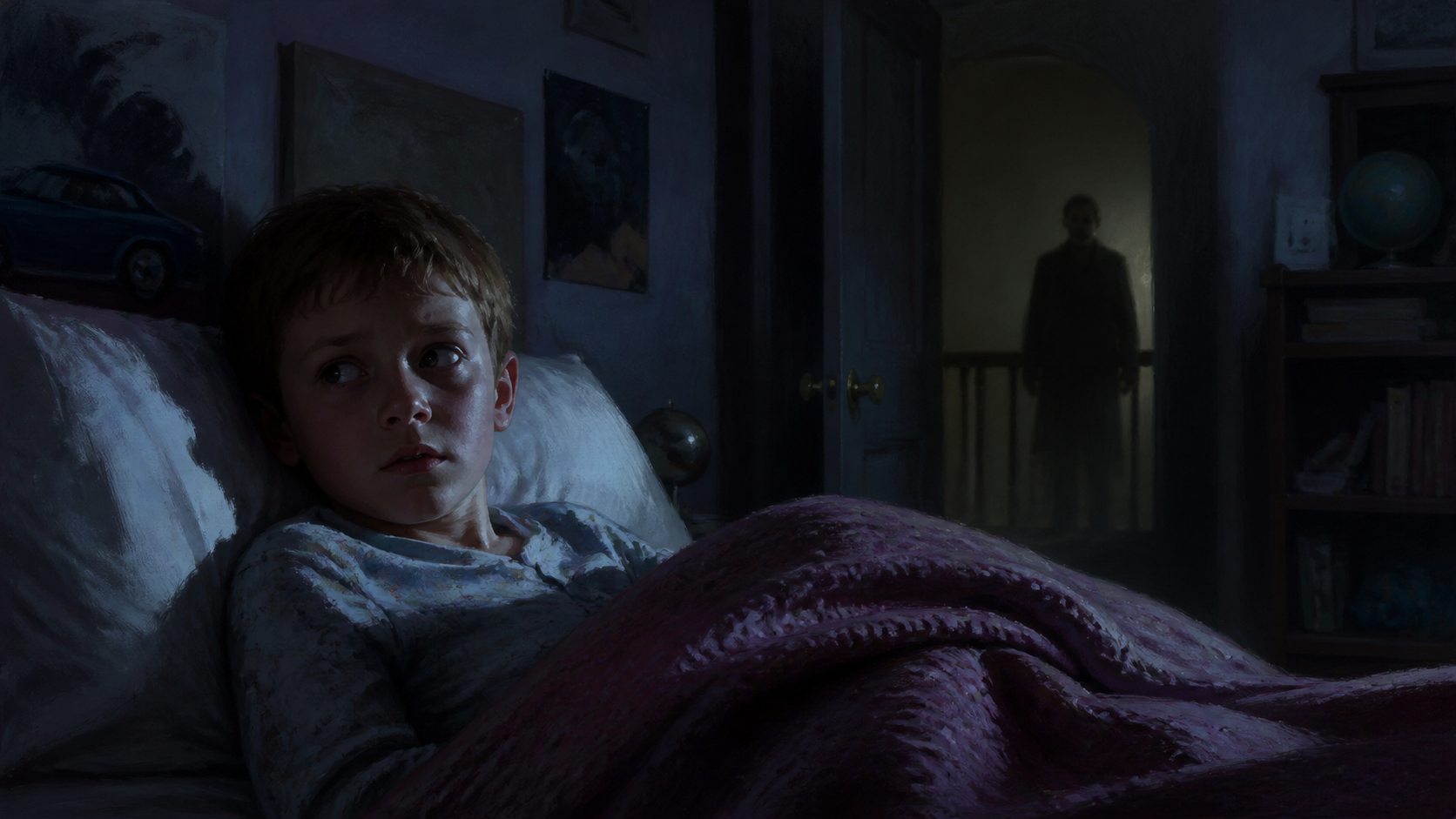
The story follows the Perry family during one long, hot summer. Twelve-year-old twins Niles and Holland are outwardly alike, but they are not socially or temperamentally identical. Niles is quiet, observant and eager to please; Holland is more reckless, manipulative and thrillingly cruel, at least as the family understands him. Their grandmother Ada, a Russian immigrant who treats intuition, folklore and instinct as practical tools, is especially attuned to the darker possibilities in the boys’ behaviour. Around them, the family’s adults are already strained by grief, illness and the responsibilities of the farm, which means there is little emotional slack when unsettling incidents begin to mount.
At first, the film plays like an accumulation of oddness. Animals die. Small accidents become harder to dismiss. The boys’ games feel increasingly secretive. Niles in particular appears to move through the household with a strange combination of innocence and knowledge, while Holland’s influence is felt even when he is not physically present. The film carefully withholds certainty about what is happening, using the family’s private routines and the children’s bond to keep the story unstable. The result is not a procedural mystery, but a domestic nightmare in which the audience is asked to notice how often danger hides behind childish language or family habit.
Spoilers ahead: the following paragraphs discuss major plot developments.
As the story unfolds, it becomes clear that the brothers’ relationship is not simply competitive or imaginary. Holland has in fact died, and Niles has been living inside a world shaped by denial, ritual and a complete misreading of what his mind can bear. The twin who seems to be present throughout the film is a continuing expression of Niles’s fractured psyche, one in which grief, guilt and wish fulfilment have taken on the force of a second personality. The horror is therefore not that a ghost has returned to torment the family, but that the family has been living inside a child’s catastrophic attempt to preserve what cannot survive.
This shift gives the final stretch its real power. Ada’s knowledge of folklore and hidden things does not make her a sorceress in any simple sense; rather, she is the only one who seems prepared to recognise that the situation is spiritually and psychologically unstable. The ending is devastating because it does not solve the problem so much as reveal the extent of it. What the film has been staging as uncanny external threat is finally understood as a breakdown within the child’s own perception, and the last events recast earlier scenes as part of a grief-soaked delusion that has become lethal. That revelation gives the film its tragic shape, because the danger is inseparable from the boy’s inability to process loss.
What Gets Under Your Skin
The Other is most effective when it lets horror grow out of uncertainty rather than out of incident. The film’s atmosphere is rooted in contradiction: the countryside is bright, fertile and orderly, yet the story keeps finding ways to make it feel closed-in and haunted. This is not a world of elaborate gothic architecture or overtly theatrical menace. Instead, the fear comes from the way a family home can become unreadable when private trauma is left to ferment underneath everyday behaviour. That makes the horror intimate rather than grand, and all the more unsettling for it.
The performances are crucial to that effect. Chris and Martin Udvarnoky are asked to do something difficult: to make identical boys feel different without turning either into a caricature. Chris, as Niles, carries much of the film’s emotional burden, and his performance works because it is so often subdued. He does not play madness as overt eccentricity. He plays a child who appears to be trying very hard to remain acceptable, even while the audience can feel that some internal pressure is becoming unbearable. Uta Hagen gives Ada an authority that keeps the film from drifting into sentimentality. She is warm, yes, but also stern, watchful and capable of reading what others miss. Diana Muldaur, meanwhile, gives the mother figure enough fatigue and fragility to make the household feel genuinely precarious.
Visually, the film is careful rather than flashy. Its period detail matters because it keeps the story grounded in a physical world of chores, weather, domestic labour and animal life. The horror is heightened by the fact that so much of this world appears stable and legible. When dread enters, it therefore feels like a contamination of something familiar rather than a break from it. That is especially important in a film about childhood perception, where what is seen and what is believed are never perfectly aligned. The movie’s imagery often suggests the pressure of a memory trying to organise itself around something unbearable.
The soundscape and pacing support that strategy. The film does not barrage the viewer with constant alarm. Instead, it allows silence, routine and repetition to do much of the work. This restraint is well judged, because the story depends on a gradual loss of confidence in the ordinary. By the time violence or death becomes explicit, the film has already taught the audience to distrust the calm spaces around it. The result is horror that feels earned through accumulation. It is more disturbing for the way it redirects sympathy than for any single visual shock.
That said, The Other is not a film that treats ambiguity as a substitute for clarity. It does eventually explain itself, and once it does, the shape of the tragedy becomes quite precise. Some viewers may find the narrative’s shifts a touch mannered, especially if they are expecting a more straightforward supernatural tale. But the film is aiming for something more exacting than a simple twist: it is building an account of childhood, grief and self-protective fantasy in which the horror comes from emotional logic as much as from plot mechanics. Judged on those terms, it is unusually disciplined.
The Film’s Afterlife
Contemporary responses were generally attentive to the film’s unusual tone, with later commentary often focusing on its beauty, melancholy and psychologically driven dread rather than on conventional shocks. In retrospect, it has come to be valued as a thoughtful example of early-1970s American horror that sits closer to tragic family drama than to monster movie territory. Its reputation rests less on influence in the broad commercial sense than on the specificity of its approach: child perspective, rural unease and grief-led horror handled with unusual seriousness. It also remains notable as one of the more distinctive adaptations of a horror novel written by its own author for the screen.
Horripilations Verdict
A quietly devastating psychological horror film that turns childhood grief into something far more corrosive than a simple twist ending. Its performances and mood are its great strengths, and its restraint is largely a virtue.
What works
- Chris Udvarnoky’s unnerving central performance
- Uta Hagen’s commanding emotional anchor
- The film’s sad, tightly controlled atmosphere
What holds it back
- A few viewers may find its gradual method too measured
- The final explanation is powerful but slightly reduces the earlier ambiguity