Echoes of Silence
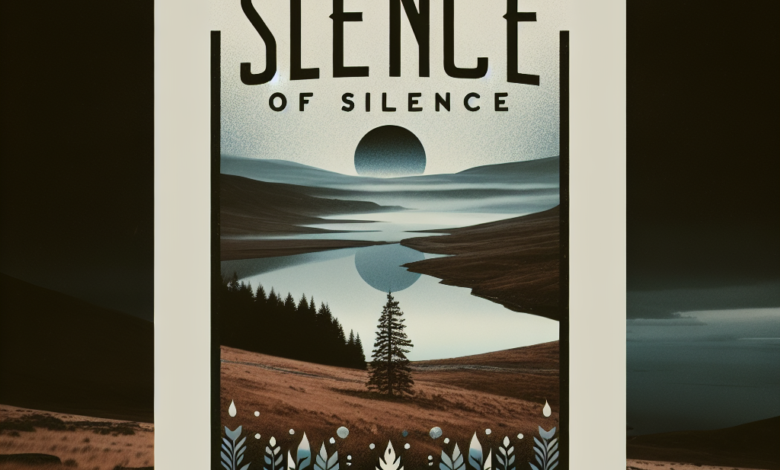
The village of Elderswick was the sort of place that rarely found its way into the pages of history books, its quiet streets and picturesque cottages tucked away from the world’s prying eyes. It sat on the cusp of the moors, surrounded by thick woods that whispered secrets in the wind. The villagers, with their weathered faces and cautious smiles, had a rhythm of life that revolved around the seasons and the stubborn traditions that had been passed through generations. But beneath the surface of this seemingly idyllic existence lay a darkness that none dared to confront—the echoes of silence that haunted the very air they breathed.
It was in early autumn when the last of the Jacobs family departed for the city, leaving behind their family cottage on the edge of the village. The Jacobs were well-liked, known for their stories about the old ways, and their departure left a palpable void in Elderswick. There was something unsettling about their departure; it was as if the very essence of their warmth had been drained, leaving nothing but a chill in its wake. The cottage, with its ivy-clad walls and sunlit garden, stood empty now, a shrine to forgotten tales and broken connections.
As the days slipped into weeks, the silence that enveloped Elderswick grew heavier. The villagers busied themselves with daily chores, but often their conversations fell flat, each word echoing in the empty squares and cobbled streets. It was as if the village itself held its breath, waiting for something that was bound to happen—or something that had already happened, buried deep beneath the surface.
Among those affected by the vacuum of absence was Clara, a young artist who had moved to Elderswick to find inspiration amid its rustic charm. She had sought solace in the quiet of the village, its serene landscapes offering a stark contrast to the chaotic world beyond. However, as the darkness of autumn encroached, her easel began to collect dust, the vibrant colours of her palette fading into a palette of greys and browns. She felt the gravitational pull of the empty Jacobs cottage and could not shake the feeling that she was being watched.
One evening, Clara resolved to paint the cottage, intrigued by its haunting beauty. The sun hovered low on the horizon, casting long shadows that danced across the ground as she trekked down the narrow lane. The chill in the air bore a sense of urgency, as if the very atmosphere vibrated with something unnameable. Upon reaching the cottage, she hesitated at the gate, feeling the weight of unseen eyes upon her. There was a stillness, and for a moment, Clara thought she heard a whisper carried in the breeze. She shook her head, dismissing it as her imagination, and set up her canvas.
As she painted, the minutes turned to hours. The setting sun bled into the sky, leaving behind a wash of crimson hues that seemed almost alive. As darkness fell, the world around her took on a different quality. The silence grew deeper, wrapping around Clara like a heavy cloak. And then, in the heart of that silence, she thought she heard it again—an echo of voices, soft and distant, calling from the depths of the cottage.
With a beating heart and trembling hands, Clara set her brush down. She peered into the darkness of the cottage, the windows like soulless eyes staring back at her. Curiosity danced alongside trepidation, urging her to step inside, to unveil whatever lay hidden within. She pushed open the creaking door, its hinges protesting as if warning her to turn back. The air inside was thick with dust, and the scent of decay lingered, mingled with something sweeter, almost floral.
Clara’s footsteps echoed as she moved through the dim hall, her breath hanging visibly in the cold air. The walls were adorned with faded photographs—ghostly images of the Jacobs family in happier times. They seemed to stare down at her, their faces frozen in expressions of joy, yet behind their smiles lay a profound melancholy. She felt a chill crawl up her spine, but still, she ventured deeper, drawn by the whispers lingering in the corners of her mind.
In the small sitting room, she discovered an old grandfather clock, its pendulum stilled in time. Intrigued, Clara approached it, examining the intricate carvings that adorned its surface. But as she reached out to touch it, a sudden chill swept through the room, and the murmurs escalated, transforming into distinct voices. They were pleading and mournful, weaving a tapestry of desperation that wrapped around her like a sinister embrace.
“Help us,” they called, resonating through the silence. “Find us.”
Clara stumbled back, heart racing, the spectres of fear and confusion overwhelming her. Yet despite the terror pulsing through her veins, she felt a strange compulsion to uncover the truth. The whispers continued, urging her onwards with an intensity that overshadowed her hesitation. She could feel something deeper than fear—a relentless curiosity that brought her closer to the heart of Elderswick’s darkness.
The whispers led her to a small door tucked away in the corner of the room, almost invisible amongst the shadows. She gripped the handle, her heart pounding audibly in her ears as she twisted it open. The door creaked in painful protest, revealing a staircase spiralling down into the abyss. The air grew colder still, and Clara hesitated before descending—the air thick with the weight of unknown histories.
As she stepped onto the staircase, Clara felt a profound sense of foreboding. The whispers grew louder, becoming a cacophony that drowned out all rational thought. Each step she took felt like a descent into hell, an exploration of the village’s buried secrets. Shadows slithered along the walls, dancing in the faint light of her flickering torch.
At the bottom of the staircase, Clara entered a cramped cellar. Its walls were lined with old barrels and rusted tools, but it was in the centre of the room where she found the source of the whispers. A circle of simple stones surrounded a tattered rug, and at the centre lay a large, ornate mirror. Its surface shimmered darkly, as if it contained not her reflection but the very essence of Elderswick’s silence.
Approaching the mirror cautiously, Clara could see faces flickering within—hollow eyes pleading for release, mouths moving in silent screams. The echoes of silence had taken on a new form, haunting her with the weight of tragic stories long forgotten. She realised then that the villagers had not just abandoned the Jacobs; they had suppressed something far more sinister.
“Find us,” they whispered again, their voices wrapping around her as she fixed her gaze on the mirror. “You must remember…”
Suddenly, the cellar grew colder still, and a surge of memories flooded Clara’s mind. Images of a dark past—the villagers congregating in secret, whispers of rituals that went awry, the Jacobs family’s role in it all—played out like a macabre film. The echoes screamed through her skull, revealing tales of sacrifice and silenced cries. What she saw was horrifying and yet captivating—a desperate plea from the past that had echoed through time, reverberating in the silence that now engulfed Elderswick.
The realisation struck her like a physical blow: the village was haunted not by ghosts, but by the decisions of its people. The Jacobs had not simply left; they had attempted to break free from the chains of a dark tradition, and in doing so, had left behind a curse that enveloped the village in its quiet grip. The villagers had forgotten their pact with silence, and now it returned to claim its due.
As Clara stumbled back, the mirror shattered, its shards cascading around her like a thousand tiny stars, each one whispering a fragment of truth. Pain struck her heart as the whispers crescendoed. The veil of silence that hung over Elderswick began to lift; faces emerged from the darkness, their expressions shifting from desperation to gratitude. They had been trapped in the echoes of their own making, and in uncovering the truth, Clara had offered them the salvation they so desperately sought.
When Clara finally emerged from the cottage, the stars twinkled brightly above her, casting intermittent light across the village. The whispers had faded into the night, replaced by an eerie tranquility. The weight of the silence lifted, but not without leaving a scar behind. Elderswick would never be the same; its echoes had been exposed and transformed. Clara took one last look at the Jacobs’ cottage, a bittersweet smile gracing her lips. She had found the truth hidden in the echoes of silence, and with it, had set the village free. But she could not shake the feeling that the true horror lay in what they would remember next.