The Shadows of Main Street
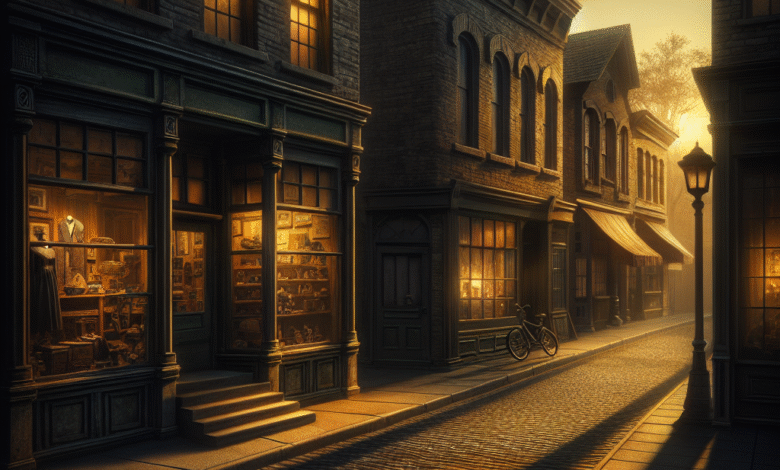
In a quiet corner of a historic English town, where cobbled streets meandered around ancient stone buildings, a curious tale was woven into the very fabric of Main Street. This street, lined with quaint shops and bustling cafés, had a secret that locals spoke of only in hushed tones, especially after dark. Beneath the veneer of normalcy lay the legend of the Shadows of Main Street.
Every evening as twilight descended, the shadows began to lengthen. People would notice a peculiar chill in the air, one that seemed to seep through the stones and cling to their skin. As the sun dipped below the horizon, the lights within shop windows flickered, casting an eerie glow that beckoned passers-by to linger just a little longer. The street seemed alive, humming with whispers of the past, yet no one could quite place the origin of the sounds.
The legend was rooted in a tragedy that unfolded generations ago, when the town was a thriving centre for trade. On one fateful night in late autumn, a fair had been arranged, attracting villagers from miles around. Children giggled as they chased each other through rows of stalls, while merchants extolled the virtues of their wares. Laughter echoed through the streets, filling the air with joyful anticipation. But as the first stars appeared, darkness fell—not just from the sky, but from within the hearts of a few.
A fire broke out in the centre of the fair, ignited by a forgotten lantern left too close to a stack of dry hay. Chaos ensued as people scrambled to escape the encroaching flames. Among them was a woman named Agnes, who had come from a neighbouring village with her two young children. In the frenzy, she lost sight of them. Desperation clawed at her heart as she searched frantically, smoke swirling around her like a malevolent spirit.
As the fire raged on, the townsfolk rallied, but it was too late. By the time the inferno was extinguished, precious lives had been claimed, and among them were Agnes’s children. Heartbroken and vengeful, she cursed the street to forever be haunted by the shadows of those who had perished that night—lost souls eternally searching for the warmth of family and home.
In the years that followed, many claimed they could feel the presence of those shadows, especially as the night deepened. It became a rite of passage for the young people of the town to stroll down Main Street after sunset, daring one another to whisper Agnes’s name, hoping to provoke the spirits lurking just beyond the reach of the lamplight. Most would return with tales of a chilling sensation, an icy finger brushing against their necks, or whispers that echoed their own fears.
There were, however, those who reported seeing the shadows more vividly—figures that danced just at the corner of their vision, flickering and vanishing when looked at directly. People began to call them the Shadows of Main Street, citing stories of how they caused inexplicable mischief: a lost shoe here, a stolen hat there. The shadows never seemed malicious, merely playful in their sorrow, as if trying to remind the living of the joy they once knew.
One particularly chilly evening in October, as the leaves turned to hues of gold and rust, a newcomer arrived in town. Sophie, a curious and spirited young woman, had moved to the area for work. A writer by trade, she was drawn to the town’s rich history and rustic charm, but little did she know that her passion for storytelling would lead her to the heart of the legend.
Intrigued by the whispers around her, Sophie decided to research the Shadows of Main Street. Gathering accounts from the locals, she listened intently as they recounted their experiences. Elderly folks shared tales of their own brushes with the uncanny, while young parents cautioned their children against wandering too far in the dark. With every story, her curiosity deepened, and she became enthralled by the notion of weaving their experiences into a narrative that would pay homage to the town’s past.
Determined to capture the essence of the shadows, Sophie ventured down to Main Street late one dreary night. The air was thick with fog, wrapping itself around her like a cloak. She strolled in the dim light of the streetlamps, the solitary sound of her footsteps echoing off the cobblestones. The street felt different, charged with a mix of anticipation and fear, and for the first time, she realised she was not alone.
As she paused outside an old bookshop, a shiver ran down her spine. There, just beyond the halo of light, she caught a glimpse of something shifting. Shadows flitted between the buildings, dancing with a lightness that defied gravity. Compelled by an unexplainable force, Sophie stepped closer, heart pounding in synchrony with her hurried footsteps.
“Show yourselves!” she whispered into the veil of night, half-mocking, half-serious. To her astonishment, a soft breeze caressed her cheek, and for an instant, the air shimmered, revealing a flicker of a shadowy figure. It was small, barely discernible, but unmistakably there—a child, searching, lost, yet inherently innocent.
Sophie’s breath caught. Realising this was no mere story but a real connection to the past, she reached out a hand toward the silhouette, beckoning it closer. “I won’t hurt you,” she promised, her voice trembling. “I’m here to listen.”
In that moment, the world around Sophie seemed to dissolve. The street blurred, and the flickering shadows enveloped her. Voices flowed into her mind—snippets of laughter, cries for help, and ultimately, a profound sorrow echoed from a distance. Struggling to comprehend the flood of emotions, Sophie felt herself sink into a whirlwind of memories, each one revealing the essence of the shadowy figures.
Hours seemed to pass, or perhaps mere seconds; time lost all meaning in that enchanted space. The shadows danced around her, whispering their stories—of love, loss, and an unyielding longing for connection. It was then that Sophie understood: the Shadows of Main Street were not malevolent spirits but echoes of a time long gone, yearning to be remembered and celebrated.
When she finally returned to reality, dawn was breaking, casting light across the cobblestones. Sophie stood alone, breathless but enlightened. Rather than fear or mischief, the shadows expressed a poignant longing. Inspired, she made her way back home, determined to honour their memories through her writing.
For weeks, Sophie poured her heart into her manuscript, weaving together the experiences of the townsfolk alongside her own encounters. The words flowed as if guided by the very spirits who had shared their tales with her. When she finally completed her work, she titled it “The Shadows of Main Street.”
The townspeople gathered for her reading, and as she recited her passages, they were enraptured. For the first time, they felt a kinship with the shadows that lingered, no longer viewing them as mere mysteries but as integral parts of their collective history.
Legend transformed into legacy. Slowly, the mood around Main Street shifted. The shadows, once feared, became a part of the town’s identity. Festivals began to be held to honour them, lights strung up as bright beacons to guide wandering souls. Children danced and played along the cobbled path, no longer afraid but embracing the stories that shaped their home. The shadows, which had once felt diminished, now felt celebrated, cherished within the living memory of the townsfolk.
As years turned into decades, the tale of the Shadows of Main Street thrived, a testament to the resilience of love and loss, a reminder that even in moments of despair, the bonds of family and community remain. Sophie’s book became a cherished relic, passed down through generations, teaching children to embrace the past while looking toward the future. And on quiet nights, when the fog rolled in thick and the streetlights flickered, the shadows would still dance, forever a part of the tapestry of Main Street.