The Faces We Wear
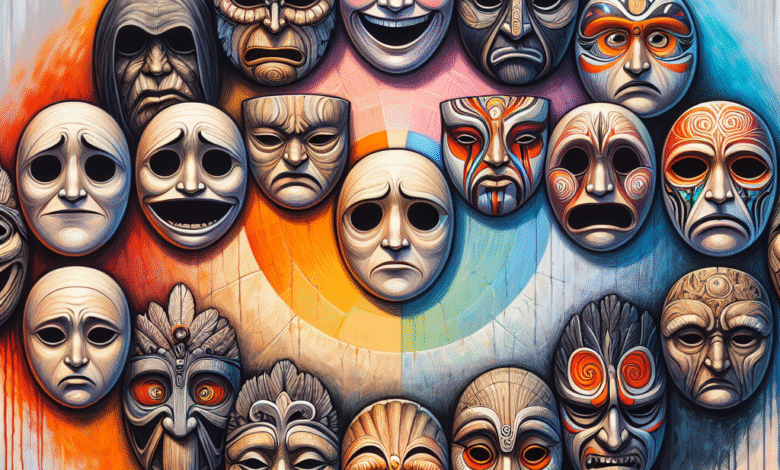
In the quaint village of Bramshaw, nestled amidst the rolling hills of the English countryside, the townsfolk were known for their jolly demeanours, witty banter, and an exceptional penchant for the gossip that fuelled the local pub, The Old Oak. The village was a tapestry of laughter and camaraderie, where friendships blossomed over pints of bitter and evenings filled with lighthearted jesting. Yet beneath this veneer of simplicity lay a haunting tale—one about the faces we wear, a poignant reminder that not everything was as it seemed.
Eliza Hartley was perhaps the most beloved of Bramshaw’s residents. With her auburn hair cascading in curls and her laughter bubbling like a brook in spring, she was the heart of the village. She led knitting circles, organised fetes, and always had a plate of freshly baked scones at her door for anyone who might happen by. But for all her warmth, an air of melancholy clung to her—a whisper of sadness known only to those who looked closely.
Eliza had lost her twin brother, Thomas, many years ago under circumstances that seemed more like the stuff of nightmares than reality. He vanished while exploring the woods that wove a dark perimeter around the village, a labyrinth of trees that hid secrets in their gnarled roots and twisted branches. Days turned into weeks, and despite the villagers’ valiant search, Thomas was never found. As the years passed, Eliza’s sorrow transformed into a palpable entity, cloaked in her smile like the mist that wrapped itself around the village every autumn. She wore her grief like a garment, frayed at the edges but all the more cherished for its history.
Every year, when the anniversary of his disappearance arrived, Eliza retreated to the depths of the woods, where she would whisper her brother’s name into the bracken, hoping the winds would carry her solace to him. These jaunts became a ritual, and as the years rolled by, the villagers grew accustomed to her solitary figure walking into the shadows, though they dared not follow; it was a journey solemnly understood.
On one particularly fog-laden day, Eliza ventured deeper into the forest than ever before. The air was thick with an unsettling stillness, and as she trudged through the underbrush, she felt an inexplicable urge to forge ahead. In the heart of the woods, an ancient oak loomed larger than life, its gnarled branches twisting like arthritic fingers reaching for the sky. At its base lay a small clearing, almost like a sanctuary carved by time itself. It was there that she spied a glimmer, something unfamiliar yet captivating beneath the leafy decay.
As she approached, her heart raced. It was a mirror—an old, tarnished thing that seemed to pulse with the forest’s energy. Eliza felt an inexplicable compulsion to touch it. She extended her hand and brushed against the cool surface, and in the next moment, the mirror rippled as if it were water, distorting her reflection until she could see deeper into the woods.
Suddenly, the clearing thickened, shadows weaving themselves into forms she recognised. There was Thomas, his eyes sparkling with mischief, and beside him stood others—faces she had known throughout her life, real yet wrong. They wore expressions she had seen before, but their eyes spoke of more than mere memory; they bore the weight of pain, of longing, twisted into something unrecognisable. Each visage in the mirror echoed aspects of Eliza’s life, friends and family caught in the grip of despair, happiness, and sorrow.
With disbelief and terror, she realised that the faces were not just reflections; they were creatures of the forest, their likenesses drawn from the tapestry of those who had walked the village. They cried out silently, trapped in the mirror’s depths, their emotions spilling over like ink in water. Eliza stumbled back, heart racing, but the mirror tugged at her, a siren’s call she could hardly resist.
“Help us,” a voice whispered, and Eliza recognised it instantly—Thomas’s voice, distinct and haunting. She shook her head, panic rising within her as the air grew thick, wrapping around her like a suffocating quilt. The forest seemed to pulse, the trees shuddering in resonance with the mirror’s dark magic.
“What do you want?” Eliza cried, her voice breaking as she fought against their allure. The figures within the mirror shifted, merging into one another, their feelings swirling into a vortex of agony and grief.
“We are the faces you wear,” they echoed in unison, their voices ethereal yet grounded. “We are the burdens you carry, the sorrows you ignore. To face us is to face yourself.”
As the words settled, Eliza felt herself drowning in an ocean of unaddressed emotions—loss, guilt, despair. The night Thomas had gone missing played like a sinister reel in her mind: the laughter shared, the games they had played, the promise made to look after one another. The silence when he vanished echoed louder than the laughter, spiralling into the guilt of having survived, of moving on while he remained lost. She had woven a fabric of smiles to mask her heartbreak, but now it unravelled before her, thread by thread.
The mirror glimmered brighter, urging Eliza to confront the truth she had buried for so long. Each face within it wore a mask that bore her entangled sorrow: the villagers who had wanted to comfort her but felt helpless, the friends who had tried to draw her out of her solitude yet were met with resistance, even her own reflection—a spectre of someone who had not yet found peace.
“You are not alone,” whispered Thomas’s voice again, gentle amidst the cacophony. “You never were. We remain a part of you. To grieve is to love still.”
Eliza’s breath caught in her throat. With trembling hands, she reached out to the mirror once more, and as her fingers brushed its surface, the weight of years pressing down on her shoulders began to lift. She imagined unmasking the grief that had shrouded her heart, seeking the joy buried beneath. A single tear slipped down her cheek, splattering against the mirror, where it shimmered and vanished, absorbed into its depths.
“Let us go,” the voices urged, their supplication gentle yet firm. “Set us free, Eliza.”
In that moment, Eliza understood that she had to embrace her loss to liberate her brother and herself. The forest around her blurred, and she felt the essence of the mirror seep into her, the faces merging with her own. Memories flooded back, not just of sorrow, but of joy shared and laughter that punctuated their days. She let the grief wash over her as she felt herself transform, the sorrow evolving into something brighter.
With a choked sob, she stepped back from the mirror, breathing in the fresh air surrounding her. She turned to leave, knowing that the darkness of grief did not have to consume her; it could instead animate her, pushing her to cherish the faces she wore, both joyful and sorrowful. For in wearing them, she recognised that they were manifestations of love, binding her to her brother and the life they had shared.
As she made her way home, the fog began to lift, revealing the vibrant beauty of the village she had almost forgotten. When she stepped into The Old Oak, the warmth enveloped her, and she felt a sense of clarity that had been absent for far too long. The laughter, the banter, the camaraderie—the faces of those she loved now shimmered with a new light.
With tears turning to smiles, Eliza felt the weight of remembrance seamlessly woven with the vibrant fabric of life. She had learned to navigate the shadows without fear, understanding that the faces we wear reflect both the joy of living and the scars of loss, each contributing to the masterpiece of our existence. In embracing them, she had not only set Thomas free but had also begun to set herself free from the chains of sorrow. The village held a piece of her heart, and in return, it would always wear the faces of those she loved.