
Whispers in the Archive
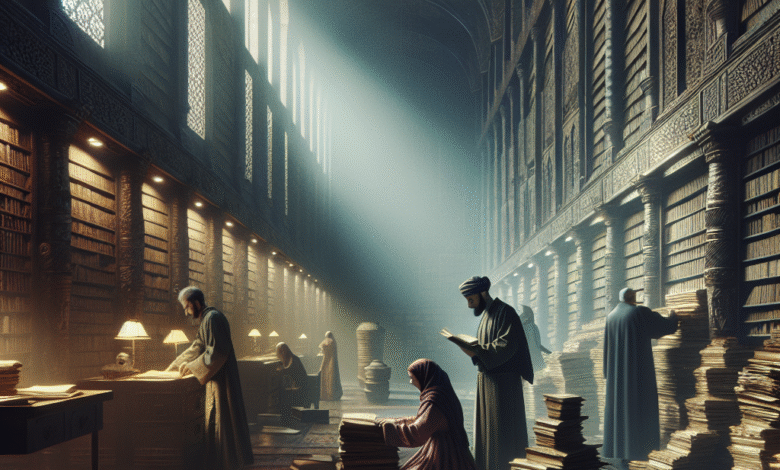
In a quaint corner of an unassuming English town lay an imposing structure known as the Ashford Archive. It stood resolute, built from grey stone that seemed to absorb the sunlight, casting a shadow over the cobblestone streets below. Many townsfolk spoke of its haunted reputation, whispering tales of strange occurrences within its hallowed halls. Yet, to most, it was merely a building filled with dusty books and forgotten records, lending itself to the daily bustle of historians and researchers hungry for knowledge.
Emily Mayfield, a determined young archivist, had recently secured a position there, enchanted by the mysteries tucked away in the depths of the Archive. Thoroughly devoted to her work, she dismissed the local lore as nothing more than quaint stories to spook children. Yet, as her first week progressed, she found herself inexplicably drawn deeper into the building, following the graceful curves of its long, dimly lit corridors.
Each day brought the scent of aged paper and polished wood, mingling with the quiet rustle of pages turned by diligent hands. On one particular Wednesday, Emily was entrenched in cataloguing a collection of journals dating back to the early 1900s when she began to overhear soft whispers echoing around her. At first, she attributed it to the drafty architecture or Bob, the elderly curator who sometimes shuffled about looking for misplaced documents.
“Bob?” she called softly, glancing up from her work. No answer. The whispers continued, elusive yet incessant, evoking an unsettling sensation that crept over her skin. Making up her mind to investigate the source, she exited her small office and ventured into the deeper recesses of the Archive. The whispers grew clearer but remained indistinguishable, a haunting melody woven into the fabric of the building.
Curiosity piqued, Emily followed the gradient of the voices that led her down an unfamiliar corridor, one she had yet to traverse during her brief tenure. The air became colder, and as she turned the corner, she noticed an old door—barred and covered in layers of dust. It sat slightly ajar, its hinges rusted but apparently functional. The whispers cascaded from within like echoes of a forgotten past.
Entranced, Emily gently pushed the door open, stepping into a small, dimly lit room. The air was thick with the scent of mildew and age. The walls were lined with shelves containing amounts of paperwork she had never seen before—letters, reports, and various accounts waiting for someone to breathe life into them. Rummaging through the yellowing papers, she found a worn leather-bound tome nestled in the corner from the pile. Its pages had been meticulously preserved despite the age of the binding. When she opened the book, the whispers surged, wrapping around her like ephemeral tendrils.
“What are you?” she murmured to the tome.
As if in response, the whispers escalated into a chorus, weaving intricate tales of anger, sorrow, and memories long buried. Each word seemed to vibrate from the depths of the room itself, and Emily felt the cold air wrap around her, blurring the lines between reality and some distant echo of the past. A solitary phrase stood out among the whispers, an urgent plea laced with pain: “Find me.”
Emily hesitated but couldn’t bear the thought of retreating. Driven by a burgeoning need to unlock the story behind those haunted voices, she dove into the cases of records surrounding her, piecing together fragments of a narrative that was yearning for attention. However, she realised that every time she delved deeper, shadows lurked at the edges of her vision, cloaked figures whispering dark and desperate secrets.
Days turned to weeks in the Archive, and the once simple task of cataloguing became a fevered obsession. Emily discovered that the tome chronicled the lives of those who once occupied the town, detailing their struggles, heartaches, and ultimately, a tragedy that had obliterated an entire family. The town’s elder, a once-respected figure named Arthur Wainwright, had led an unsuccessful attempt to seize an old estate, which had resulted in the death of his wife and children in a fire ignited by a bolt of lightning.
As she pieced together the accounts, the whispers grew more cohesive, urgency radiating from their unearthly refrain. “Help us… finish the story…” they urged, filling her with a sense of inevitability. Emily could see how the Archive itself acted as a vessel for the unresolved grief of its former occupants, a reservoir of emotions trapped by time and fate.
Compelled by an unseen force, she organised an event, gathering the townsfolk to unveil the story of the Wainwright family. Perhaps, by sharing their tragedy, the voices would finally find peace. The day of the presentation arrived, draped in an air of tension as villagers gathered, whispering sceptically among themselves. However, she began recounting the lost lives, detailing Arthur Wainwright’s love for his family, the ill-fated estate, and the haunting fire that had engulfed their lives in tragedy.
As she narrated the tale, the room felt electrified. The whispers crescendoed into a seemingly palpable presence, wrapping around every listener, entwining them in a tapestry of collective sorrow and history. Faces that had once shown disbelief now turned somber, enveloped in empathy. And then, as if the Archive itself exhaled, a sudden hush fell over the assembly, followed by the softest sigh that emanated from every shadowed corner.
After the presentation concluded, the townsfolk departed, some in tears, but all of them transformed. Somewhere inside, Emily allowed herself to believe that the tale had been enough to relieve the weight that had settled in each of their hearts. Yet, she could still hear the whispers lingering in the air, the quiet acknowledgement of something yet undone.
Days dripped by, the Archive becoming more vibrant yet oddly melancholic. Emily felt a strange dichotomy growing inside her; the whispers were now woven into her consciousness, lulling her to sleep and gracing her with unwelcome dreams of the past. Each moment spent inside the Archive grew heavier, laden with the yearning of those still trapped within its confines, pulling at her mind’s edges where reality met the twilight of her own subconscious fears.
Eventually, she came to a chilling realisation. The presentation had been merely a catharsis of the surging emotions, but the story of Arthur and his family had not fully closed. The whispers had been a plea; not for mere remembrance but for resolution and redemption.
Determined to bring peace, she returned to the book that had first beckoned her into the embrace of the Archive. Rendezvousing with the pages, she discovered a final fragment—a passage detailing a hidden cache of letters buried beneath the ashes that had claimed the Wainwright estate. Her heart raced as she deciphered the words. She needed to uncover these remnants. Perhaps they held the answers, the truth that could quiet the exiled souls.
As evening cloaked the Archive in darkness, Emily scoured historical maps and references until she arrived at the block of land once owned by the Wainwright family. With a sense of both dread and determination, she ventured out underneath the creeping fog, armed only with a trowel and a flickering lantern. Guided by intuition and whispered encouragement, she began to dig—sinking her hands into the cold earth, uncovering layers of history held captive beneath her.
Hours passed like seconds, until finally her trowel struck something hard. With a rush of exhilarating trepidation, she dug feverishly, unearthing a small, weathered box. Trembling, she pried it open, revealing a collection of letters sealed in an old envelope marked with Arthur’s signature. The letters spoke of love, sorrow, hope, and regret; words intended for those who would never receive them.
Tears streaming down her face, Emily transcribed the letters, capturing the essence of Arthur’s heartache. She would return to the Archive, presenting the letters to the townsfolk as the final chapter in a story long overdue for resolution. Outside, the whispering voices harmonised softly in approval.
Emily’s presentation that evening felt different, electric with the promise of closure. As she shared the words penned by Arthur, the past began to breathe once more, enveloped by warmth and understanding. Laughter erupted from shared memories, and the sense of loss transformed into a celebration of love, promising that the Wainwright family would never be forgotten.
With the final letter read, a gentle stillness filled the Archive, every corner echoing with the vibrant release of long-buried grief. The whispers, once a cacophony of sorrow, morphed into a soothing refrain of gratitude. Emily found peace for the souls she had fought to honour, their stories forever interwoven with the fabric of the town. The Archive stood resolute, a shrine of memory transformed by the power of connection and the resilience of the human spirit.


