Dead of Night is the 1945 British anthology horror film from Ealing Studios, a supernatural portmanteau built around a country-house gathering in which one guest arrives with a recurring nightmare that seems to be leaking into reality. Its central pleasure is the slow tightening of dread across several linked ghost stories, culminating in one of cinema’s most unsettling ventriloquist tales. It sits at the crossroads of Gothic horror, psychological horror and anthology storytelling, with a distinctly British polish that keeps the supernatural unnervingly close to ordinary life.
The Film File
- Original release year: 1945
- Director(s): Alberto Cavalcanti, Charles Crichton, Basil Dearden, Robert Hamer
- Credited writer(s): John Baines, Angus MacPhail
- Principal cast: Mervyn Johns as Walter Craig; Roland Culver as Eliot Foley; Mary Merrall as Mrs Foley; Googie Withers as Joan Cortland; Frederick Valk as Dr van Straaten; Antony Baird as Hugh Grainger; Sally Ann Howes as Sally O’Hara; Robert Wyndham as Dr Albury; Judy Kelly as Joyce Grainger; Basil Radford as George Parratt; Naunton Wayne as Larry Potter; Miles Malleson as Joseph Garvey; Michael Redgrave as Maxwell Frere
- Approximate runtime: 104 minutes in one commonly listed version; 102 minutes in some modern catalogues
- Country of production: United Kingdom
- Relevant horror subgenres: Anthology horror, supernatural horror, Gothic horror, psychological horror
Behind the Screams
Dead of Night was made at Ealing Studios in the closing months of the Second World War, when British horror production was still an unusual proposition. The film’s shape was unusually collaborative even by anthology standards. The frame story and the individual episodes were handled by four directors, with material drawn from several literary sources as well as original contributions by John Baines and Angus MacPhail. E.F. Benson and H.G. Wells are both part of the film’s source DNA, and the film’s varied tone reflects that mixed inheritance: drawing-room unease, comic awkwardness, folkish ghostliness and outright psychosexual disturbance.
The structure is its most significant creative decision. Instead of presenting a straightforward sequence of separate tales, the film ties its episodes to a single gathering at a country house, where Walter Craig recognises events before they happen. That framing gives the anthology a circular, almost hypnotic logic. The stories are not just a selection of shocks; they become symptoms of the same destabilising dream state. This is why the film feels more carefully engineered than a loose collection of macabre sketches. The frame actively turns each story into evidence that something is wrong with the world itself.
The best-known episode, the ventriloquist story, is also the one that most decisively shaped the film’s reputation. Michael Redgrave’s performance as Maxwell Frere gives the segment an unnerving seriousness, and the dummy Hugo is not treated as a novelty prop but as a malignant extension of personality and will. That psychological premise is crucial. The horror is not simply that a dummy seems alive, but that the film keeps making room for the possibility that Frere’s mental collapse and Hugo’s malevolence are indistinguishable. Elsewhere, the film leans into more restrained ghost-story material, but it repeatedly returns to the idea that the supernatural may be inseparable from anxiety, repetition and dread.
Some later summaries have slightly different running times, which is unsurprising for a title with multiple releases and restorations. The core film, however, is firmly a 1945 Ealing production, and its historical position matters. Released just after the war in a British industry that had largely avoided horror, it effectively reopened a door for the genre in the country, while remaining far classier and stranger than the cheap omnibus chillers that would follow in later decades.
Into the Dark
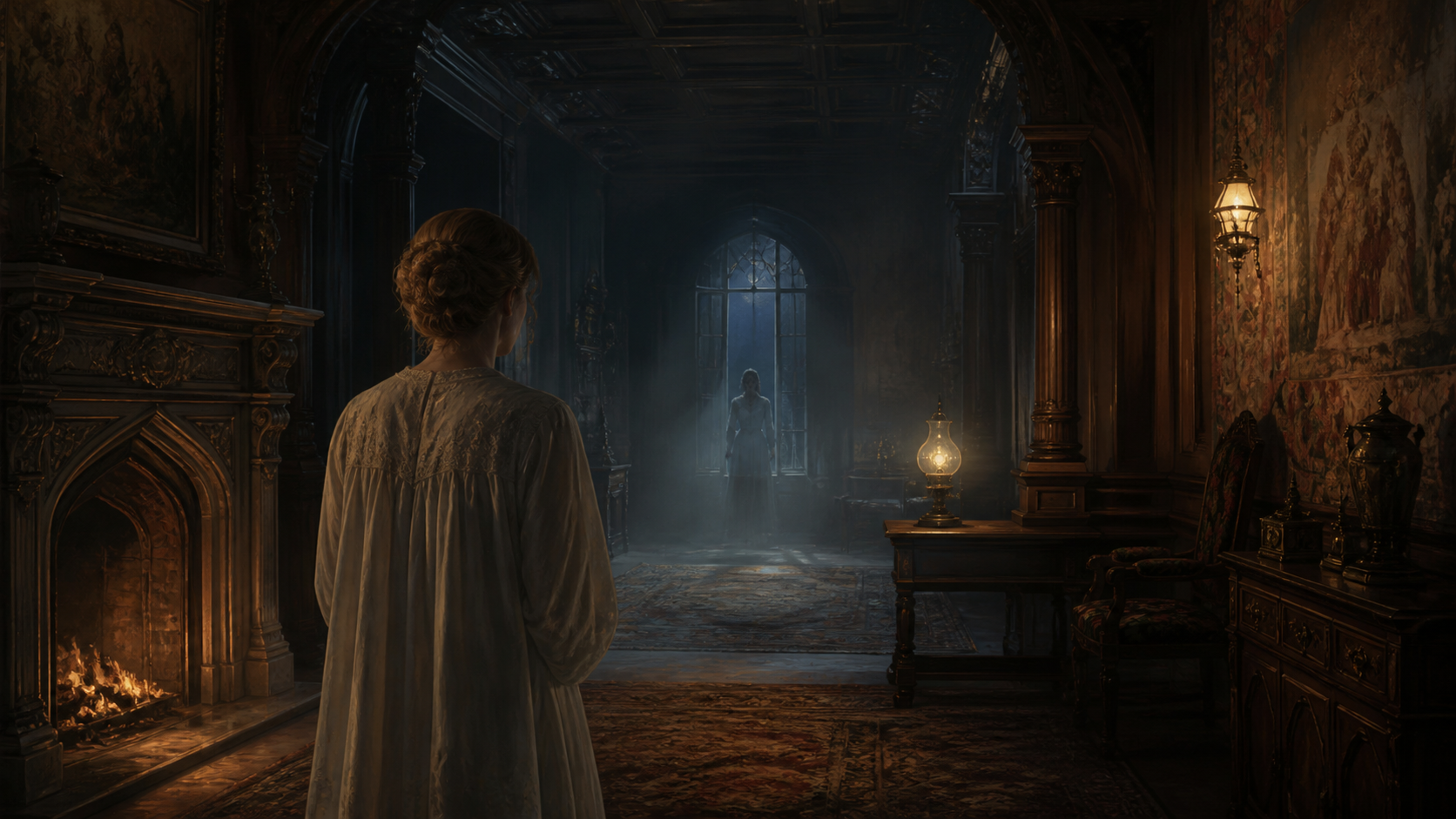
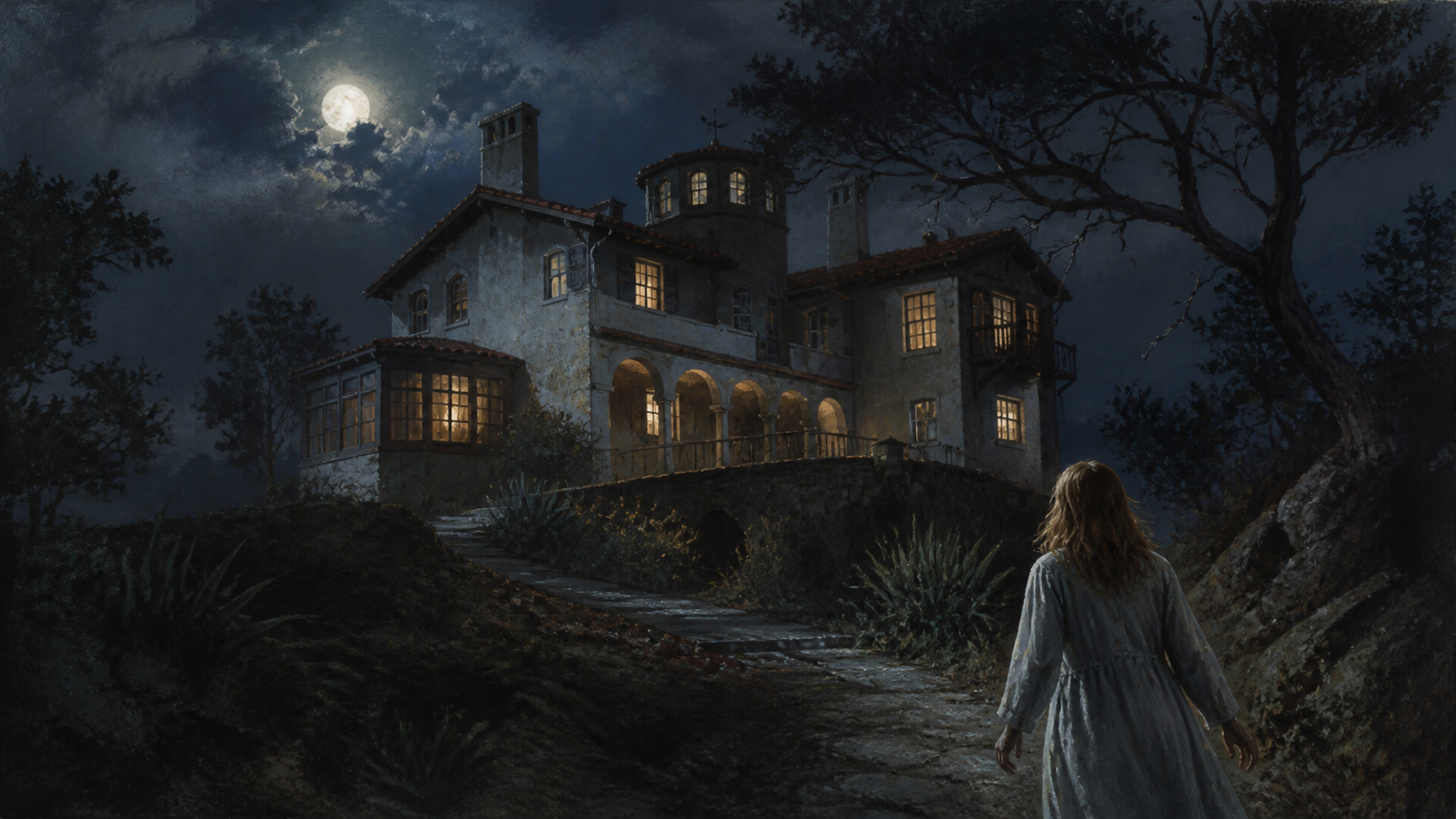
Walter Craig, an architect, is invited to a country house and is immediately struck by the certainty that he has been there before in a dream. Around the table, the guests begin telling stories that range from comic unease to overt supernatural disturbance. A hearse driver describes an eerie encounter. A Christmas gathering turns sinister. A haunted mirror exposes the fragility of a marriage. A golfing anecdote becomes a fable of obsession and rivalry. Then comes the ventriloquist story, in which the boundary between performer, puppet and personality begins to collapse.
The power of the film’s premise lies in the way each story feeds the next. The guests are not just passing the time; they are building a pattern that Walter Craig seems condemned to recognise. His dream is not a private quirk but a warning about the whole environment. The house, the conversation and the stories all begin to feel trapped inside one another. What starts as polite social ritual gradually becomes an atmosphere of fatal repetition, where every attempt at normality only confirms the presence of something uncanny beneath it.
Spoilers ahead: the following paragraphs discuss major plot developments.
As the stories accumulate, Walter realises that he cannot escape the sequence he has already seen in his dream. The situation becomes most alarming when the ventriloquist Maxwell Frere arrives at the gathering. Walter has dreamt of him too, and this makes the dummy Hugo seem less like a one-off nightmare and more like the central intelligence of the film’s uncanny design. Frere is split between self-denial and panic, while Hugo grows increasingly dominant, taunting him, shaming him and finally taking over the emotional centre of the story. The confrontation matters because it turns the film’s abstract unease into a crisis of identity: the fear is not only that the puppet may be alive, but that Frere’s mind has already ceded authority to it.
The ending confirms the film’s circular trap. Walter tries to resist the pattern, but the film drives back towards the nightmare he had already foreseen. That final return is not merely a twist; it is the film’s argument. Experience itself has become recursive. The supernatural does not just intrude on everyday life, it colonises it, turning the ordinary rules of time, memory and social exchange into a loop of dread.
What Gets Under Your Skin
Dead of Night works less as a barrage of shocks than as a steady accretion of unease. Its atmosphere is one of measured civility gradually becoming intolerable. The country-house setting, with its polite talk and controlled interiors, gives the film a genteel surface that makes the eruptions of the uncanny feel more invasive. That contrast is one of the film’s smartest assets. Rather than relying on overt grotesquerie, it finds horror in the breakdown of reasonable conversation, in the suspicion that a nightmare can be recognised before it is fully understood.
The storytelling is unusually strong for an anthology because the segments are varied without feeling random. The film uses lightness carefully, especially in the golf story and the more comic exchanges around the table, but it never lets humour flatten the dread. Even the ostensibly lighter material keeps returning to the idea of compulsion, whether through romantic jealousy, domestic strain or fatal recurrence. That thematic unity gives the film more weight than a simple compilation of ghost stories.
Performance is another major strength. Mervyn Johns anchors the frame with a wary, haunted ordinariness that makes Walter Craig easy to read as a sensible man pushed beyond comfort, while Michael Redgrave gives the ventriloquist segment its most memorable intensity. Frederick Valk’s Dr van Straaten adds a needed note of analytic scepticism without draining the supernatural charge from the story. Elsewhere, the supporting players are efficient rather than showy, which suits a film that depends on tonal control more than flamboyant acting. The cast understands that restraint is part of the terror.
Visually, the film benefits from a polished black-and-white look that lets spaces feel both tangible and slightly unreal. The different episodes are recognisably distinct, but they are bound together by a common mood of instability. The horror is not built on elaborate monster effects or bloodshed. It comes from the sense that the world is slipping sideways by degrees. That is a subtler approach than many later horror fans expect, but it is also why the film remains effective. It creates fear through pattern, implication and repetition, not through excess.
There are limits to that approach. Because the film is an anthology, not every episode lands with equal force, and some viewers will inevitably find one or two segments less compelling than the frame or the ventriloquist story. The film also leans on the period’s restrained style, which means its shocks are psychological rather than visceral. For the right audience that is a virtue, but it does mean the film’s power depends on mood and structure more than on immediate jolts. If you want a blunt, high-intensity fright machine, this is not that film. If you want a ghost story that keeps folding back into itself, it is remarkably controlled.
The Film’s Afterlife
Contemporary reception was positive enough to establish the film quickly as something unusual and important in British cinema. Its reputation has only strengthened over time, especially as critics and historians have revisited it as an early masterwork of the horror anthology form and a key predecessor to later British portmanteau horror from Amicus and beyond. Its influence is often discussed not as a matter of direct imitation alone, but as a structural template: the linked-story format, the framing nightmare, and the idea that the anthology itself can generate escalating unease rather than merely house separate tales.
Today, it is best understood as a foundational British ghost film that still feels formally adventurous. Its reputation rests on the discipline of its construction as much as on any single iconic image. The dummy may be the headline, but the deeper achievement is the way the film keeps making every story feel like part of the same psychic trap.
Horripilations Verdict
A superbly controlled British anthology that turns polite conversation into a nightmare machine, with a frame narrative and ventriloquist tale that remain genuinely unnerving.
What works
- Tightly interlocked structure
- Michael Redgrave's chilling central performance
- Atmospheric black-and-white craft
What holds it back
- Uneven strength across the anthology segments
- Its restrained style may feel less immediate than later horror