Bound by Unrest
The faint smell of rotting meat lingered in the cramped living quarters above the butcher’s shop where Adam Lawson lived. It was mid-December, and the air was heavy with ice. Wrapped in a thin wool coat and clutching a half-drained cup of stale tea, Adam sat at the small desk that overlooked the narrow street of St. Anne’s, pen scratching against crumpled paper as he struggled to write another instalment of his local history column for the borough’s monthly magazine. Outside, couples were bustling about, festive laughter surrounding them while he remained, isolated and solitary, watching the peeling woodwork of his surroundings flake under the pressure of neglect.
Yet, it wasn’t the cold or the isolation that gnawed at him; it was the feeling that he was being watched. The tenants before had all reported strange occurrences, but Adam scoffed at the superstitions. He found comfort in facts, numbers, and the comfort of anchoring his thoughts in rationality. But the feeling gnawed deeper now, turning his smile taut, and the hairs on his arms bristled at the conclusion of his solitary ruminations.
He leaned back in his chair, glancing at the door. The shop below was closing soon, and soon the sounds of slicing meat and bustling patrons would yield to the quiet of the night. There was something unsettling about that thought. The timber creaked as he shifted his weight, and that peculiar smell intensified, an unsettling reminder of the rare cuts left overnight, destined for tomorrow’s customers.
That night, the unease grew unbearably palpable as the clock struck midnight. A slam echoed from downstairs, a resonant thud that jolted him upright. He grabbed a torch, his knees warily braced against the cold floor, careful as he descended the narrow staircase leading to the shop. On reaching the bottom, he felt it: an undeniable presence. The hairs prickled at the nape of his neck, and adrenaline coursed through his body as he peered into the butcher’s domain.
All the shelves were intact, the display counters clean. The usual neatness of the shop was replaced with an unsettling chaos. Knives lay strewn, and the large chopping block at the centre appeared smeared with something dark—something other than meat. Wrapping his fingers tighter around the torch, he scanned the room. In the corner, a shadow flickered.
“Hello?” His voice trembled, barely a whisper.
No answer. He waited, heart hammering in his chest. As he turned to leave, the chill struck him—an icy breath against his ear.
“I was betrayed.”
The voice was neither profound nor meandering. It possessed an unsettling clarity, harmonising fear and sorrow. Adam spun around, but nothing was there. A mere figment of a deluded mind? He shut his eyes tightly, but it wasn’t a dream; he knew that instinctively. The violence of cold fear wrapped around him, and he bolted for the stairs.
Days turned into weeks, yet the spectre of the unknown lingered, manifesting itself at uninvited hours. While Adam hurried about town covering mundane histories, flashes of memories began shuffling through his mind—people he’d never met became familiar. Faces of sorrow intertwining with names, glimpses of quarrels encased in despair.
“It was not my fault,” a fleeting thought echoed through the corridors of his reasoning, skirting the edges of his comprehension. He awoke restless, clutching at the edges of fragile dreams that brushed against the consciousness, each a chilling reminder of the presence that had intertwined with him.
One drizzly afternoon, as he sifted through the aged archives of St. Anne’s local library, he stumbled upon a crumpled old article. The grainy photograph depicted the butcher, a man named Samuel Draycott, who had run the shop fifty years earlier, and another distinct figure—an acquaintance of his, a graceful woman named Margaret. Beneath it, scrawled words blared the headline: “Filleting Friendship: A Betrayal Leads to Tragedy.” Adam felt the blood drain from his face as the article described Draycott’s downfall, claimed by a tragic accident that involved the very woman depicted.
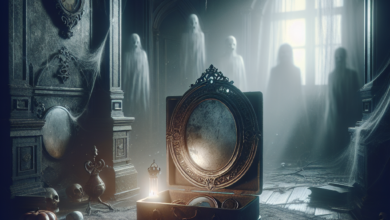
It was her voice. Everything clicked into place. Margaret’s spirit was resonating with him, using him to vicariously inhabit a world still reeling from her death. Within weeks of reading that piece, something dark began to alter his surroundings. The mirrors reflected him less, and more often, they presented absent faces—distorted visages that carried markers of regret. Those ongoing whispers become clearer, eclipsing his thoughts and digressing his past, anchoring him to primal senses he’d never fathomed.
His relationships faltered; friends turned to strangers as their eyes recoiled from the madness unsettling Adam. Each touch was marred by a spectral chill, laughter faded into disinterest, and they questioned his sanity. Intimate conversations dissolved into echoes, forgotten sentences trailing like smoke. What was once tangible care and affection became replaced with whispers of his insanity, and Adam withdrew entirely into the darkness of the shop above.
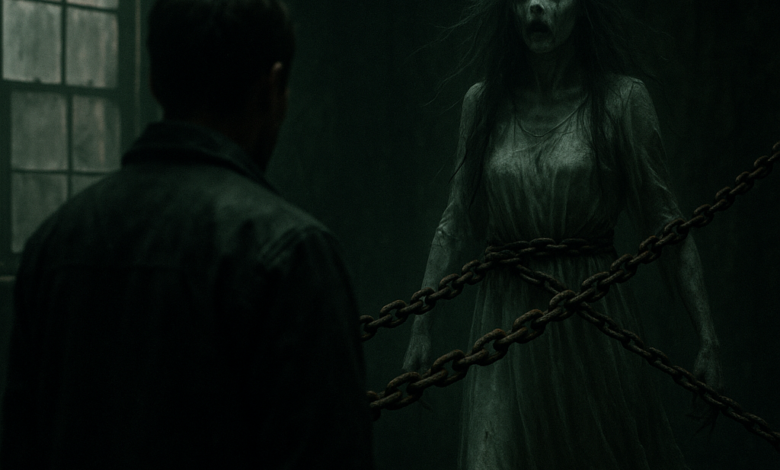
One night, the sounds crescendoed to a fever pitch, snapping the final shred of his fragile composure; hopelessness languished around him, entangling him in desperation. He couldn’t deny it anymore; he was bound by unrest, shackled to this spirit intent on revenge.
“Why are you doing this?” he yelled into the darkness of the butcher’s shop, his voice vibrating off the chilled plaster walls. He felt it surge towards him, a dark aspiration of anger and grief settling against his chest.
“Betrayed,” came the low and seething reply.
Figures moved in the corners of his vision, only to vanish when he turned. Those who knew him grew apprehensive, avoiding him in the streets as if he were a leper. They sensed the ghostly pulse of anguish tangled within him. The burden rested solely on him, the embodiment of the betrayal from generations before.
Desperate, he resolved to seek the truth. He found the last few moments of Margaret’s life entangled in the butcher’s tragic history, a love unconsumated, twisted by jealousy, and betrayal, and destruction. He faced the mirror that reflected only darkness; the spectre loomed large behind him, yet courage drove him onward.
But the haunting increasingly twisted into surreal possession; he found himself isolating key events, reliving their passions and mistakes through memory flashes of shattered glass and chilled knives. The pain of it gnawed at him. Friends faded. Strangers crossed the street as he did, their discomfort palpable.
Lurid motives surfaced: refusing to let him go meant feeding her grievances. But what to offer in return? The opportune moment clashed with a sudden urgency. He delved into the depths of his mind, confronting the repressed terrors, and with that reckless abandon, he found himself standing before his spectral tormentor once more.
“Release me!”
The intensity escalated, oblivion blooming in the rush of the spirit’s fury. “Not until…” came the dark cacophony.
Madness twined around him, consuming and reshaping his will. In that moment, all rational thought dissolved as he felt his essence drain away; warmth faded as cold terror took over. Struggling against fate, it caused an irrevocable shift; darkness enveloped him whole as mainstream horror etched into her laughter.
At dawn, the butcher’s shop remained eerily still. Passersby wouldn’t notice just yet, buried beneath the fabric of their own lives. But a subtlety had shifted in St. Anne’s—Adam was gone, his possessions stuffed in cache, memories wiped clean, friendships unravelling like threads.
The butcher’s place had found a new tenant, a new tenant walking in with a familiar recipe. And with it flowed the echo of a spirit still seeking, and the workplace of destiny burgeoned anew.