Whispers from the Cobblestones
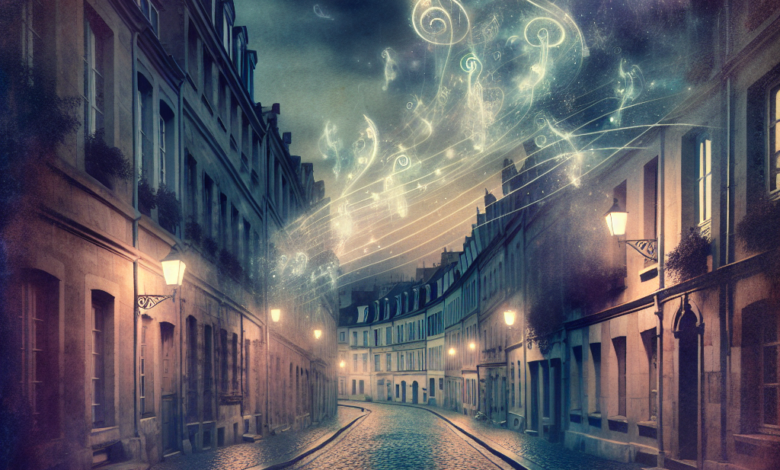
In the sleepy village of Eldridge, where the mist clung to the cobblestones like a shroud, there was a whisper of something more than just the wind rustling through the gnarled oaks. It was said that the cobbled streets held secrets beneath their ancient stones, secrets that were not meant for the living. The villagers, wrapped in their daily routines, seldom paid heed to the tales spun by the older generation, but nonetheless, they gave the cobblestones a wide berth, especially as dusk began to settle.
Isolde Granger, a newcomer to Eldridge, arrived in the village one fateful autumn, seeking solace and inspiration for her writing. When she first laid eyes on the cobbled streets and the quaint, ivy-clad cottages, her heart raced with a sense of belonging, something she had long yearned for in the bustling chaos of London. Yet, it was not long before she began to hear the whispers.
Isolde had taken residence in a modest cottage at the end of a narrow lane. The cottage, with its thatched roof and creaking floorboards, seemed to breathe with life. Yet, every evening, as twilight descended and shadows stretched ominously, Isolde would sit by the window with her notebook open, her pen poised to capture perfect inspiration. But more often than not, the only voices that reached her ears were the faint murmurs from the cobblestones outside.
Initially, she dismissed them as figments of her imagination, mere manifestations of her isolation. After all, the village was picturesque, but it had an air of desolation — the sort of place where stories lay thick as the autumn leaves on the ground. Yet, the whispers grew too loud to ignore, forming words that tantalised her ears in the silence of night. “Help us,” they pleaded, muffled as if spoken through a dense fog. “Remember us.”
It was one particularly blustery evening, the wind howling through the village, that Isolde finally succumbed to curiosity. With a shawl wrapped tightly around her shoulders, she ventured out into the damp chill, the cobbled lane slick beneath her boots. The moon cast a silvery glow, illuminating her path as she walked gingerly, listening intently to the echoes beneath her feet.
As she wandered further down the deserted lane, the whispers grew clearer, intertwining with the sound of her footfalls – a delicate harmony that hinted at both warning and invitation. “Come closer,” they beckoned, a gentle caress against the chill of the night air. Isolde’s heart raced, not from fear, but the exhilaration of encounter. She was a writer, after all; there was nothing she craved more than a story waiting to be uncovered.
The whispers led her to an old well nearly hidden beneath the creeping ivy, its stones weathered and cold. Once gleaming, the well had become a relic, steeped in the lore of the village. Was it the whispers that had brought her here? She knelt beside it, leaning over the moss-covered stones, her breath fogging in the crisp air. “What do you want?” she whispered, half-laughing at her own audacity.
“You know,” the winds seemed to murmur in reply. “You feel our pain… feel it as your words flow.”
A shiver trickled down Isolde’s spine as she contemplated the entities tied to the well — the forgotten, the forsaken. Ghostly grimaces and pleading whispers danced on the edge of her mind. Was this where the stories lay buried?
Returning to her cottage, Isolde felt a sense of anticipation building within her. If the well was a vessel for these lost thoughts, perhaps she could weave them into the fabric of her tales, breathe life into the suffering by giving voice to the silenced. Night after night, she returned to the well, absorbing fragments of sorrow and longing that felt too profound for words.
The village’s inhabitants sensed her growing obsession. They exchanged glances filled with concern, stirring the gossip pot regarding the newcomer. Old Mrs Hargreaves, renowned for her keen intuition and sharp tongue, approached Isolde one brisk morning, wrapped in the heavy layers of a moth-eaten coat. “Best be careful, my dear. The cobblestones carry burdens that are not yours to bear.”
Isolde smiled kindly, brushing off Mrs Hargreaves’ warning as merely superstitious ramblings of an old woman. After all, she was an aspiring writer, and what better source of inspiration could she possibly have than the whispers of the past? Night after night, she penned the tales that flowed from the well of voices; stories of sorrow, loss, and unfulfilled promises that weighed heavy on her heart. Each chapter breathed life into Eldridge in ways the villagers had long forgotten.
But as she delved deeper, the whispers grew more insistent, veering into realms of despair. The icy hands of the dead reached from beyond, intertwining with her very thoughts. She could no longer discern where her own creativity ended and the cries of the lost began. Shadows danced at the corners of her vision, and distant figures flitted about just beyond her grasp. The stories, once an expression of her longing to create, became an obsession — a tangled web of pain that spiralled into madness.
As the days turned to weeks, Isolde withdrew from the village, becoming a ghost of her former self; a reclusive spectre haunting the once beloved cottage. The villagers spoke in hushed tones, worried but helpless. Then one chill winter’s night, when the wind howled like a banshee, Isolde vanished. The only evidence of her existence was the chilling drafts that swept through her cottage and the pervasive whispers that echoed through the cobblestoned streets.
When the spring sun finally thawed the frost, the villagers discovered her abandoned cottage, the windows boarded up and the door swinging in the breeze. Inside, her notebooks lay scattered about, pages filled with fragmented tales, but no words described the fate of the woman who had brought them to life. All they found was an unsettling emptiness — a void where Isolde’s laughter had once tinkled like wind chimes.
The whispers, now entwined with Isolde’s spirit, echoed through all of Eldridge. The well became a place of pilgrimage for those drawn by the tales of the lost writer who had embraced the forgotten echoes beneath the cobblestones. Strangers would come in the hope of hearing her voice, believing they would find inspiration or perhaps closure for their weary souls. Yet, all they heard were the continued mournful whispers.
As night descended, the air thickened with mist, and those brave enough to wander the cobbled lanes would often hear Isolde’s voice mingling with the whispers of sorrow. “Remember us,” they would plead, as the wind howled through the branches and around the stones.
The cobblestones had become part of Isolde, cradling her story, melding with the echoed pleas of the lost souls she had tried to uncover. The village of Eldridge remained untouched by time; an encapsulated moment, a sad melody haunting the air. The whispers continued, soft yet relentless, giving voice to the invisible threads connecting the past to the present.
And so, the cobblestones bore witness to the stories that refused to be forgotten, weaving a tapestry of whispers that resonated with anyone who dared to walk their ancient paths. They whispered of a woman who, in seeking to understand the darkness of the dead, had become entwined with them, her spirit eternally roaming their cobbled roads, seeking the redemption that eluded them all.