Whispers of the Forgotten: The Lady of the Lake
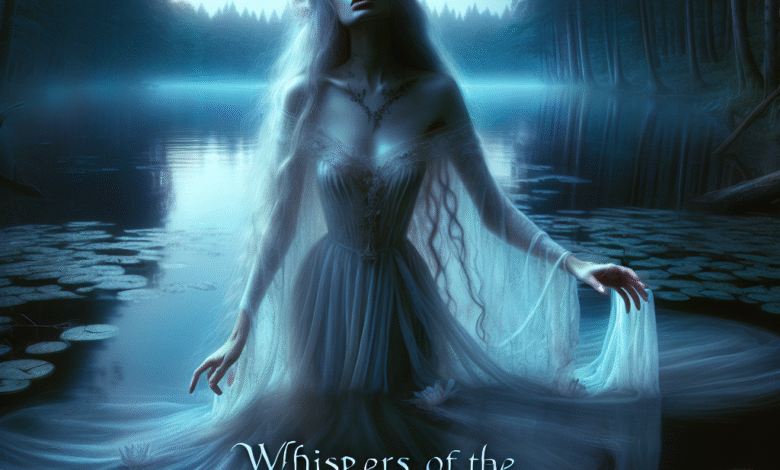
In the quaint village of Eldermere, nestled between rolling hills and dense, ancient woodlands, there resided a lake so still that its surface reflected the clouds like a mirror, creating an illusion of endless sky. Known simply as the Lake of Eldermere, it held more than just water; it cradled tales of villagers long since passed and whispered secrets known only to the winds. Among these narratives, one stood apart—the haunting story of the Lady of the Lake.
Many years ago, during the reign of Queen Victoria, Eldermere was thriving. Yet, within this vibrance lay an air of melancholy when dusk descended upon the village, shrouding it in a veil of shadows. Tales spread like wildfire, passed from one villager to another, about a beautiful woman who had once inhabited a grand estate overlooking the lake. Lady Isolde Merton was her name, a striking figure with long, flowing auburn hair and eyes that sparkled like the water at dawn. She was reputed to be a healer, often found wandering the village, tending to the sick and distressed with herbal remedies gathered from the surrounding woods.
Isolde’s life wasn’t without sorrow. Her heart belonged to a handsome young soldier, Thomas, who had promised to return after battling in the wars raging across Europe. Days turned into weeks, and weeks into months, but the echoes of the battlefield claimed him, and he never returned. Grief-stricken, Isolde withdrew into her estate, shunning the world and relinquishing her duties to care for the village.
As the seasons changed, the whisper of a spring breeze would sometimes carry her songs across the still lake, soft and melancholic like the last rays of sunlight dipping behind the hills. Villagers would pause at the water’s edge, bewitched by her haunting melodies, which resonated through the calm air, a reminder of love lost.
Not long after Thomas’s disappearance, unusual occurrences began to plague Eldermere. Animals became restless, crops wilted, and an inexplicable chill permeated the air, robbing villagers of warmth and comfort. Children would awaken screaming of shadows lurking in the corners of their bedrooms, while adults struggled to keep their spirits alight amid the mounting despair.
One fateful evening, an ill-fated gathering took place at the village pub, The Crooked Lantern. The room buzzed with gossip about Lady Isolde’s melancholic state and the mysterious occurrences in the village. Old Mrs. Darrow, the eldest resident, recounted an ancient tale about the Lady of the Lake, whose tears were said to drown the souls of the unwary.
“It is said that if you listen closely to the water at midnight, you can hear her whispers calling to those who have lost their way,” she warned, her voice trembling. “It is not a love song, but a lament for those who linger between the living and the dead.”
Scepticism brewed amongst the villagers. They laughed, dismissing the old woman’s warnings as the ramblings of an eccentric mind, yet a dread settled into their hearts, urging them to respect the waters that had always been their lifeblood.
In time, the haunting of Eldermere took a darker turn. One by one, villagers began to disappear, their absence woven into the fabric of the community until it became a tapestry of sorrow. It was said that their spirits had been claimed by Isolde, who roamed the shores at night, beckoning with her alluring, ethereal beauty.
Those who ventured too close to the lake’s edge reported seeing her silhouette, reminiscent of a delicate figure clad in silvery-white, her hair flowing like mist, gliding gracefully across the water’s surface. Whispers carried on the wind, promising eternal comfort to anyone desiring solace. But promises made from the depths of despair rarely held truth, and numerous villagers chose the darkened waters over their troubled lives, lured by the enchanting song of the Lady.
After years of despair, a group of brave villagers decided to confront the spectre they believed was haunting their home. Armed with nothing but lanterns and their dwindling courage, they approached the lake one fateful midnight under a moon glowing like a pallid orb in the night sky. The air was thick with foreboding; not a single bird dared to chirp, and the wind held its breath as if anticipating the confrontation.
When they reached the shore, the moon’s reflection shimmered on the lake, and they beheld the ethereal figure of Isolde standing amidst the silver mist. With tears streaming down her face, she beckoned them closer—a vision suspended between beauty and sorrow. The villagers called out, demanding answers, their voices breaking the stillness of the night.
“Why do you mourn? Why do you take from us?” called out Thomas Sommers, a young man whose family had lost a child to the Lady’s call.
Isolde turned her gaze towards him, her eyes penetrating deeply into his soul. “I do not take what is not freely given,” she whispered, her voice a wind-chime’s gentle tinkle mingling with the hush of the lake. “I mourn for my lost love—his promises were to be fulfilled, yet the world snatched him from my grasp.”
The villagers shuddered, the air turning icy. It was then they realised that Isolde was not merely a ghost—they had unwittingly become part of her narrative, each disappearance intertwined with her longing. Each name whispered into the night—those who had vanished—each one had carried a sorrow that resonated with hers.
“Return to whence you came,” urged Thomas, his heart pounding, “for our lives are tethered to this earth, not to your eternal woe.”
But Isolde only wept. “To forget is to die, to remember is to grow heavy with sorrow,” she lamented. “I cannot rest while my heart is chained to this world.”
One brave soul stepped forward, grasping a flower plucked from the shores—a token of life amongst the haunting desolation. “If a piece of your heart is lost, take this offering,” she implored. “Find comfort! We shall remember you, but you must let us live.”
Isolde’s gaze wavered, and for a fleeting moment, the darkness that shrouded her expression faltered, revealing a glimpse of a fractured spirit longing for freedom. She took the flower and pressed it to her chest, her tears mingling with the water at her feet. “I will call not to the lost; instead, I shall guard those who remain.”
With that pronouncement, the winds around the lake began to swirl, and the moonlight brightened, casting vivid reflections upon the water. Isolde’s silhouette began to fade, dissolving into mist, her sorrow transformed into a whisper—a promise of protection for the village.
From that night forth, visitors would sometimes hear her gentle song carried upon the wind, but the despair in her voice was not as pronounced. Eldermere slowly found its footing again, rebuilding lives that had once been touched by shadows. The villagers, forever cautious, respected the lake, offering tokens of remembrance on the shore.
As years turned to decades, the tale of the Lady of the Lake became a cherished story, retold at harvest gatherings, the ghost transformed from a figure of terror to one of understanding. Yet, there were still moments when silence draped the village like a heavy cloak, and if one were to stand by the lake at midnight, they’d swear they could hear the faintest melody echoing across the water—a reminder that love, as fleeting as it might be, could leave its mark across time and space.
In the heart of Eldermere, folk still leave flowers by the edge of the lake, a pact forged with the whispers of the forgotten—the Lady of the Lake—who watches over them with an enduring love that transcends even death itself. Each offering is a testament to the memories shared, the sorrows borne, and the unbreakable bond between the realms of the living and the spirits who once walked among them.