Against the Grain
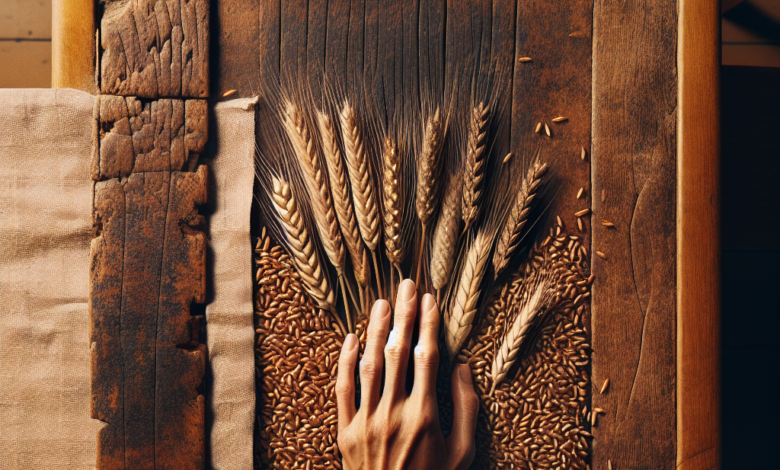
In the heart of the English countryside, where verdant fields stretched like a patchwork quilt and the air was thick with the scent of damp earth, there lay an ancient village named Eldergrove. It was a quaint place, its cobbled streets winding through clusters of thatched-roof cottages flanked by overgrown hedgerows and the gnarled trunks of oak and ash trees. However, beneath the surface of its pastoral beauty, Eldergrove harboured a history riddled with shadow and dread, a legacy whispered about only in the dead of night.
The villagers remained bound by a peculiar tradition, one that dated back long before even the oldest recorded history. Each year, toward the end of summer, they held the Harvest Festival, a celebration of their crops, bountiful harvests, and the cycle of life itself. Yet intertwined with this merriment was an age-old ritual, one that had garnered little attention over the years, though its purpose remained deliberately obscured—an offering to the woods, to appease whatever dwelled beyond the reach of human understanding.
The festival dawned bright and crisp, with the sun spilling golden light across the fields. The air buzzed with excitement as children chased one another, laughter bubbling like the gentle brook that meandered through the village. Mrs. Hawthorne, the village baker, had prepared an array of pastries that shimmered under the midday sun, each confectionery piece a testament to her annual devotion. The people of Eldergrove bustled about, busy with preparations, their hands eager and hearts light, for they all believed that the village’s prosperity depended on this annual rite.
Amongst them was Clara, a bright-eyed girl of twelve summers, whose heart raced with anticipation of the festivities. Unlike the adults, whose faces were etched with the lines of duty and history, Clara possessed the boundless curiosity of youth. She often ventured into the woods, exploring the forgotten nooks and crannies hidden within its embrace. Eldergrove’s elders warned the children to avoid the depths of the forest, where shadows danced in ways that defied reason.
On the eve of the festival, Clara, unable to resist the call of the mysterious woods, tiptoed from her home. The moon rose high, cloaking the world in silver. She blended into the darkness, her heart thrumming in rhythm with the night. The forest loomed before her, gnarled branches reaching out like skeletal hands, inviting yet foreboding. She hesitated but felt an inexplicable pull toward the heart of the forest where the trees entwined in a protective embrace.
As she traversed the twisting paths, a sudden rustle broke the silence, causing her to pause. Shadows flickered at the corner of her vision, and for a fleeting moment, she thought she saw a figure darting between the trees. Ignoring the whispers of caution echoing in her mind, she pressed on, drawn by an insatiable hunger for discovery.
Deep within the forest, Clara stumbled upon the remnants of an old stone altar, overgrown with ivy and moss. Carvings adorned its surface, depicting grotesque creatures, fearsome yet strangely beautiful. The air thickened here, charged with an energy that crackled against her skin. It was then that she heard it—a low, rumbling growl that seemed to resonate from the earth itself, reverberating through her bones.
Fear mingled with awe. The villagers had spoken of the Guardian of Eldergrove, a creature birthed from the very essence of the woods, one who watched over the land. When the harvests faltered, it was said that the Guardian would emerge, and it would be demanded a tribute, lest their crops wither and their livelihoods crumble. Clara recalled the stories told around the fire: Of lost children who had dared to seek the heart of the woods, never to return.
The growling morphed into a haunting melody, echoing a tune all too familiar to Clara. It was the lullaby her mother used to sing. She felt compelled to call out, her voice trembling slightly, “Is anyone there?”
Silence fell, thick and stifling, before the rustling returned, closer now, heavy with weight and purpose. Clara squinted into the darkness. From the shadows emerged a creature, its form shimmering like moonlight upon water—a majestic amalgamation of man and beast, clad in fur as dark as midnight, eyes glowing like burning embers. It stood at least ten feet tall, its limbs crafted from sinewy muscle, exuding an aura of ancient wisdom juxtaposed with fierce power.
“Why do you trespass?” its voice resonated, deep like rolling thunder, but laced with an unexpected gentleness. “This is sacred ground.”
Swallowing hard, Clara spoke, “I … I wanted to see you.”
The Guardian regarded her with eyes that pierced through the veil between innocence and knowledge. “The woods are not a playground for the unprepared. The souls that wander too far for too long lose their path.”
Clara took a cautious step forward, emboldened by the creature’s gentleness. “But we’re supposed to celebrate tomorrow! The Harvest Festival. Isn’t that why you’re here?”
“Celebration?” The Guardian’s snout wrinkled in a way that might dismiss the frivolity of human customs. “What is celebration without understanding the cost? There’s balance to be maintained, child.”
With each word, Clara felt the weight of her village’s ignorance press heavily on her young shoulders. “But the villagers— they don’t understand,” she stammered. “They just want to celebrate.”
“Then they will become the architects of their own ruin,” the Guardian replied, sadness permeating its tone. “They mock the ancient pact, believing that joy can be extracted without acknowledging the respect owed to the source. Each year they reap without giving back, thinking merriment is enough.”
With a sudden grace, the Guardian bent down, its eyes level with Clara’s. “Indeed, joy is essential; it nourishes the heart. But so, too, are sacrifice and reverence. Without them, the land withers, and darkness takes hold.”
“What can I do?” Clara asked, desperation creeping into her voice. “I can help. I’ll tell them!”
A silence enveloped them, punctuated only by the rustle of leaves in the gentle breeze. The Guardian’s expression softened. “It is not fear that binds you to silence, but the strength of your heart. If you wish to bring the truth to your village, you must be brave enough to challenge what they believe.”
As dawn crept upon the horizon, the Guardian rose, towering over Clara once more. “You are not alone, child. The spirits of the forest shall guide your path, but you must tread carefully. Truth is often met with resistance.”
With that, the Guardian retreated into the shadows, leaving Clara alone amid the ancient remnants of the altar. She felt a surge of purpose ignite within her, a ferocious determination to anchor her village back to their roots, to weave together the threads of reverence and joy.
At the break of day, Clara hastily returned to Eldergrove, her heart racing against the backdrop of dawn’s embrace. The villagers were already assembling for their festival, laughter bubbling amid the clinking of pots and the fragrance of baked goods wafting through the air. Yet as she approached, she was met with sceptical stares. Adults, wrapped in their preoccupations, dismissed her wide-eyed fervour as the whimsical fantasies of youth.
“Clara, come help with the preparations!” Mrs. Hawthorne beckoned, her voice warm but oblivious to the urgency that resided in the girl’s heart.
“No! You don’t understand!” Clara cried, cutting through the air with desperation. “The Guardian! We must honour the pact!”
Gasps rippled through the crowd, followed by disdainful chuckles. “The Guardian? Such tales are for children!” a village elder declared, his voice dismissive.
Undeterred, Clara spoke fiercely, “If we don’t, the crops will wither! The Guardian said we must make an offering, not just celebrate without understanding!”
The tendrils of doubt and disbelief began to weave themselves among the villagers’ minds, and as the morning slipped into midday, the quiet murmur of suspicion grew into a chorus of concern. Clara persisted, for she could feel the Guardian’s presence lingering—the weight of ancient wisdom lingered, compelling her.
“Let us pay tribute, one simple offering,” Clara pleaded. “Let it be something from each of us as a promise to honour the land.”
As the sun dipped low in the sky, the villagers reluctantly acquiesced, albeit half-heartedly. They gathered their brightest harvests, fruits and breads, but many still scoffed at the idea. Clara’s heart pounded as they formed a procession toward the altar, their steps laden with scepticism.
When they arrived, Clara stepped forward, her voice cutting through the twilight like a clarion call as she began to sing the lullaby that echoed through the woods—the same one she had heard deep within the forest. Slowly, the villagers joined in, their voices lifting to the heavens, merging with the haunting rhythm of nature around them.
As they sang, the air shimmered, filled with an otherworldly resonance. The Guardian emerged from the shadows, larger than life, filling the clearing with an ethereal glow. The villagers fell silent, awestruck, as the creature raised its mighty head, acknowledging the offering—a tribute born from renewed understanding. It picked up the first offering, a simple loaf, and as it took a bite, a soft, radiant light enveloped the altar, illuminating the night with a warm glow.
“Remember, children of the earth, respect begets joy, and joy begets life,” the Guardian intoned, its voice settling around them like a warm embrace.
In that moment, something fundamental shifted, for Clara saw it in the faces of her people. For too long, the village had lost sight of the balance—now, at the threshold of understanding, they felt the pulse of the land beneath their feet, a resonating heartbeat that united them with the very essence of the world.
As the night deepened and the festival continued, laughter unfurled, but now laced with reverence and gratitude. The Guardian lingered, a protective presence that watched over them, reminding them all that life was an intricate weave of giving and receiving. Amidst the festivities, Clara smiled, knowing that she had not only dared to challenge the narratives of old, but had transformed the very foundation of her village.
Now they walked together in harmony with the land, wiser and more connected, learning to navigate the complexities of existence—each celebration followed by the promise of respect for the roots that nourished them.