The Abyssal Echo
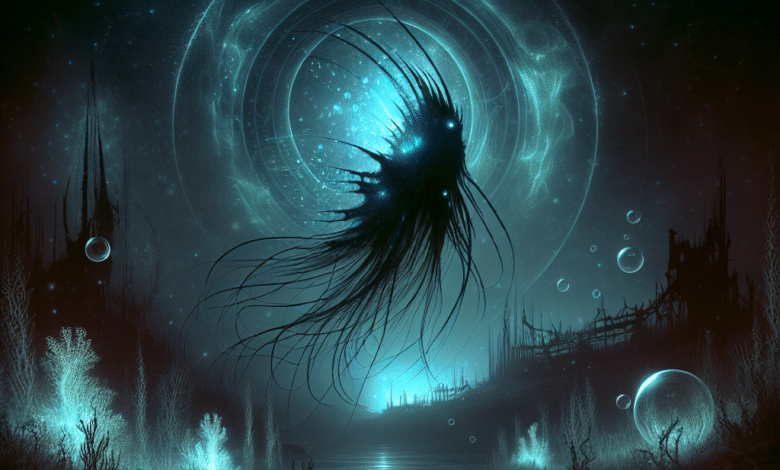
In the small coastal village of Dunmarrow, whispers of the sea danced like shadows among its inhabitants. For centuries, the villagers had lived in harmony with the restless waters, revering the ocean for its bounties while simultaneously fearing its mercurial temperament. Fishermen would tell wild stories of the depths, of formidable beasts that lurked beneath the waves, hidden from the unsuspecting eyes. However, none were as enigmatic and feared as the creature known only as the Abyssal Echo.
The tale began with an old sailor named Thomas Blakely, a man whose beard was as wild as the sea itself and whose eyes sparkled with the light of countless forgotten stories. He would gather the village’s children around him, the fire crackling in the hearth, and recount the legend of the Abyssal Echo—an entity as old as the ocean. According to Thomas, the creature was born from the grief of the sea; an embodiment of sorrow, lost ships, and drowned sailors. It was said to call out the names of those who had perished, luring the living to their doom with haunting, melodic cries.
One stormy evening, as thunder rumbled and rain lashed against the weathered stone walls of Dunmarrow, a newcomer arrived. Her name was Eliza Hartley; a marine biologist drawn by the allure of the waters and the promise of discovery. She had heard the stories, the legends that seemed too peculiar to be true, yet something within her—a relentless curiosity—compelled her to investigate the matter more deeply. She settled into a small cottage at the edge of the village, overlooking the tumultuous sea, where the cries of the wind sounded disturbingly like those of a weeping child.
Days turned into weeks, and Eliza’s research began. She combed through old mariner logs, diaries, and local folklore, piecing together the fragmented histories of the Abyssal Echo. Though the village folk treated her with a mix of guarded scepticism and wary admiration, she pressed on, determined to uncover the truth. As she ventured to the cliffs one day, the harsh winds tangled in her hair and whipped at her coat, yet there was a gnawing sensation deep within her, an inexplicable draw towards the crashing surf below.
On one particularly bleak afternoon, she found herself perched upon a rocky outcrop, gazing into the depths. The sea, churning darkly, appeared to pulse as if it harboured a life of its own. Suddenly, the familiar chill ran up her spine, and then she heard it—the mournful, exquisite sound that filled her with both terror and thrill. It was a melody that echoed through her very bones, resonating as if the ocean itself were weeping.
Clenching her jaw, Eliza fought against her instincts to flee. Instead, she took a deep breath and called back, her voice trembling. “What do you want?” And then, silence—the kind that lingered, drawing close like a curtain, concealing the unease that slumbered beneath the calm surface.
Night fell swiftly, and the storm returned with a vengeance, lashing the village with unrelenting fury. Eliza, driven by an insatiable need to understand, trudged towards the earthen dock where the fishermen had gathered. Their faces illuminated by flickering lanterns looked grim, as if resigned to the inevitable tragedy that the spitting tide foretold. They warned her—a dark omen swirled within the waves, a threat that had certainly awakened.
With each additional tale, a portrait began to form in Eliza’s mind. She understood now that the Abyssal Echo was not merely a creature; it was an echo of humanity’s own frailty and sorrow. In a strange way, it mirrored their deepest fears, but she could not, would not, shy away. The truth was there to be discovered; she could nearly taste it like salt on her lips.
As weeks slipped by, Eliza’s obsession grew. She fashioned makeshift diving gear and compiled her equipment, determined to face the unknown. The villagers, once sympathetic to her scholarly pursuits, now viewed her as a fool, but she paid them no heed. On a hauntingly still evening, with a promise of an uncharacteristic calm over the tempestuous waves, she plunged into the water.
The darkness enveloped her, and for a moment, she felt weightless, as if the ocean cradled her gently. She adjusted her dive light and swam deeper, the light piercing the ink-like depths. The shadows danced along the ocean floor, revealing scattered remnants of lost vessels that bore witness to the deaths of countless souls. As she explored, the cry echoed again, clearer and closer, threading through the liquid world like an invisible thread.
Eliza’s heart raced as she followed the sound, entranced yet fearful. Each stroke brought her closer to the source, but the abyssal depths also unveiled something darker—the realisation that she was not alone. Shapes twisted in the water, ghostly forms materialising out of the gloom. Faces, twisted in anguish, floated momentarily before her eyes, pleas trapped in silence. The Abyssal Echo was not merely a mythical creature; it bore the weight of the dead, their suffering embodied within.
With a gasp, she surged upward, the water rushing past her like a tempest as panic gripped her heart. Breaking the surface, Eliza clawed towards the boat moored nearby, gasping for air as waves crashed violently against her. She managed to pull herself aboard, trembling and drenched. In her mind’s eye, she saw them—the faces of those lost to the sea, now forever tied to an ancient entity.
The villagers had gathered along the shore, murmuring in hushed tones as they watched her return, weary and changed. They approached cautiously, their eyes wide with a mixture of fear and acceptance. Eliza, still shivering, recounted her harrowing experience—the beauty and horror of it all. And as she spoke, a shift occurred, a collective understanding that echoed through the group. The Abyssal Echo transcended monster and myth, representing their own fears, their losses.
In the following days, the village prepared to honour those who had fallen to the depths. They gathered as one, casting lanterns into the sea, each flickering glow a tribute to the forgotten souls. Eliza stood among them, feeling the weight of their collective sorrow; she now belonged to this village, intertwined with its history and folklore. The Abyssal Echo had not merely called to her; it had awakened something deeper within her, an undeniable connection forged by tragedy and loss.
As night fell, the sea shimmered under a tapestry of stars, and the haunting melody returned, but this time it was different. The notes floated gently upon the night air, resonating as a balm—a reflection of their sorrow and a promise of remembrance. The villagers listened, holding their breath, an unbroken silence permeating the darkness. The cries of the deep transformed from despair into an echo of hope, an understanding that those lost were never truly gone, but remained a part of the living tapestry of Dunmarrow.
In that moment, Eliza realised that facing the abyss had revealed not just the terrors of the unknown but also the strength that lay within their hearts. Where there once sat fear, now occupied understanding; not every echo from the depths was malevolent. There was a beauty to it, an acknowledgement that sometimes, to honour the dead, one must embrace the unknown.
The tides would continue to roll, and the whispers of the Abyssal Echo would carry on, threading through the village, merging with the lives of all who heard it. In Dunmarrow, beneath the endless canopy of stars, the village and the sea would remain eternally intertwined—a dance of remembrance, life, and the deep, echoing sorrow of the Abyssal Echo.