Peeping Tom is the 1960 British psychological horror-thriller directed by Michael Powell, with a screenplay by Leo Marks. It follows Mark Lewis, a camera technician and amateur filmmaker whose private obsession with recording fear turns the act of looking into the engine of the horror. The film sits at the crossroads of psychological horror, serial-killer thriller and voyeuristic meta-cinema, which gives it a peculiar, unsettling charge: it is as much about watching as it is about murder, and that idea remains the reason it unnerves.
The Film File
- Original release year: 1960
- Director: Michael Powell
- Writer: Leo Marks
- Principal cast: Carl Boehm as Mark Lewis; Moira Shearer as Vivian; Anna Massey as Helen Stephens; Maxine Audley as Mrs Stephens
- Approximate runtime of the version described here: 101 minutes
- Country of production: United Kingdom
- Relevant horror subgenres: psychological horror, serial-killer thriller, voyeuristic horror, thriller-drama
Behind the Screams
Peeping Tom was made after Michael Powell’s long collaboration with Emeric Pressburger had ended, and Powell later said the project came to him through Leo Marks, the wartime codebreaker and writer who supplied both the original story and screenplay. In Powell’s own account, Marks pitched the film as a story about a young man who kills people with his camera, and Powell immediately wanted to make it. That origin matters because the film is not an adaptation of a novel or a horror property; it is an original premise built around cinema itself, with the camera not just observing violence but participating in it.
The film was shot in Britain and made as a colour 35 mm feature, with Otto Heller as cinematographer, Brian Easdale as composer and Noreen Ackland as editor. Powell also appears in the film as Mark’s father, and his son Columba plays the child Mark, a choice that became part of the outrage around the production. The BBFC’s later case study confirms that this casting was one of the points that disturbed contemporaneous critics and audiences, though Powell defended it as a way of securing a more natural performance. The same BBFC account also records that the film arrived for classification in 1960 with seven cuts made in order to secure an X certificate, including reductions to violent detail and nudity. That gives a clearer picture of how severe the original controversy was: the film was not merely disliked, it was trimmed before release and still prompted a backlash.
There is sometimes confusion about the running time because different versions circulate. For this guide, the most useful reference point is the full restoration commonly listed at 101 minutes, while some archival listings give 103 minutes for a restored print. The key point is that the film exists in multiple versions, and the shorter versions reflect cuts made for release and later distribution. What matters for viewers is that the work’s full shape is a little longer and less compromised than the versions that shaped its first reputation.
Into the Dark
Mark Lewis works in a film studio by day and prowls London at night with his camera, photographing women and pursuing a private project that is inseparable from his past. He is quiet, polite and damaged, but the film never lets that softness become innocence. His life is arranged around filming fear: he records women in moments of terror and uses the camera to freeze the instant when dread reaches its peak. That premise gives the film its central tension. This is not a supernatural story and it is not a slasher built on body count. The horror comes from obsession, coercion and the way Mark turns looking into a form of predation.
As the story unfolds, Mark’s private compulsions come into contact with two women who matter in different ways. Vivian, a model and actress, is drawn into his orbit through work and flirtation, while Helen Stephens, who lives in the same building, becomes the first person to treat him with a degree of warmth and curiosity. That contrast is important. The film is not content with a simple predator-versus-victim structure. It asks what it means for someone deeply scarred by childhood abuse and pathological conditioning to encounter genuine sympathy, and whether that sympathy can coexist with the fact that he is still dangerous. The result is a film in which emotional entanglement and menace keep colliding.
Spoilers ahead: the following paragraphs discuss major plot developments.
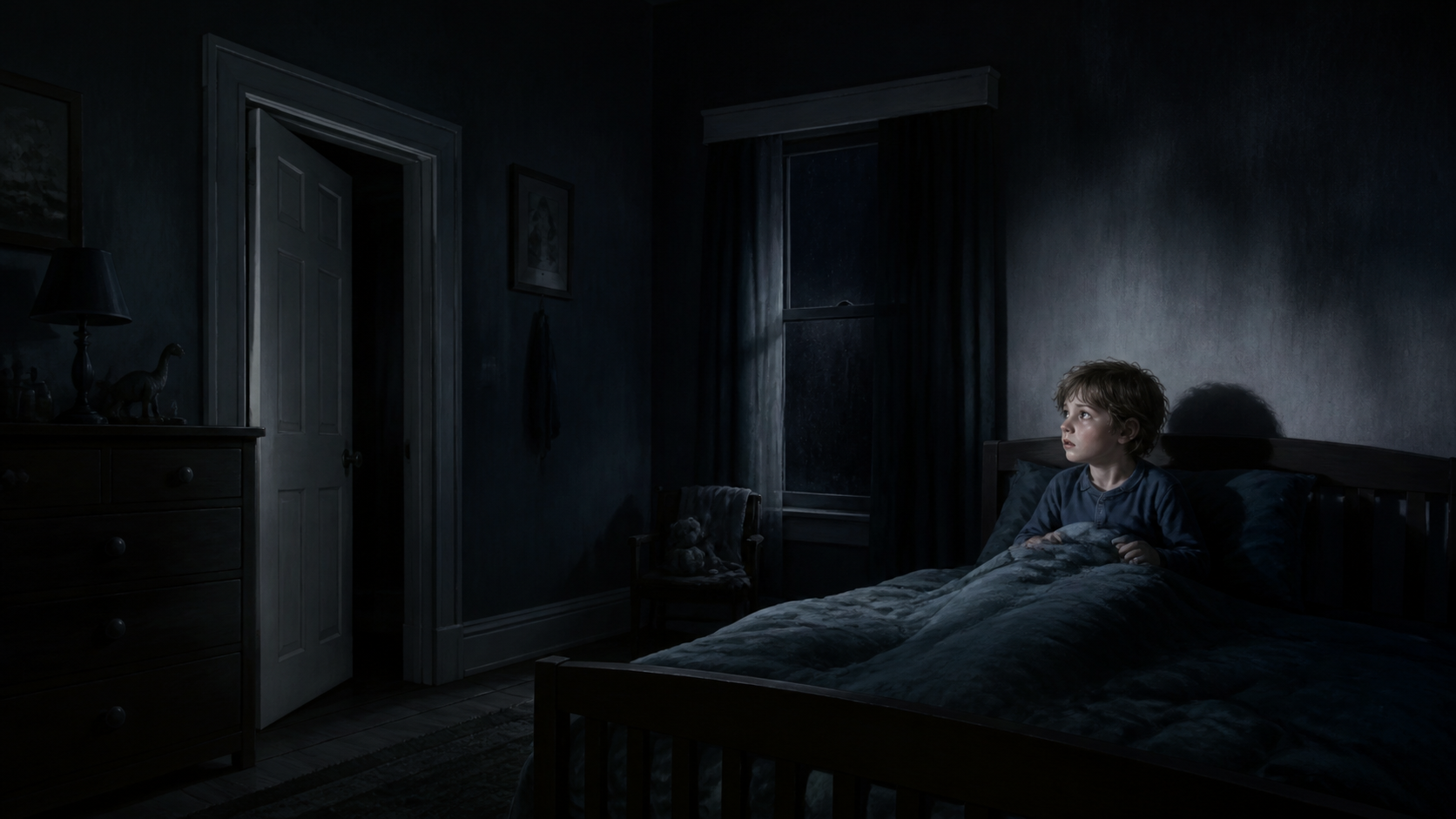
The film’s most revealing material concerns Mark’s upbringing. His father, a psychologist, subjected him to gruesome experiments in fear, filming the boy’s reactions as part of a lifelong study. Those childhood scenes are not just backstory. They explain why Mark’s camera is inseparable from trauma and why the tripod spike he uses for murder has been designed as a weapon hidden in plain sight. The adult Mark has internalised his father’s methods so completely that he repeats them on other women, filming the dying process as if he is completing the experiment. This is why the horror lands so strongly: the film does not present murder as random evil but as inherited pathology, a learned system of looking and control.
The ending tightens that idea rather than softening it. Helen becomes the emotional counterweight to Mark’s fixation, but the film never lets the possibility of rescue feel simple. Mark’s attempts at intimacy remain bound up with surveillance and projection, and the final movement turns his own apparatus against him. The film’s point is not that love cures him, but that his entire identity has been built on recording terror, so his destruction is inseparable from the machinery that defines him. The conclusion is bleak, but it is also precise: Peeping Tom is about a man who can only experience the world by staging it, filming it and controlling the conditions under which he sees it.
What Gets Under Your Skin
The film’s atmosphere is its first great strength. Powell places a seemingly respectable, inwardly diseased man in recognisably ordinary London settings, and that contrast keeps the film from drifting into gothic distance. The unease comes from how plausible Mark’s routines are. He works, pays rent, chats, shops and courts. The horror is not that he belongs to a supernatural underworld but that he can pass through everyday life while carrying out acts that are psychologically extreme. That grounded quality makes the film feel modern in a way many later serial-killer stories only approximate.
Leo Marks’s screenplay gives the film a remarkable shape. It is a thriller, but one built from ideas rather than procedure. The script keeps circling the same themes of recording, shame, performance and control, and it does so without flattening Mark into a neat monster. Karlheinz Böhm plays him as tense, awkward and sad rather than flamboyant. That is crucial to the film’s effect. Böhm does not ask for sympathy, but he makes it easy to understand why other characters might fail to read him immediately. Anna Massey gives the film much of its human temperature as Helen, whose curiosity is alert without becoming foolish, while Moira Shearer brings poise and force to Vivian. Their contrasting energies stop the film from becoming a purely conceptual exercise.
Visually, the film uses colour and composition to make the premise feel perversely seductive. It is a horror film that understands how attractive surfaces can disguise dread. The camera obsession is not only in the story; it is in the way the film frames faces, props and spaces as if everything might be turned into an image. That creates a persistent friction between beauty and disgust. The film can be shocking, but it is not crude about it. Violence is often suggested through implication, sound and aftermath rather than spectacle, which means the viewer is left with the implication of what has been done and, more importantly, with the knowledge that the film has implicated their own gaze in the process.
The sound design and Brian Easdale’s music also matter more than the film’s notorious reputation sometimes suggests. The score does not simply batter the audience into submission. Instead, it helps maintain the uneasy balance between emotional fragility and technical control. The film’s use of sound, especially around moments of threat and memory, reinforces the sense that Mark’s life is governed by repetition. This is a horror film in which the most disturbing image is often accompanied by quiet inevitability rather than bombast. That restraint suits the material. The film is less interested in shocks as such than in the mechanisms that produce them.
What makes the horror effective, finally, is its intelligence about spectatorship. Peeping Tom does not just contain voyeurism as a theme. It turns voyeurism into a moral problem and a structural one. Mark’s camera is a murder weapon, but it is also an extension of the film itself, and the script knows exactly how disturbing that association is. Rather than merely condemning curiosity, the film recognises that looking is part of what cinema does, then asks what happens when looking becomes exploitative, fetishistic and lethal. That is a sharper and stranger proposition than simple serial-killer horror, and it is why the film still feels distinctive.
The Film’s Afterlife
The immediate reception was brutal. The BBFC summary records intense criticism from both critics and the public, widespread disgust at the film’s subject matter and a negative reaction that severely damaged Powell’s standing in Britain. It also notes that the film was later sold off, resurfaced in cut form abroad and only began to recover its reputation in the 1970s, with Martin Scorsese helping to spearhead the revival. That broad outline matches the film’s later status: once treated as scandalous, it is now commonly discussed as one of the major British horror films and one of the key meta-cinematic thrillers of its era.
Its influence is less about direct imitation than about permission. Later filmmakers have repeatedly returned to its fusion of murder, performance and self-conscious looking, and its reputation has grown because it anticipated concerns that would later become central to modern horror and thriller cinema. Contemporary listings from respected film institutions now describe it as a landmark and a dark masterpiece rather than a curiosity or a scandal. That shift in status does not make the film easier, but it does clarify why it matters: Peeping Tom helped define what horror could do when it stopped treating the camera as a neutral observer.
Horripilations Verdict
A daring, precise psychological horror film that turns voyeurism into both theme and method. Its power lies in the way it fuses a chilling premise with elegant craft and unusually thoughtful performances.
What works
- Voyeurism is woven into the film’s structure
- Karlheinz Böhm, Anna Massey and Moira Shearer anchor the psychological tension
- Powell’s colour imagery and Leo Marks’s screenplay give the horror real bite
What holds it back
- Its famously severe premise can feel emotionally harsh rather than cathartic
- Some viewers may prefer a more overtly horrifying or conventionally paced thriller