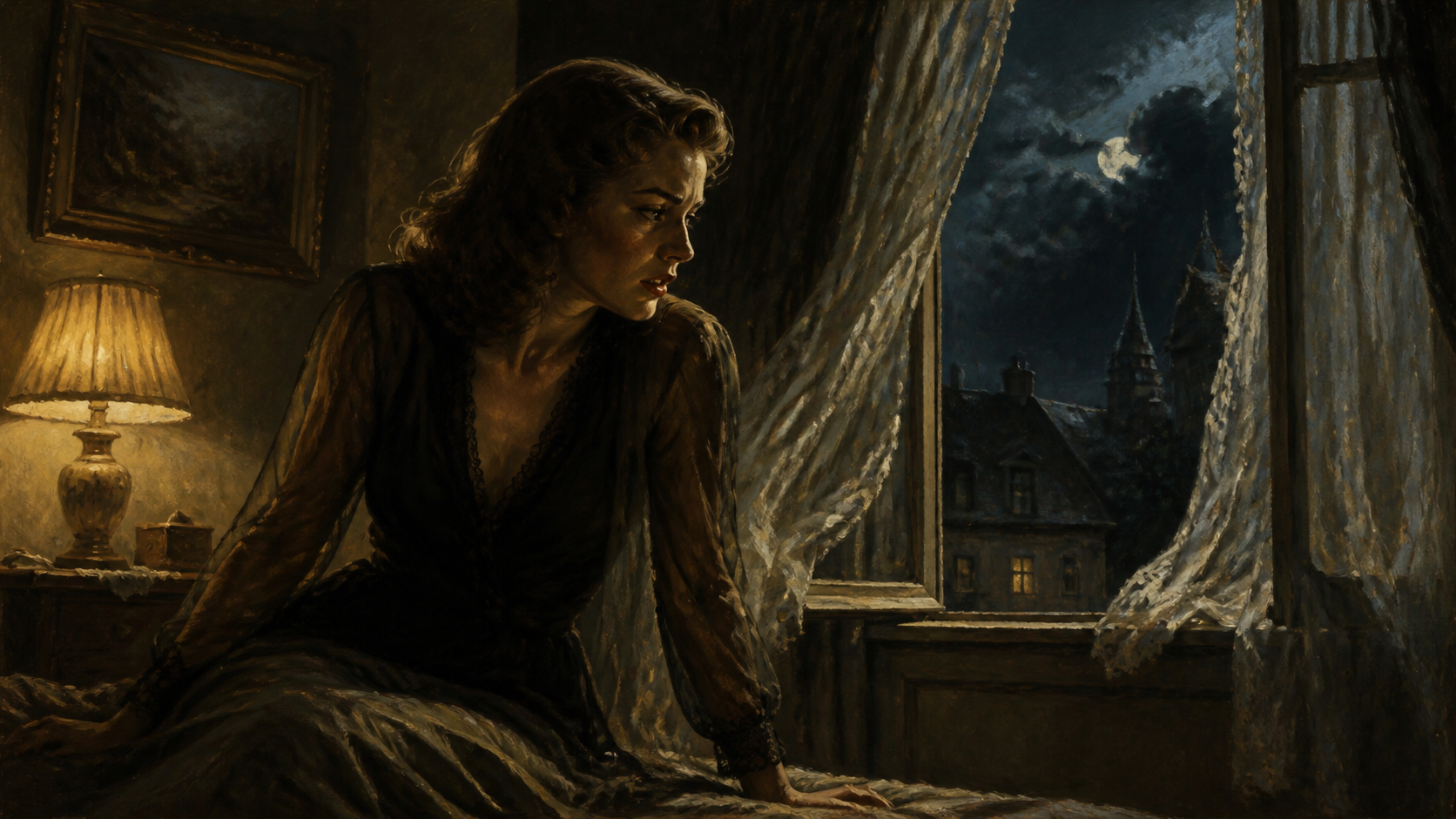
The Skin I Live In is Pedro Almodóvar’s 2011 Spanish-US psychological horror thriller, a coldly elegant tale of a surgeon whose experiments, grief and obsession lead him into appalling moral territory. It plays like a gothic revenge story filtered through body horror and captivity drama, with the kind of glossy surfaces and emotional corruption that make Almodóvar’s work so unsettling when it turns dark. The film’s distinctive appeal lies in the clash between its polished melodramatic style and its deeply cruel premise, which it explores without ever losing sight of the human wreckage at its centre.
The Film File
- Original release year: 2011
- Director: Pedro Almodóvar
- Credited writers: Pedro Almodóvar, Agustín Almodóvar, with collaboration from Thierry Jonquet; based on the novel Mygale by Thierry Jonquet
- Principal cast: Antonio Banderas as Robert Ledgard; Elena Anaya as Vera Cruz; Marisa Paredes as Marilia; Jan Cornet as Vicente; Roberto Álamo as Zeca; Bárbara Lennie as Norma Ledgard; Eduard Fernández as Fulgencio
- Approximate runtime: 120 minutes
- Countries of production: Spain, United States
- Relevant horror subgenres: psychological horror, body horror, captivity horror, revenge horror
Behind the Screams
The film is adapted, very loosely, from Thierry Jonquet’s 1995 novel Mygale (Tarantula in English). Almodóvar openly framed the source as a point of departure rather than a blueprint, and the finished film keeps only the broadest structural idea: a surgeon with a private laboratory, a captive, and a project built around control over flesh. The director has also described the film as a departure into a genre space that suited his interests at that moment, and the result feels less like a straightforward thriller than an Almodóvar melodrama stripped of warmth and pushed towards clinical cruelty.
The production reunited Almodóvar with Antonio Banderas, whose collaboration with the director had stretched back to the 1980s and early 1990s. That casting matters because Banderas brings a controlled, almost aristocratic stillness to Robert Ledgard, which makes the character more disturbing than if he were played as a ranting villain. Elena Anaya’s role is even more crucial. The film asks her to carry shifting identities, vulnerability and resolve, and the performance has to absorb the film’s reversals without breaking its emotional logic. Marisa Paredes, one of Almodóvar’s key recurring collaborators, adds another layer of family and institutional secrecy without the film needing to over-explain it.
The Skin I Live In premiered in competition at Cannes in 2011. That placement is telling: the film belongs to the director’s polished art-house sphere, but it is also aggressively extreme in content, dealing with sexual violence, confinement, medical violation and identity manipulation. Its horror is not built on supernatural spectacle. Instead, it emerges from the deliberate misuse of science, the abuse of power and the sense that intimacy itself has been weaponised.
Into the Dark
Robert Ledgard is a celebrated plastic surgeon working in a private, heavily secured environment. He is driven by grief and obsession, particularly after a personal catastrophe involving his daughter and wife, and he has developed a secret research programme that seems to promise a revolutionary synthetic skin. The film gradually reveals that this work is not just scientific ambition but a means of compensation, control and revenge. Robert’s world is one of immaculate interiors, surveillance, locked doors and professional detachment, all of which make his private behaviour seem even more predatory.
At the centre of that private world is Vera Cruz, a woman kept in isolation and treated as the subject of Robert’s experiments. The film withholds and then parcels out information about who Vera is, how she came to be there and why Robert is so invested in her transformation. As the story develops, the relationship between surgeon and captive becomes the film’s true engine, and the horror lies in the way Robert’s attempts to remake the body are tied to a fantasy of ownership. The outside world, meanwhile, remains entangled with family histories, old injuries and the consequences of violent male entitlement.
Spoilers ahead: the following paragraphs discuss major plot developments.
The film’s central twist is that Vera is not who Robert believes her to be. She is Vicente, the young man who was wrongly blamed for the assault on Robert’s daughter, Norma. After Vicente’s life collapses, Robert abducts him and uses sex reassignment surgery and forced bodily alteration to reshape him into Vera. Robert then subjects her to long-term imprisonment, cosmetic engineering and psychological domination, effectively converting revenge into a grotesque act of enforced identity theft. The film is not ambiguous about the cruelty of this process; it presents Robert’s project as a violation of body, consent and selfhood on every level.
That revelation recasts everything that came before it. What looked like a clinical thriller becomes a far more pointed story about gendered control and the violence of medical authority. Vicente does not simply escape by chance; she has to reclaim a name, a body and a place in the world after being remade against her will. The ending matters because it refuses to treat restoration as clean or easy. The damage is permanent, but the final turn gives Vicente a way to step back into life, however fractured, and to expose the truth of Robert’s “creation” to the people closest to him.
What Gets Under Your Skin
The film’s atmosphere is one of its major achievements. Almodóvar shoots the material with a polished calm that heightens rather than softens the dread. Instead of gritty panic, he gives the story symmetry, immaculate design and controlled pacing, which makes the underlying abuse feel more deliberate and therefore more horrifying. The visual world is elegant, but it is also sterile, and that sterility becomes part of the horror language: Robert’s home and laboratory feel like extensions of a mind that confuses mastery with morality.
Performance is central to the film’s effect. Banderas avoids cartoon villainy, making Robert intellectually composed and emotionally opaque rather than explosively mad. That restraint is what allows the character’s brutality to register as something methodical, even rationalised. Elena Anaya has the hardest task and the more important one: she has to shift the audience’s understanding of the film while preserving emotional continuity, and she does so with a combination of fragility, anger and intelligence. The supporting cast, especially Marisa Paredes, deepens the family and domestic unease without pulling the film away from its austere centre.
The film also uses horror in a particularly pointed way. Its most disturbing material is not there for shock value alone, even though the content is undeniably extreme. The body horror is inseparable from theme: skin, surgery and cosmetic reconstruction all become symbols of possession, trauma and false transformation. That gives the film a queasy precision. It is not trying to frighten through sudden attack or monster revelation, but through the logical extension of obsession into atrocity. For viewers who respond to horror as an exploration of identity, bodily autonomy and revenge, that approach is far more memorable than simple gore.
One of the film’s strengths is that it keeps multiple tones in balance. It has the structure of a revenge melodrama, the surface of a sleek erotic thriller and the moral temperature of nightmare cinema. Those registers do not always sit comfortably together, but that friction is part of its power. When the film is at its best, the elegance of the presentation makes the material feel even more corrosive, as if respectability itself were another disguise.
The Film’s Afterlife
The Skin I Live In was widely discussed as one of Almodóvar’s darkest films, and its reputation has only grown as viewers have revisited it alongside the director’s more overtly melodramatic work. It remains especially notable for the way it folds horror into his recurring concerns with desire, family, performance and bodily identity, rather than treating genre as a detached exercise. That combination has made it a frequent reference point whenever people discuss prestige horror that is also explicitly about gendered control and medicalised violence.
Its place in Almodóvar’s filmography matters too. Coming after a long run of dramas, it showed how completely he could retool his style without losing his authorial identity. The film is not a conventional franchise title and does not belong to a larger horror cycle, but it has persisted because it is hard to confuse with anything else: severe, glossy, perverse and emotionally exacting in ways that linger after the plot details settle.
Horripilations Verdict
A sleek and deeply unsettling body-horror melodrama, powered by rigorous control, strong performances and a genuinely unnerving premise. It is not a broad shock machine, but it is one of the more memorable examples of prestige horror shaped by obsession, violation and revenge.
What works
- Elegant visual control
- Antonio Banderas and Elena Anaya anchor the film with precision
- The horror concept is both provocative and thematically exact
What holds it back
- Its emotional ice may keep some viewers at a distance
- The twist-driven structure can feel deliberately withholding at first