Released in 1982, The Entity is a supernatural horror film with an unusually bleak, bruising premise: a single mother in Los Angeles is repeatedly assaulted by an unseen force while the people around her struggle to decide whether she is being haunted, traumatised or dismissed. What gives the film its distinctive pull is the collision between tabloid-shocking subject matter and a serious, sceptical framework. It is not a playful ghost story or a neatly packaged possession tale. Instead, it sits in the uneasy space between paranormal horror and psychological terror, with a cold, adult-minded interest in disbelief, bodily violation and institutional failure.
The Film File
- Original release year: 1982 in the United States; it opened in Los Angeles and New York on 4 February 1983 after earlier international openings.
- Director: Sidney J. Furie.
- Credited writer: Frank De Felitta, adapting his own novel.
- Principal cast: Barbara Hershey as Carla Moran; Ron Silver as Phil Sneiderman; David Labiosa as Billy; George Coe as Dr. Weber; Margaret Blye as Cindy Nash; Jacqueline Brookes as Dr. Cooley; Richard Brestoff as Gene Kraft; Michael Alldredge as George Nash; Raymond Singer as Joe Mehan; Allan Rich as Dr. Walcott.
- Approximate runtime: 120 minutes for the theatrical version; some listings give 125 minutes, but the AFI Catalogue records 120 minutes.
- Country of production: United States.
- Relevant horror subgenres: supernatural horror, psychological horror, paranormal horror, rape-revenge-adjacent trauma horror, haunted-house horror.
Behind the Screams
The Entity began life as Frank De Felitta’s 1978 novel, which was itself based on an alleged real-life case involving a Los Angeles woman known publicly by the pseudonym Carla Moran. De Felitta wrote the screenplay as well, keeping the film close to the basic structure of the book: a woman is attacked in her home by something invisible, then finds herself trapped between escalating terror and a culture that is ready to explain her suffering away. The adaptation was not merely a matter of preserving a sensational premise. It was a way of retaining the story’s central tension between explanation and experience, between what can be measured and what refuses to be contained by a diagnosis.
The film’s production history is straightforward in some places and less settled in others. The AFI Catalogue records a late March 1981 to early July 1981 production period in Culver City, California, with Twentieth Century-Fox handling distribution. It also notes that Barbara Hershey was cast only days before principal photography began and had reservations about nude scenes, which is a concrete, production-level detail rather than a folklore-heavy anecdote. The result is a film that feels shaped around a performance under pressure: Carla is not written as a decorative horror heroine but as a working mother whose domestic life, financial strain and emotional exhaustion all matter to the story.
Sidney J. Furie’s direction is important because it keeps the film from collapsing into either camp excess or solemn abstraction. The material could have become a mere exploitation vehicle, especially given its notorious premise, but Furie and De Felitta aim for a grim procedural tone. That choice matters. The film keeps returning to attempts at documentation, explanation and diagnosis, from medical and psychiatric scrutiny to paranormal investigation, and that structure gives the story a bleak credibility even when events become increasingly impossible to dismiss. The creativity here lies less in stylistic flamboyance than in refusing easy certainty.
Into the Dark
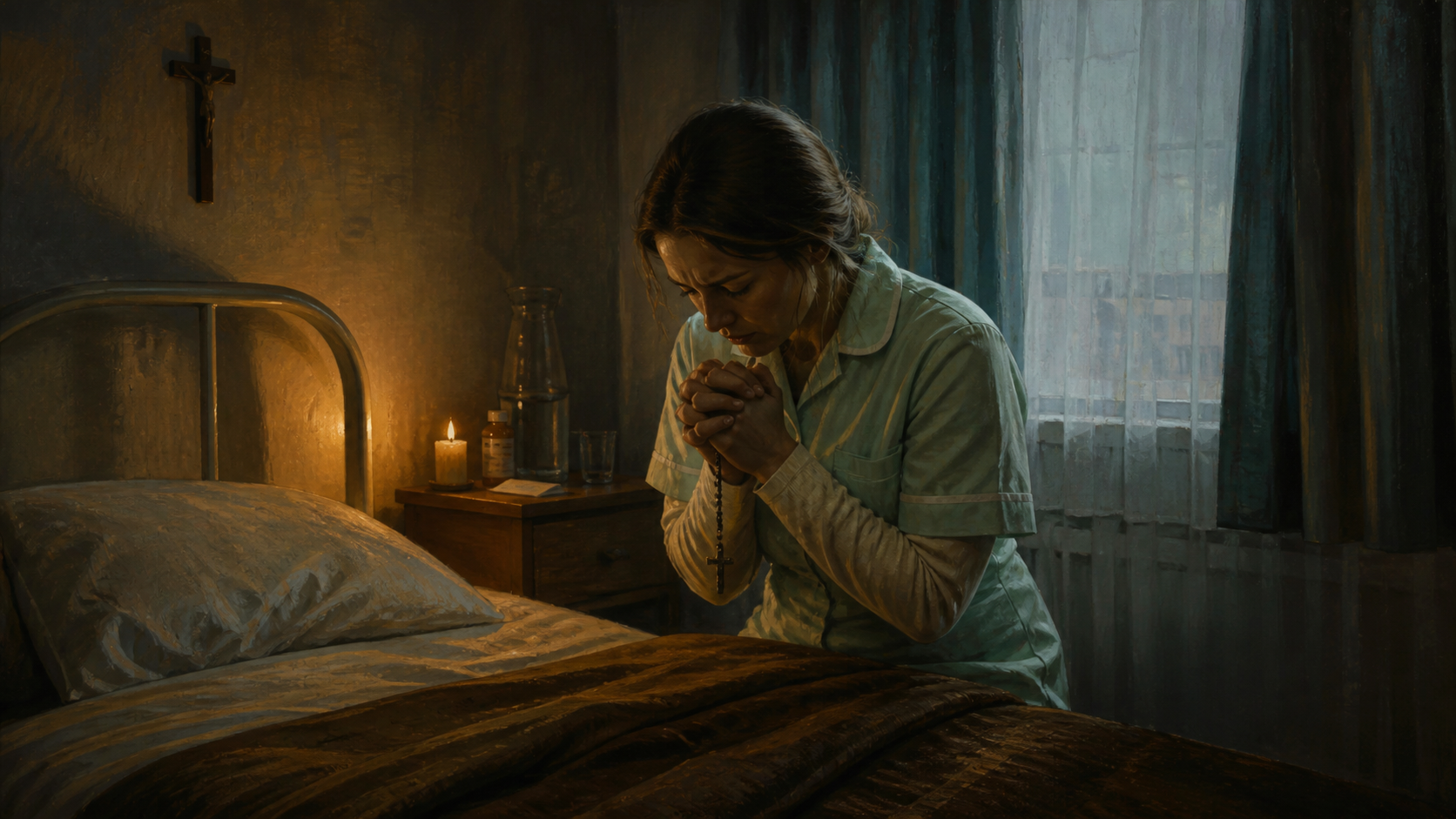
Carla Moran is a divorced or separated mother trying to hold together work, parenting and ordinary life in Los Angeles. When the attacks begin, the film treats them first as intimate, isolating episodes and then as a pattern that spreads into every part of her daily routine. The horror is not only that something is violating her, but that each new incident deepens the gap between what she knows has happened and what other people are willing to believe. The house becomes a site of dread, but the wider fear is social: if no one will acknowledge the assaults, then Carla is left to endure them alone.
The story develops through a series of increasingly difficult encounters with authority and expertise. Phil Sneiderman, a psychiatrist played by Ron Silver, becomes central to the film’s sceptical side. He initially approaches Carla’s experiences through trauma and stress, and the film does not present that impulse as absurd. In fact, it is one of the film’s most effective ideas that a rational explanation is both plausible and inadequate. The attacks continue, the evidence becomes harder to rationalise, and the story gradually shifts from disbelief to reluctant investigation. That makes The Entity less a mystery in the conventional sense than a sustained argument about how women’s testimony is received when it describes things outside the expected boundaries of experience.
Spoilers ahead: the following paragraphs discuss major plot developments.
As the attacks intensify, Carla’s home is subjected to direct investigation by a team interested in the paranormal, and the film pushes further into explicit conflict between scientific scepticism and supernatural evidence. Their involvement does not tidy the story up or reduce it to a neat “yes, ghosts exist” conclusion. Instead, it confirms that something hostile is present while leaving the larger mystery of its nature unresolved. The film’s final movement is therefore less about solving the case than about recognising the cost of being forced to prove one’s suffering before it is taken seriously.
That ending matters because it preserves the film’s central wound. The Entity is not primarily interested in a puzzle-box explanation. It is interested in what happens when bodily terror, domestic vulnerability and social disbelief intersect. Even after the paranormal element is acknowledged, the film does not become reassuring. If anything, it underscores how deeply the experience has already damaged Carla and how little institutional language is built to catch hold of that damage.
What Gets Under Your Skin
The film’s strongest quality is its oppressive seriousness. It refuses the comforting release that some supernatural horror offers, where the right ritual, object or revelation clarifies the threat. Here, the threat is intimate and invasive, and the film keeps stressing Carla’s exposure. That makes the horror less about jump scares than about violation, embarrassment and powerlessness. For viewers attuned to horror as a form of social anxiety as much as spectacle, that is a potent combination.
Barbara Hershey is the film’s decisive asset. She gives Carla a stressed, lived-in credibility that prevents the role from becoming either a victim stereotype or a prestige-horror symbol. The character is constantly required to be legible to other people, and Hershey makes that burden visible: irritation, shame, fear, stubbornness and exhaustion all register at once. Ron Silver’s performance works differently, offering a controlled counterweight that allows the film to dramatise scepticism without making it cartoonishly villainous. The tension between them gives the story its sharpest dramatic edge.
Visually, the film is most effective when it treats the ordinary spaces of home as unstable and exposed rather than transforming them into gothic architecture. This is not a heavily stylised haunted-house film in the classic mould. Its rooms, corridors and domestic surfaces feel recognisable, which makes the intrusions more disturbing. The craft leans toward rough realism rather than elaborate design flourishes, and that restraint suits the material. When the film does go fully into overt supernatural manifestation, it is impactful precisely because so much of the running time has been spent in grounded uncertainty.
The horror is also unusually bodily. This is a film about touch, force and unwanted contact, which gives it a rawness that goes beyond the usual haunted-house repertoire. That can make it difficult viewing, and the film’s notoriety is not hard to understand. But the point is not merely to shock. The repeated assaults are the mechanism by which the film expresses Carla’s loss of control, and by refusing to soften that reality, it keeps the emotional stakes brutally clear. The intensity is not decorative; it is structural.
Where the film is less persuasive is in its pacing and repetition. The premise is powerful enough that a certain amount of reiteration is inevitable, but the middle passages can feel procedural in a way that slightly drains momentum. The upside is that this gives the film a methodical, almost investigative rhythm. The downside is that some viewers may experience it as narrow, even when the film is deliberately narrowing in on Carla’s world. It is a limitation of structure rather than of ambition.
Still, The Entity has a particular kind of unsettling confidence. It is not interested in broad mythmaking or baroque world-building. It wants to ask what happens when an ordinary woman says something impossible is happening to her, and what the cost is when the world around her keeps trying to translate her experience into something more palatable. That is a strong horror premise, and the film commits to it with enough conviction that the result remains compelling even when its mechanics are uneven.
The Film’s Afterlife
At the time of release, reception was mixed rather than celebratory. Contemporary commentary often focused on the film’s abrasive premise and its heavy-handedness, while later reassessments have tended to value Hershey’s performance and the film’s grim seriousness more highly than the original critical climate did. Rotten Tomatoes currently lists the film at 62% from 13 critic reviews, checked on 21 November 2026, which suggests a modestly positive contemporary consensus rather than canon status. The film has also lingered in horror discussion because of its unusual blend of supernatural threat, trauma narrative and quasi-procedural scepticism, as well as because it was loosely tied to a reported real-world case that continues to invite debate.
Horripilations Verdict
A grim, unusually serious supernatural horror film that turns disbelief itself into the main source of dread. Hershey’s performance and the film’s harsh focus on violation give it lasting force, even if the middle sections can feel repetitive.
What works
- Barbara Hershey’s committed lead performance
- The unsettling blend of psychological and supernatural horror
- Its blunt, uncompromising treatment of terror and disbelief
What holds it back
- The central pattern of attacks can become repetitive
- The procedural middle occasionally slows the momentum