Lucio Fulci’s The Beyond is a 1981 Italian horror film built around a cursed New Orleans hotel, a hidden gateway to hell and the slow collapse of ordinary reality into nightmare. It sits at the intersection of gothic horror, supernatural apocalypse and grotesque body horror, with Fulci turning a simple premise into something delirious, disorientating and often viciously tactile. For horror fans, its appeal lies in the way it trades tidy explanation for mood, imagery and a sense of cosmic wrongness that keeps widening as the story progresses.
The Film File
- Original release year: 1981.
- Director: Lucio Fulci.
- Credited writers: Dardano Sacchetti, Giorgio Mariuzzo and Lucio Fulci; the film also credits H.P. Lovecraft and Clark Ashton Smith for inspiration in later credit listings.
- Principal cast: Catriona MacColl as Liza Merril; David Warbeck as Dr. John McCabe; Cinzia Monreale as Emily; Antoine Saint-John as Schweick; Veronica Lazar as Martha; Al Cliver as Dr. Harris; Michele Mirabella as Martin Avery; Giovanni De Nava as Zombie Schweick.
- Approximate runtime of the version described here: 87 minutes.
- Country of production: Italy.
- Relevant horror subgenres: gothic horror, supernatural horror, occult horror, zombie horror, body horror.
Behind the Screams
The Beyond is best understood as part of Fulci’s early-1980s horror surge, when he was making films that leaned harder into dream logic, explicit effects and metaphysical dread. The film was produced by Fabrizio De Angelis for Fulvia Film and is commonly associated with the so-called Gates of Hell cycle, alongside City of the Living Dead and The House by the Cemetery. In production-credit terms, the core creative trio is straightforward enough: Fulci directed and co-wrote with Dardano Sacchetti and Giorgio Mariuzzo. The film’s later credit listings also foreground literary inspiration from H.P. Lovecraft and Clark Ashton Smith, which fits its atmosphere and imagery, although it is not an adaptation of a single specific story.
The film’s most important production fact is its international construction. It was shot partly on location in Louisiana, with interiors completed in Rome, which helps explain why the setting feels both recognisable and slightly unreal. The story’s New Orleans backdrop is not just decorative: the location was used to anchor a film that otherwise keeps slipping away from realism. That tension between American gothic detail and Italian horror stylisation is one of the project’s defining qualities. Contemporary and later accounts of the film’s making also point to the practical, sometimes improvised way Fulci worked, with a three-page concept outline frequently mentioned in interviews and production recollections. That detail is widely repeated, though it belongs more to behind-the-scenes lore than to the core facts of the finished film. The solid point, in any case, is that the movie was developed with enough looseness to allow Fulci’s visual imagination to dominate the final shape.
What matters creatively is the decision to make the hotel itself the film’s central engine of dread. The opening prologue in 1927 establishes the place as contaminated before the modern story even begins, and the structure then returns to the decayed property in the present day, where renovation, inheritance and investigation all become forms of trespass. Fulci and his collaborators build the film less as a mystery than as a descent. The sets, make-up effects and sound work all serve that downward pull, with gore not used as random decoration but as a way of making the supernatural feel physically invasive. Later restoration materials also underline how the film existed in multiple versions, including the heavily altered U.S. release 7 Doors of Death, which confirms how much the movie’s reception history is tied to censorship, re-editing and distribution rather than to a single stable cut.
Into the Dark
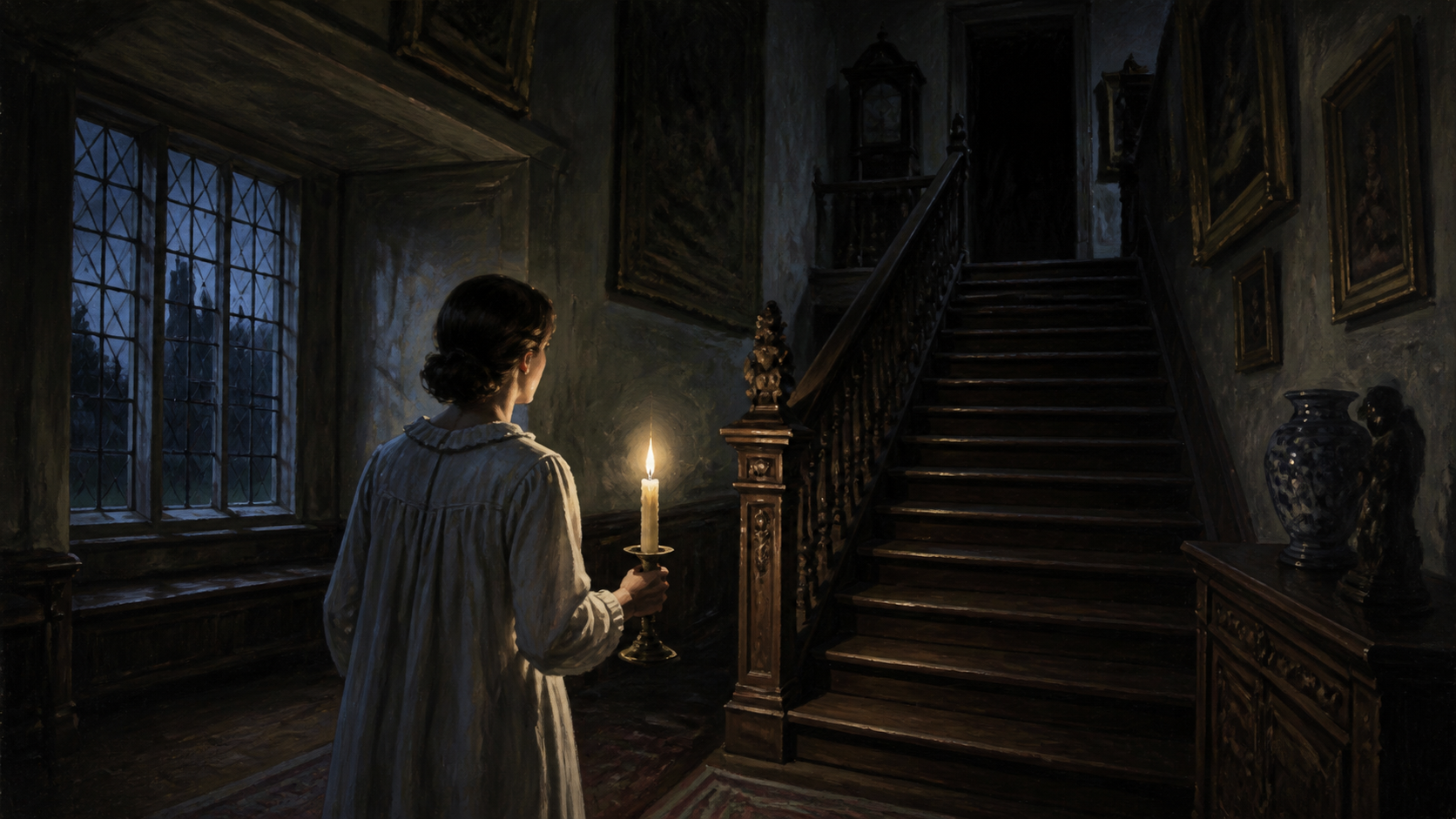
The story begins in 1927, when an artist named Schweick is attacked in the Seven Doors Hotel after his activities and his paintings suggest that the building is bound up with something infernal. The film then jumps to the present day, where Liza Merril inherits the old hotel and plans to restore it. Almost immediately, the renovation work begins to expose the building’s rotten core, while a blind local woman, Emily, warns Liza that the place is marked by death and should not be opened. A series of strange accidents and violent deaths soon follow, drawing in Dr. John McCabe and others as the hotel’s sealed past starts to intrude on the present. The premise is simple on paper, but the effect is of a place gradually shedding the last traces of normality and revealing itself as a threshold rather than a building.
As the narrative unfolds, the investigation into the hotel’s history becomes less important than the growing evidence that the building is already open to forces no one can control. Corpses, infections, assaults and apparitions do not behave like discrete plot events so much as symptoms of a larger breach. Fulci keeps the story lean enough that the film never has to explain everything in neat terms, but the underlying conflict is clear: Liza and McCabe are trying to survive in a place that has become hostile at a metaphysical level. The hotel is less haunted than permeated, and the living are gradually pushed into the same horrific orbit as the dead.
Spoilers ahead: the following paragraphs discuss major plot developments.
What finally gives the film its shape is the discovery that the hotel is one of the seven gates to Hell, and that the physical space itself has become a passage into the Beyond. The characters’ attempts to escape do not restore order. Instead, they are driven deeper into the hotel’s underworld, where the boundary between the living and the damned collapses. By the end, Liza and McCabe move through a landscape of corpses and desolation that confirms the film’s title literally rather than symbolically. That ending matters because it rejects the usual horror expectation that survival will bring closure. Here, survival only means moving from one chamber of dread to another, until the world itself is revealed as contaminated.
What Gets Under Your Skin
The Beyond is often praised for atmosphere, but that word can undersell what it is actually doing. The film’s most striking quality is not merely mood, but the way it makes the world feel unstable. The Louisiana setting gives it a southern-gothic texture, yet Fulci refuses the comfort of classical gothic grandeur. Instead, the hotel, the hospital, the roads and the interiors all seem infected by the same sense of decay. That is why the film lands so effectively as supernatural horror: it is not just that bad things happen, but that the environment itself seems to have lost its moral or physical coherence.
The performances serve that design well. Catriona MacColl gives Liza a needed steadiness, which matters because the film surrounding her becomes increasingly irrational. David Warbeck brings a practical, sceptical energy as McCabe, helping the story feel grounded even when the images do not. Cinzia Monreale’s Emily adds an eerie, near-oracular quality without turning the role into a stock guide-to-the-supernatural figure. Fulci’s casting is effective precisely because it avoids theatrical excess in the central roles, leaving the shock and extravagance to the film’s eruptions of violence and uncanny spectacle.
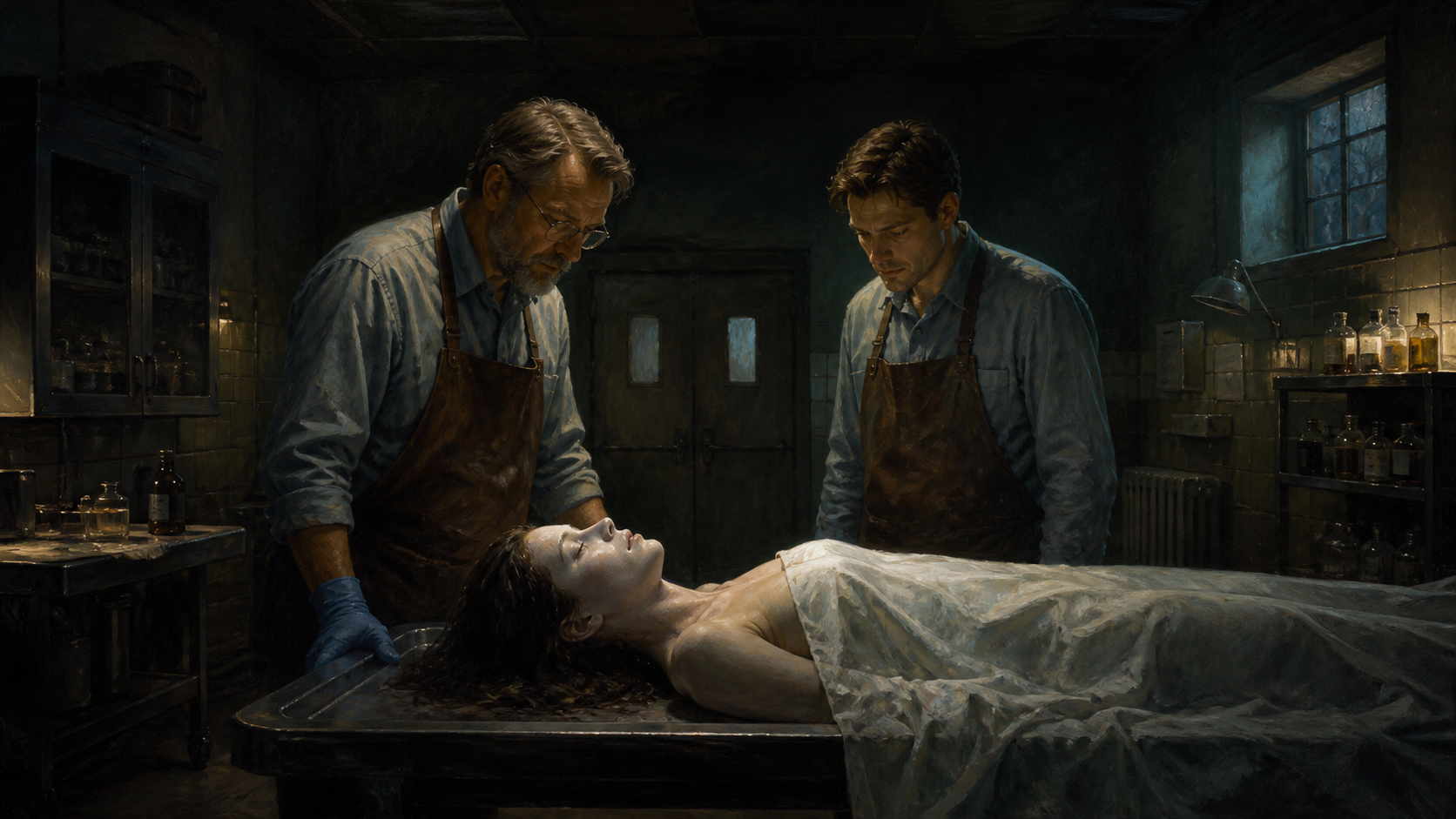
Visually, the film is most memorable for the way it stages gore as part of a broader fever dream. The effects are notorious, but what makes them linger is not only their extremity. They are organised around recurring patterns of injury, blindness, decay and bodily vulnerability, so the violence feels thematically loaded rather than merely splatter-oriented. Fulci is especially interested in broken perception, which is why eyes, walls, corridors and blocked exits matter so much. The horror is physical, but it also has a disorientating logic: people do not just die, they are made to confront a world in which seeing, moving and escaping all become unreliable.
The sound and music deepen that effect. Fabio Frizzi’s association with the film is central to its reputation, and later restorations even revisited the score in new versions, which says something about how strongly the music contributes to the film’s identity. More broadly, the soundscape helps hold together scenes that could otherwise feel arbitrary. Fulci’s cinema can be episodic, but here the audio design and score keep returning the viewer to the same polluted atmosphere, as if the hotel were leaking into the soundtrack. That is one reason the film feels so immersive despite its narrative looseness. It is not aiming for tidy suspense so much as sustained unease.
Storytelling is where the film divides opinion most sharply, and with good reason. The film values progression by nightmare association more than by explanation, so characters can feel secondary to the next image or effect. For some viewers, that looseness is a feature because it preserves the film’s hallucinatory power. For others, it can make the drama feel thin compared with the force of the visuals. Yet that tension is also part of the film’s identity. The Beyond is not trying to function like a conventional mystery or a tightly engineered supernatural thriller. It is trying to make dread feel inevitable, and its success depends on that single-mindedness.
The Film’s Afterlife
At the time of writing, contemporary reception remains strong enough for the film to retain cult-classic status, but not so unanimously strong that it has become a universally agreed masterpiece. Rotten Tomatoes currently lists it at 75% positive reviews from 24 critic reviews, a useful snapshot of its critical standing rather than a complete measure of its value. The film’s reputation was also shaped by distribution history: for years many viewers knew it primarily through the shortened U.S. version 7 Doors of Death, before the fuller cut became more widely available. That history has helped cement the film as both a censorship-era artefact and a touchstone of Italian horror excess.
Horripilations Verdict
A vivid, coherently vile gothic nightmare that turns a cursed hotel into a descent into metaphysical horror. Its narrative is deliberately loose, but the film’s imagery, effects and atmosphere make that looseness feel purposeful rather than careless.
What works
- Remarkably oppressive setting and visual design
- Memorable practical effects and bodily horror
- Strong central performances anchor the delirium
What holds it back
- Story progression can feel sketchy by design
- Characters are sometimes subordinated to the next shock