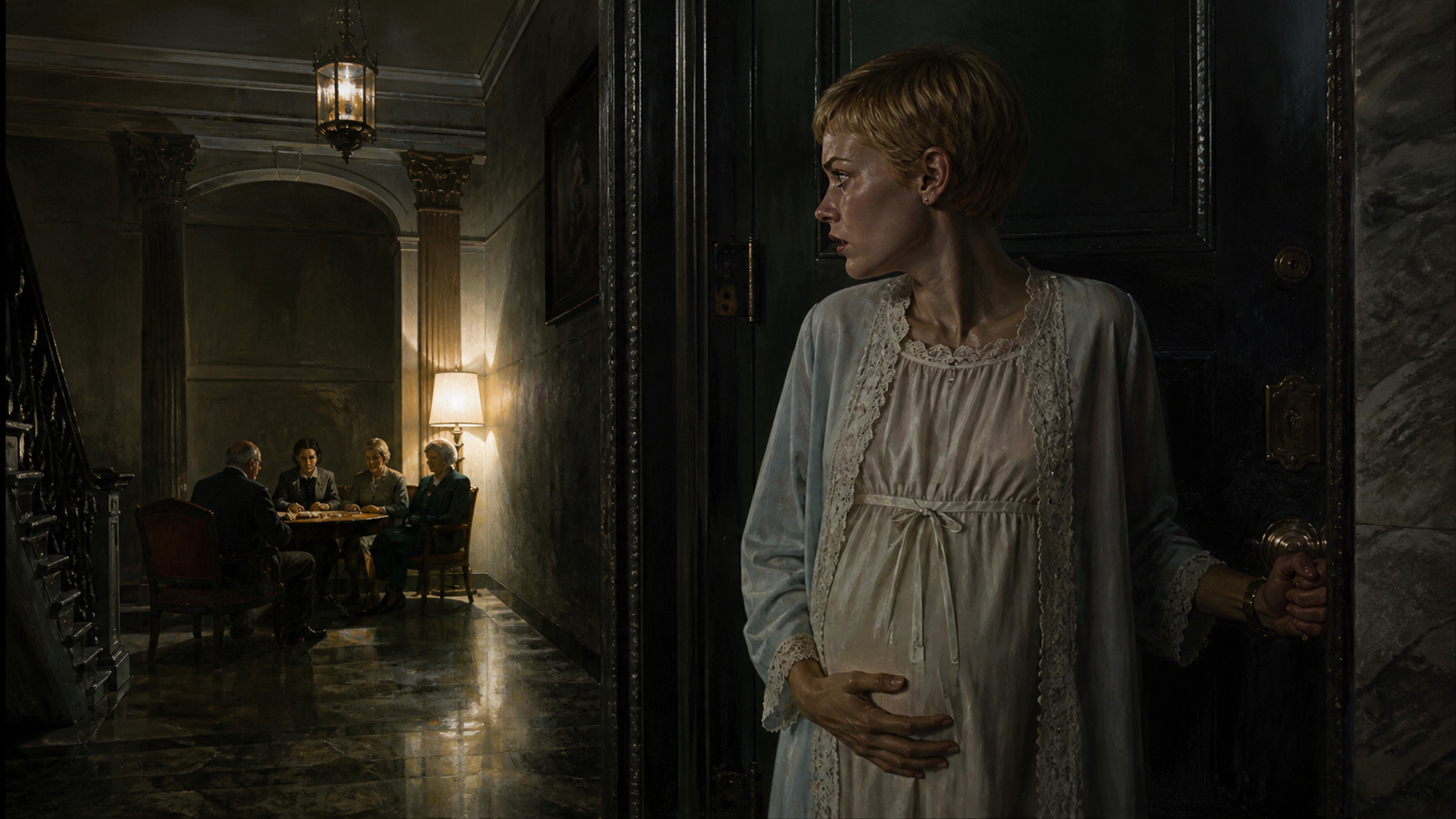
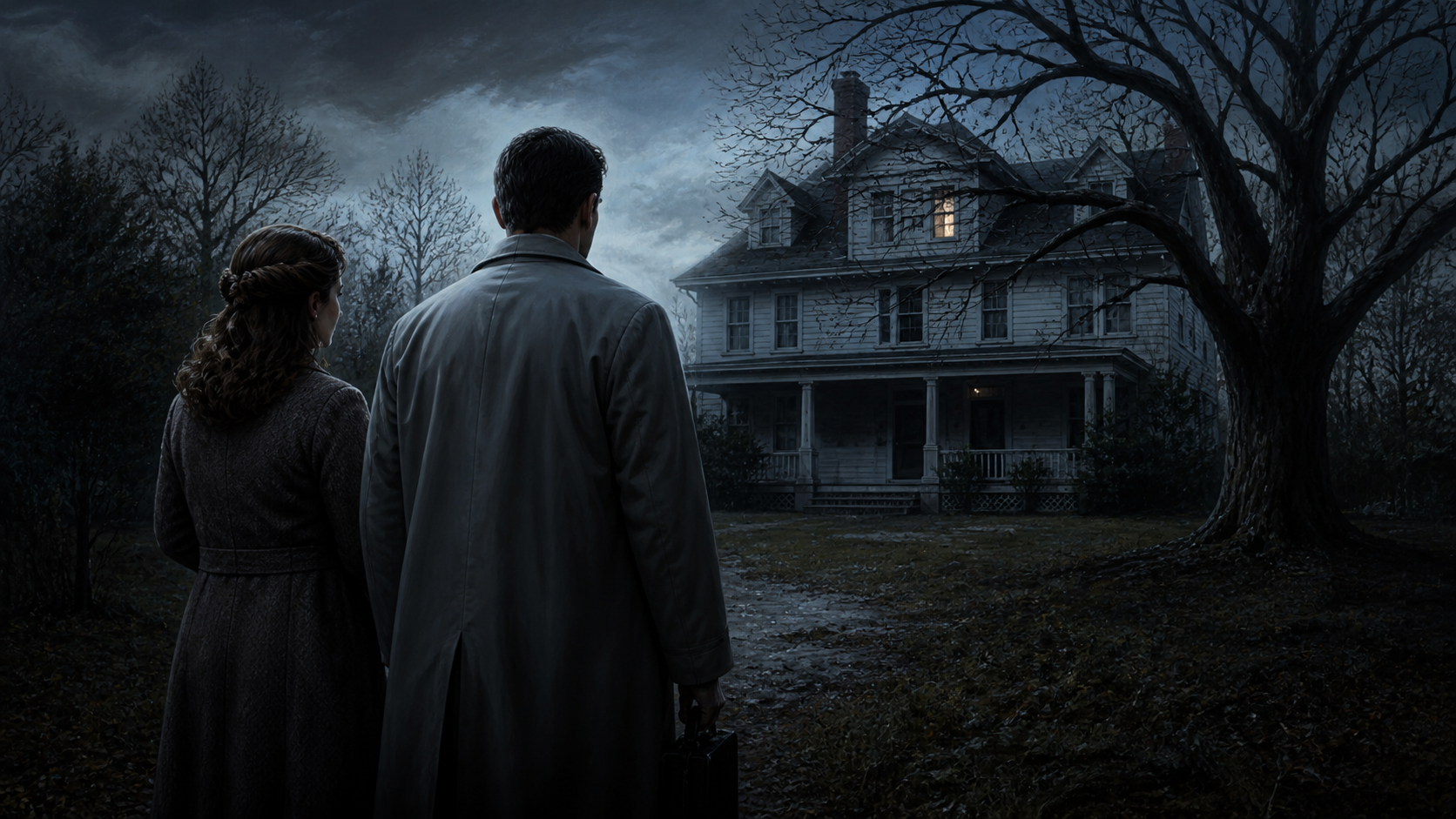
The Haunting (1963) is Robert Wise’s elegant, unnerving adaptation of Shirley Jackson’s The Haunting of Hill House, a supernatural psychological horror film about a small group assembled in an allegedly cursed mansion to investigate whether the place is truly haunted or whether something far less stable is happening to one of them. It is a ghost story, but one rooted in doubt, emotional vulnerability and suggestion rather than spectacle, which is exactly why it still commands attention from horror fans looking for something more controlled and insidious than a barrage of shocks.
The film’s appeal lies in the way it turns the old dark-house premise into a study of pressure, desire and dread. It is both stately and feverish, with the supernatural left tantalisingly ambiguous for long stretches and the human cost made uncomfortably clear. If you already know the title, this is the version that shaped much of the modern haunted-house template; if you are new to it, the pleasure comes from seeing how much fear Wise can generate without showing you very much at all.
The Film File
- Original release year: 1963
- Director: Robert Wise
- Writer: Nelson Gidding, based on the novel The Haunting of Hill House by Shirley Jackson
- Principal cast: Julie Harris as Eleanor Vance; Claire Bloom as Theodora; Richard Johnson as Dr John Markway; Russ Tamblyn as Luke Sanderson; Lois Maxwell as Grace Markway; Fay Compton as Mrs Sanderson
- Approximate runtime: 107 minutes for the version listed in current classification records; the original cinema version is listed at 114 minutes 12 seconds
- Country of production: USA and United Kingdom
- Horror subgenres: supernatural horror, psychological horror, haunted house film, gothic horror
Behind the Screams
The Haunting was developed from Shirley Jackson’s 1959 novel The Haunting of Hill House, though the finished screenplay by Nelson Gidding significantly reshapes the material for the screen. Robert Wise first encountered the novel through a review, then pursued the project with Gidding. The film eventually entered production in England, with Wise producing as well as directing. The BFI and AFI both identify the film as a 1963 USA and United Kingdom production, and contemporary records show filming began in October 1962 before the film opened in September 1963. It was released in New York and Los Angeles on 18 September 1963.
One of the most important creative decisions was to make the house itself feel oppressive without relying on obvious effects. Wise shot in Panavision and deliberately used the format to exaggerate corridors and doorways, making the interiors feel longer, darker and more difficult to navigate. The film’s black-and-white photography and sound design do a great deal of the work that modern horror might assign to visible apparitions. That restraint was not a lack of resources so much as a guiding principle. The production was aiming for unease through composition, rhythm and suggestion, not a parade of supernatural sights.
The adaptation also alters the balance of the novel by making Eleanor Vance even more central to the emotional and psychological action. This is one reason the film has often been discussed as both a ghost story and a study of mental fragility. The screenplay narrows the focus onto Eleanor’s isolation and her relationship with Theo, while keeping the group investigation framework intact. Jackson’s book is itself famously resistant to easy reduction, and the film preserves that ambiguity while making the interpersonal tensions more immediately visible.
There are also concrete production facts that matter because they shaped the film’s final texture. Wise had worked earlier in his career with Val Lewton, whose productions prized implication over explicitness, and The Haunting clearly draws from that lineage. The score by Humphrey Searle adds another layer of strain rather than simply underscoring scares. And while later accounts sometimes exaggerate the film’s “curse” or invent colourful anecdotes, the real story is more interesting: a carefully controlled studio production that set out to make a sophisticated ghost film and did so with unusual discipline.
Into the Dark
Dr John Markway recruits Eleanor Vance and Theodora, along with heir Luke Sanderson, to stay at Hill House and document reported supernatural disturbances. The mansion’s history already includes tragedy, loss and unexplained events, and the house quickly begins to seem less like a setting than an active force. Doors move, knocks echo, messages appear on walls, and the inhabitants start to feel that the place is responding to them individually. Eleanor, in particular, becomes increasingly vulnerable to the house’s claims on her attention and identity.
The film’s central conflict is not simply whether ghosts exist, but what Hill House does to people who arrive carrying loneliness, guilt or emotional instability. Markway approaches the house as a rational investigator, yet the more the film progresses, the more it undermines his neat categories. Theo is perceptive and teasing, Luke is sceptical and evasive, and Eleanor is so eager to belong that she becomes dangerously open to suggestion. As the haunting intensifies, the house seems to isolate Eleanor from everyone else, turning her private fears into something that can be manipulated and amplified.
Without needing elaborate exposition, the film steadily makes the viewer understand that Hill House is not a place where the group can simply gather evidence and leave with a verdict. It is a pressure chamber. The story matters because it keeps collapsing the distance between the supernatural and the psychological, so that every disturbance feels both like an external attack and a manifestation of inner collapse. That tension is the film’s real engine, and it is why the ending lands as more than a procedural conclusion.
Spoilers ahead: the following paragraphs discuss major plot developments.
As the haunting worsens, Eleanor becomes convinced that the house is communicating with her personally and offering her a place of belonging that she has never had in ordinary life. The disturbances culminate in a fatal confrontation with the house, and Eleanor dies after crashing her car into a tree while trying to escape. The film then closes on the grim suggestion that Hill House has not been conquered or understood, only briefly interrupted. Dr Markway and the others are left with proof that something terrible happened, but no comfortable mastery over it.
What makes this ending effective is that it confirms the film’s tragic logic. Eleanor is not merely frightened into death. She is drawn towards a place that seems to promise identity, recognition and rest, and the film treats that temptation as part of the horror. The supernatural and emotional strands are inseparable by the final stretch, which is why the conclusion feels devastating rather than merely macabre.
What Gets Under Your Skin
The film’s atmosphere is its greatest strength, but not in the vague sense of “good mood”. The Haunting uses sound, framing and darkness with precision to create the sense that the house is listening. The banging on the walls, the odd silences, the off-screen noises and the repeated emphasis on closed doors turn ordinary domestic spaces into threats. Because the film so often refuses to show the source of what is happening, the viewer is left to do some of the fear-making work, which gives the dread a particularly intimate quality.
Its storytelling is equally effective when it stays close to Eleanor. The film does not treat her as a mere victim of a spooky house. Julie Harris gives her loneliness, neediness and suspicion a real texture, so that the character’s fear and susceptibility never feel abstract. Claire Bloom’s Theodora provides warmth, wit and a tantalising possibility of connection, while Richard Johnson plays Markway with enough seriousness to prevent the investigation from becoming a parody of academic certainty. Russ Tamblyn is sharp, sceptical and lightly abrasive as Luke, which helps keep the group dynamic in motion.
Visually, the film is striking without being showy. The black-and-white image gives Hill House a bleak, almost funereal clarity, and the production design makes every room look as if it has absorbed decades of regret. Wise’s use of wide framing gives the interiors a warped grandeur, making the house feel bigger than the people inside it and somehow less stable than a normal building should be. The effect is not simply gothic decoration. It is spatial anxiety. The house feels wrong before anything overtly supernatural happens in it.
The horror is also notable for what it withholds. This is not a film of creature reveals or elaborate special effects. Its power comes from the possibility that the house may be haunted, from the possibility that Eleanor may be breaking down, and from the possibility that those two ideas are the same thing by the end. That ambiguity is not evasive. It is the film’s design. For viewers expecting jump-scare mechanics, the pace may feel measured, but the slow burn is doing serious work. The film builds a sense of suffocation that makes its later bursts of terror feel earned rather than manufactured.
One limitation, depending on taste, is that the dialogue-heavy middle passages can feel deliberate to the point of chilliness. Wise is clearly more interested in tension than momentum, and the film occasionally pauses longer than some viewers will want before the next disturbance arrives. But that restraint is also integral to the style, and it suits a story where the atmosphere of waiting matters as much as the shocks themselves. The film’s sophistication comes from not over-explaining or overplaying its hand.
The Film’s Afterlife
The Haunting was not universally admired on release. Contemporary notices were mixed, with some critics finding it elegant but insufficiently convincing in plot terms. That reaction did not last. The film’s reputation grew steadily, and later criticism has tended to treat it as one of the key haunted-house films of the 20th century, especially for the way it fuses psychological instability with supernatural suggestion. Its influence is easy to trace in later ghost stories that prioritise subjective dread over visible monsters.
The title has also remained culturally active because of the 1999 remake, which inevitably invites comparison. That later film is useful mostly as a reminder of how unusual the 1963 version is: less loud, less literal and much more disturbing in the long run. For many horror fans, Wise’s film remains the more revealing adaptation because it understands that a haunted house is frightening not merely when it contains ghosts, but when it starts to feel like a place where loneliness can be weaponised.
Horripilations Verdict
A beautifully controlled haunted-house film that turns architecture, performance and suggestion into genuine dread. It is less interested in spectacle than in psychological pressure, and that discipline gives it unusual staying power.
What works
- Julie Harris gives Eleanor Vance a fragile, absorbing centre
- The sound design and widescreen staging make Hill House feel actively hostile
- The film’s ambiguity deepens the horror instead of softening it
What holds it back
- Its measured pace may feel austere to viewers wanting more overt shocks
- Some midsection dialogue stretches tension so far that the film can seem emotionally sealed off