The Innocents is the 1961 British gothic horror film directed by Jack Clayton, adapted from Henry James’s The Turn of the Screw. Set in a remote country house, it follows a governess who comes to believe that the children in her care are touched by something sinister, though the film keeps the question of ghosts, trauma and suggestion deliberately unsettled. Its horror lies in unease, repression and ambiguity rather than shocks, making it a key title for viewers drawn to psychological ghost stories with a strong literary backbone.
The Film File
- Original release year: 1961
- Director: Jack Clayton
- Credited writers: William Archibald, Truman Capote
- Principal cast: Deborah Kerr as Miss Giddens; Martin Stephens as Miles; Pamela Franklin as Flora; Megs Jenkins as Mrs Grose; Michael Redgrave as the Uncle; Peter Wyngarde as Peter Quint; Clytie Jessop as Miss Jessel; Isla Cameron as Anna
- Approximate runtime of this version: 100 minutes
- Country of production: United Kingdom, United States
- Relevant horror subgenres: gothic horror, supernatural horror, psychological horror, haunted house horror
Behind the Screams
The Innocents begins with Henry James’s 1898 novella The Turn of the Screw, one of the most contested and adaptable ghost stories in English literature. Before it became a film, the material had already been filtered through William Archibald’s 1950 stage adaptation, and that theatrical version fed directly into the screenplay credits here. Jack Clayton initially worked with Archibald, then brought in Truman Capote for further scripting, with John Mortimer also contributing to the adaptation history at an earlier stage. The finished screenplay emerged from that layered process, not from a single-author rewrite, which helps explain the film’s careful balance between literary fidelity and cinematic compression.
The production’s most decisive creative choices are easy to identify. Clayton and his collaborators refused to flatten James’s ambiguity into a simple “are there ghosts or not?” exercise. Instead, the film frames the governess’s certainty and the possibility of her own instability as equally active forces. That approach is supported by Freddie Francis’s black-and-white widescreen cinematography, which makes the country house feel both grand and airless, and by Georges Auric’s score, which favours melancholy and dread over overt melodrama. The result is a film that understands how horror can grow from suggestion, social restraint and erotic tension rather than from visible monsters.
Deborah Kerr’s casting is central to the film’s identity. She was already an established star, and the role asks her to play a woman whose piety, desire, anxiety and authority are all in conflict. The children, played by Martin Stephens and Pamela Franklin, are not written as innocent in any easy sense. They are poised, strange and watchful, which gives the film much of its friction. Megs Jenkins, Michael Redgrave and Peter Wyngarde add to that tension by shaping a world in which adult authority is partial, evasive or compromised.
One useful fact to keep in mind is that the film was made as a prestige ghost story, not as a low-budget exploitation item. That matters because its restraint is not a lack of ambition. The design is calculated, the performances are modulated and the editing lets silence and hesitation do as much work as plot. The film’s horror strategy is built into its adaptation choices.
Into the Dark
Miss Giddens, a clergyman’s daughter with little experience of the wider world, accepts a post as governess to two orphaned children at a secluded estate. Their wealthy uncle, who wants absolutely nothing to do with the practical burdens of raising them, gives her broad authority and leaves almost everything else to staff and letters. Once she arrives, she finds the house beautiful, formal and strangely sealed off from ordinary life. The children appear charming, intelligent and affectionate, but they also seem to know more than they should about the history of the house and its dead former employees, Peter Quint and Miss Jessel.
As Miss Giddens settles into the household, she begins to interpret a series of unsettling events as signs that the spirits of Quint and Jessel are haunting the grounds and exerting influence over Miles and Flora. Her concern is not idle. The children’s behaviour grows more secretive, their attachment to the dead seems oddly intimate, and the governess becomes convinced that she is fighting for their souls. The story is driven less by external action than by the worsening gap between what she believes and what the others will admit, or even see.
What makes the plot so gripping is that it never gives the viewer the comfort of a clean explanation. The film allows for a supernatural reading, but it also makes room for sexual repression, projection and psychological collapse. Miss Giddens may be a protectress, an obsessive, or both. Miles and Flora may be endangered children, sly performers, or children simply trapped in an adult struggle they barely understand. That instability is the engine of the film’s suspense. It is not waiting to spring a twist so much as tightening the pressure around a set of increasingly impossible interpretations.
What Gets Under Your Skin
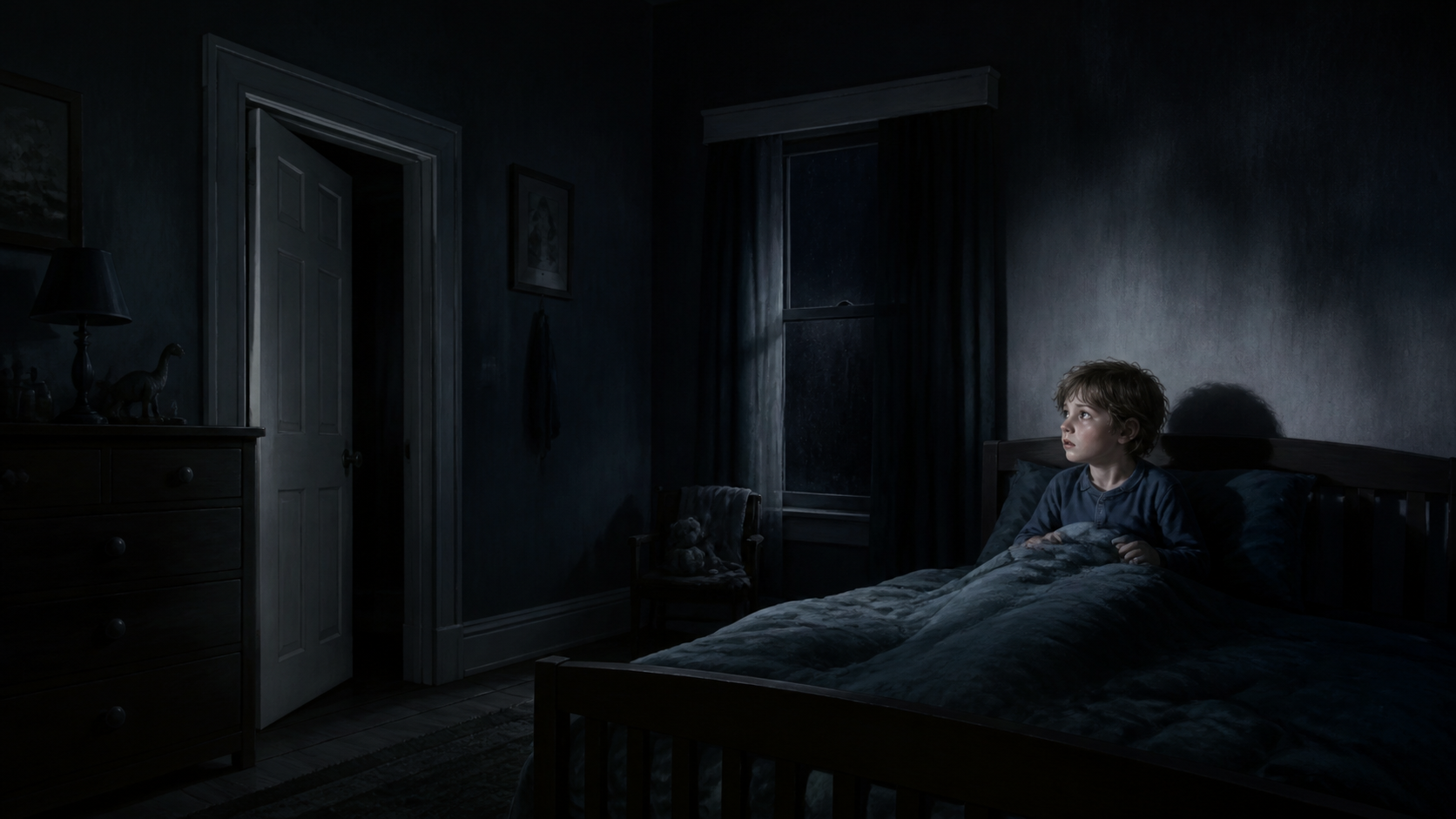
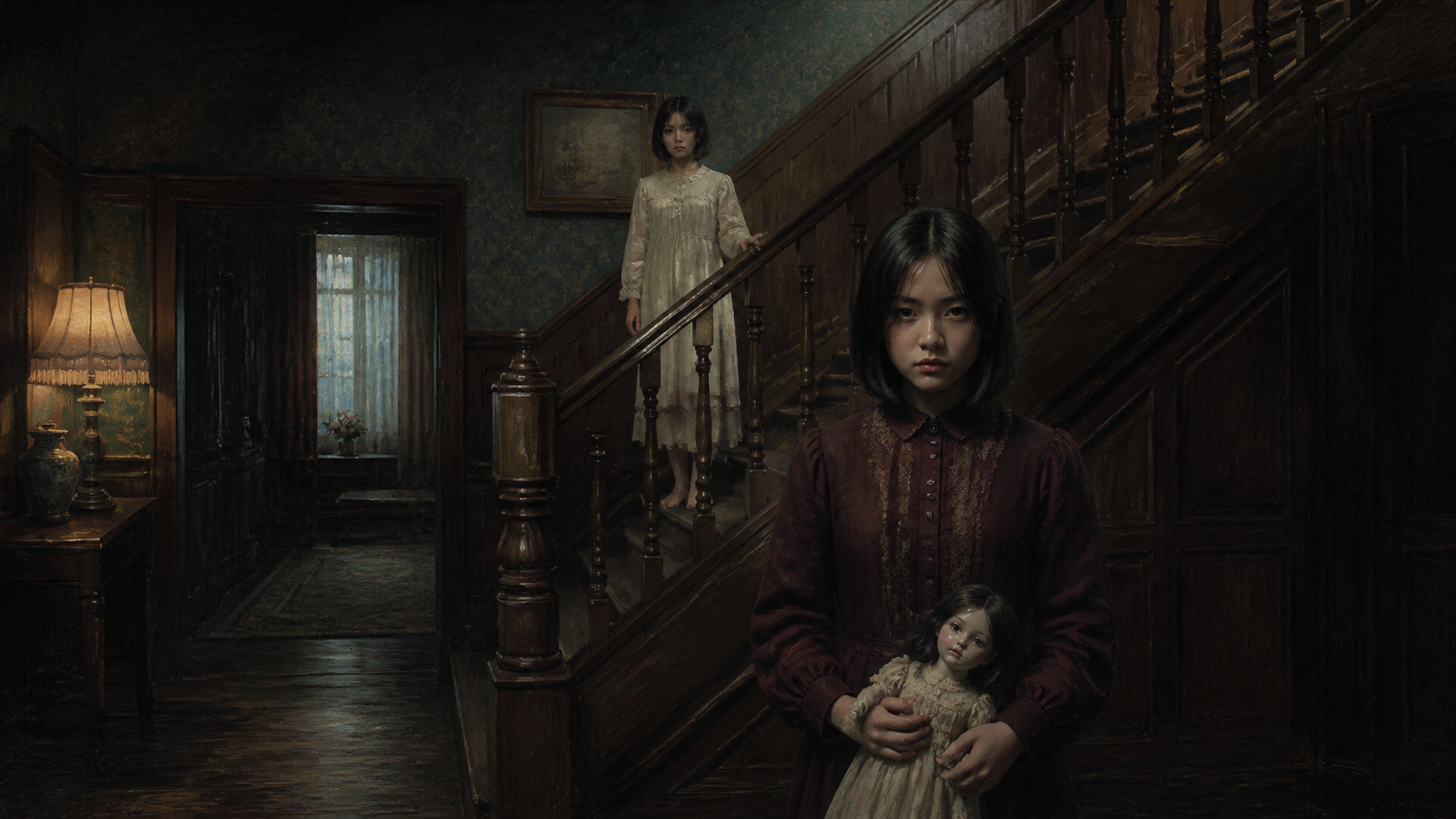
The film’s atmosphere is remarkably precise. It is not simply “moody” in the general gothic sense. Clayton’s direction makes the country house feel like a place where decorum has become a kind of haunting, with every room seemingly holding back information. The story’s visual world is all thresholds, windows, darkened corners and enclosed spaces, so the setting never reads as a neutral backdrop. It feels like an active participant in the drama, almost an extension of the governess’s inward strain.
Freddie Francis’s black-and-white photography is one of the film’s great achievements. The image has a velvety depth that allows darkness to remain suggestive rather than empty. Faces emerge from shadow, corridors seem to lengthen, and the house often appears to dwarf the people inside it. That visual strategy serves the material perfectly because it keeps the audience alert to movement at the edge of the frame without reducing the film to a parade of apparitions. The terror is cumulative and interpretive. You look because the film teaches you that looking is dangerous.
The screenplay is equally disciplined. It does not over-explain the governess or the dead servants, and it resists the temptation to turn the children into simple victims or simple villains. Instead, it keeps dialogue slippery and emotionally charged. Characters speak in a register of propriety, but the subtext is volatile. That tension is especially effective because the film is about social and emotional constraint as much as supernatural threat. The house is full of things not said, and the script repeatedly shows how silence can become a form of pressure.
The performances sharpen that pressure rather than softening it. Deborah Kerr gives Miss Giddens a rigid surface that gradually reveals fear, craving and dogged certainty. Her performance is so exact that the character’s instability never collapses into hysteria. Megs Jenkins brings an almost painful plainness to Mrs Grose, which makes her evasions and half-disclosures more disturbing than outright alarm would have been. Martin Stephens and Pamela Franklin are both superbly controlled, with the sort of composure that can seem angelic in one moment and deeply unnerving in the next. Peter Wyngarde’s Quint, when he appears, has a predatory self-possession that helps the film suggest corruption without turning him into a standard gothic villain.
Sound is crucial too. The film understands that dread can be carried by voices, footsteps, the music of a nursery song, or the absence of the expected human noise. Auric’s score does not batter the audience into submission. It shadows the story, giving the film a mournful, suspended quality that fits its central uncertainty. Rather than flooding scenes with warning signals, the soundtrack often makes the air itself feel monitored. That is especially effective in a film where the audience is meant to listen as carefully as it looks.
As horror, The Innocents works through implication, but that does not make it timid. Its power comes from the way it binds the supernatural to repression, desire and responsibility. The film is frightening because it keeps asking whether Miss Giddens is perceiving danger or manufacturing it, and because those possibilities do not cancel each other out. For viewers who want elaborate creature effects or overt violence, this may feel understated. For anyone interested in horror that transforms a domestic setting into a site of moral and psychological instability, it is formidable.
The Film’s Afterlife
Contemporary reception was strong but not universal. The film drew praise for its craftsmanship and for its atmosphere, while some critics were less convinced by its interpretive ambiguity. It was not a major box-office phenomenon on release, but it steadily gathered stature in later decades, helped by critical reassessment and restorations that allowed newer audiences to see how exacting its construction is. Its reputation now rests on the sense that it captures James’s story in cinematic terms without reducing it to a puzzle with a single correct answer.
Its influence is clearest in later haunted-house and psychological horror that values suggestion over revelation. It is often treated as a touchstone for filmmakers interested in ambiguity, child menace and the unsettling overlap between supernatural threat and mental disturbance. That legacy can be overstated when people describe every restrained ghost story as “inspired by” it, but in this case the connection is genuine: The Innocents remains one of the defining examples of how horror can be both elegant and deeply disquieting.
Horripilations Verdict
A superb gothic ghost story whose restraint is a strength, not a limitation. It turns adaptation, performance and visual design into a steadily tightening trap, and its ambiguity still feels alive rather than evasive.
What works
- Deborah Kerr’s tightly controlled central performance
- Freddie Francis’s shadow-rich black-and-white cinematography
- A script that sustains unsettling ambiguity without losing narrative grip
What holds it back
- Some viewers may want a more explicit supernatural payoff
- Its measured pace can feel deliberate rather than propulsive