Watch it. Own it. Brave it.
Affiliate links. As an Amazon Associate I earn from qualifying purchases. Check the retailer for current availability and the correct edition. Prime Video may require a subscription, rental or purchase.
The Wolf Man is the 1941 Universal horror classic that turns a folklore curse into a bleak, intimate tragedy. George Waggner’s film follows Larry Talbot, an uneasy returning son whose night visit to a Romani camp and encounter with a strange attack leaves him marked by lycanthropy. It is a Gothic supernatural horror film first and foremost, but one whose lasting appeal lies in the way it binds monster-movie spectacle to family dread, fatalism and a sense of contamination that spreads through every conversation.
The Film File
- Original release year: 1941
- Director: George Waggner
- Credited writer: Curt Siodmak
- Principal cast: Lon Chaney Jr. as Larry Talbot; Claude Rains as Sir John Talbot; Evelyn Ankers as Gwen Conliffe; Ralph Bellamy as Colonel Montford; Warren William as Dr. Lloyd; Bela Lugosi as Bela; Maria Ouspenskaya as Maleva; Patric Knowles as Frank Andrews
- Approximate runtime: 70 minutes
- Country of production: United States
- Relevant horror subgenres: Gothic horror, werewolf horror, supernatural horror
Behind the Screams
The Wolf Man was developed at Universal Pictures as part of the studio’s monster cycle, but it was not simply a repeat of earlier lycanthrope tales. Curt Siodmak’s screenplay drew on European folklore and the werewolf tradition, shaping the material into a modern studio horror story built around inheritance, guilt and bodily transformation. The film’s status within Universal horror also matters: it arrived after Dracula, Frankenstein and other landmark titles had established the studio’s reputation for iconic monsters, yet it helped define one of the most emotionally direct of all those creations.
George Waggner directed and also received a producer credit, while Universal assembled a cast that gave the film much of its personality. Lon Chaney Jr., who had already proved effective in horror roles, became permanently associated with Larry Talbot. Claude Rains, cast as Sir John Talbot, brings an aristocratic reserve that fits the film’s English-country-estate setting. Evelyn Ankers, Patric Knowles, Warren William and Maria Ouspenskaya round out a cast that keeps the story grounded in relationships rather than spectacle alone. Bela Lugosi appears in a small but crucial role as Bela, a part that has become especially notable because it places the star of Dracula inside another defining Universal nightmare.
Some later anecdotes about the film’s development are repeated often enough to sound canonical, but the useful facts are straightforward. The title was not always fixed early in development, and the production went through revisions before settling on the version released in 1941. Siodmak’s screenplay is the key creative decision that made the film distinctive: rather than presenting the werewolf as a mere external villain, it centres the curse on an ordinary man whose social awkwardness, desire to belong and growing terror make him both threatening and pitiable. That human-centred approach is one of the film’s most important choices, because it gives the monster story emotional stakes beyond the next transformation.
Into the Dark
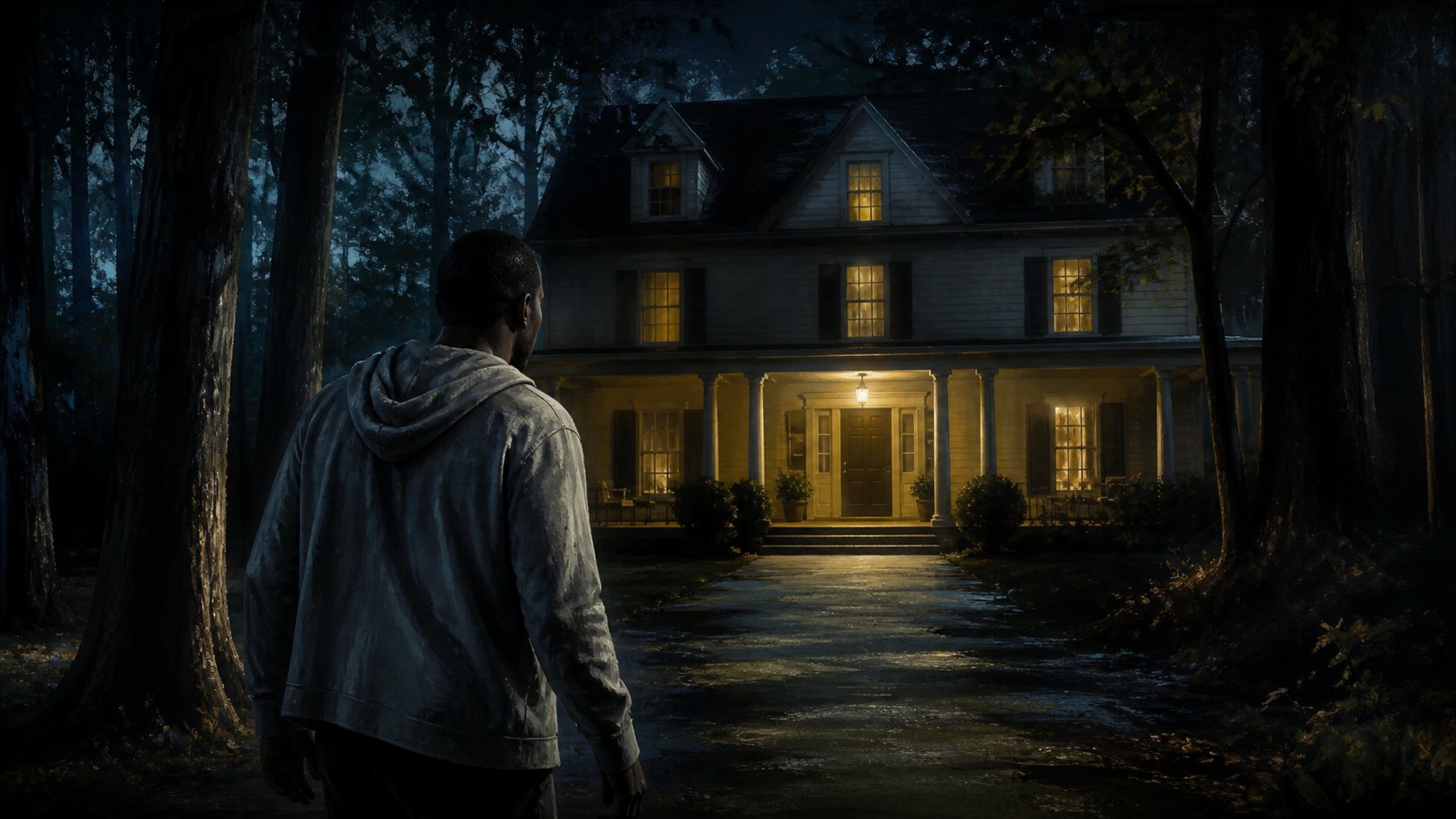
At the start, Larry Talbot returns to his father’s Welsh estate after years away and tries to reconnect with the family he has been separated from. The film immediately frames him as an outsider: educated enough to move in polite society, but awkward, restless and unsure of his place. His interest in Gwen Conliffe gives the story a romantic edge, yet the real tension comes from the way Talbot keeps misunderstanding the world around him. He wants to be accepted, but his attempts at charm often make things worse.
The encounter that changes everything is both simple and fateful. Talbot buys a silver-headed walking stick, follows Gwen to a Romani camp and later gets caught up in a wolf attack. He kills the animal, but soon discovers that the creature was not what it seemed and that the violence has linked him to a curse that will define the rest of the story. From there, the plot becomes a study in fear, denial and doomed self-awareness as Talbot tries to explain his condition and the people around him struggle to decide whether he is ill, deluded or dangerous. The film’s conflict is less about solving a mystery than about watching a man lose control of his own body and reputation at the same time.
As the nights progress, the horror deepens through repetition and helplessness rather than elaborate set-piece invention. Talbot’s transformations and the resulting attacks make him a threat to those near him, but the film never lets that reduce him to a simple beast. Instead, it keeps returning to the emotional cost of the curse: his isolation from his father, his inability to claim a future with Gwen, and his awareness that he may harm the very people he wants to protect. The ending matters because it resolves the action in classical horror fashion while also locking in the tragedy of a character who has been trapped by fate, not just bitten by an animal.
What Gets Under Your Skin
The film’s atmosphere is one of its strongest assets, but not in the generic sense of “old dark house” mood. What makes it work is the way it turns a compact running time into a steadily tightening net. The setting feels socially enclosed as much as geographically isolated, with private estates, private fears and private judgments all pressing in on Talbot. That gives the horror a class-conscious edge: this is a monster story where aristocratic respectability, scientific curiosity and folk belief all fail in different ways to contain the same menace.
Chaney’s performance is central to that effect. He plays Talbot with enough uncertainty and wounded vanity that the character never becomes merely a victim or merely a menace. That balance matters because the film asks the audience to see the curse from inside his embarrassment, fear and self-disgust. Claude Rains, meanwhile, gives the father-son material a serious dramatic weight that prevents it from feeling like filler between horror beats. The supporting cast is not ornamental either: Maria Ouspenskaya’s gypsy matriarch gives the supernatural explanation a hard, fatalistic authority, and Bela Lugosi’s brief appearance becomes more than a curiosity because it anchors the story in the broader Universal monster world.
Visually and structurally, the film is efficient rather than sprawling. It does not overload the viewer with explanation; instead, it lets the curse become legible through recurring signs, warnings and consequences. That restraint helps the horror land more cleanly. The film is also notable for the way it treats the werewolf not just as a special-effects prospect but as a dramatic problem: every transformation is tied to shame, danger and the collapse of normal life. The result is a horror film that relies less on shock than on inevitability, which suits the material well. Even now, the story’s power lies in watching a man discover that the worst thing in him may also be the thing he cannot escape.
The Film’s Afterlife
The Wolf Man has a strong contemporary reputation and remains one of Universal’s best-known horror titles. Rotten Tomatoes currently lists it with a 91% Tomatometer based on 45 critic reviews and an 80% audience score, checked on 31 October 2026. Its reputation has also been reinforced by decades of franchise use: Larry Talbot and the film’s mythology recur through later Universal monster crossovers and remakes, keeping the character visible long after the original studio cycle ended.
Horripilations Verdict
A lean, humane and unusually tragic monster film that turns lycanthropy into family horror and spiritual despair. Its scale is modest, but its emotional precision and signature Universal imagery make it one of the studio’s most effective horrors.
What works
- Lon Chaney Jr. gives Larry Talbot real pathos
- The screenplay fuses folklore with family tragedy
- The compact running time keeps the dread focused
What holds it back
- Some supporting stretches are brisk to the point of feeling abrupt
- The film’s compactness leaves a few character beats underdeveloped
Ready for your next viewing?
Affiliate links. As an Amazon Associate I earn from qualifying purchases. Check the retailer for current availability and the correct edition. Prime Video may require a subscription, rental or purchase.