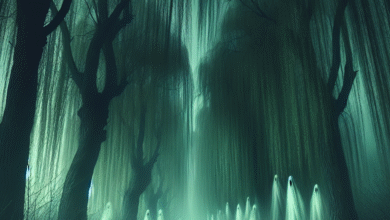
The Echo Chamber

In the heart of East London, tucked between a dilapidated bookshop and an abandoned pub, stood an unremarkable door. The paint was peeling, and a thick layer of dust coated the brass handle. Most pedestrians passed it without a second glance, yet those who had the misfortune of crossing its threshold never left the same. This was the entrance to The Echo Chamber, a place that existed on the periphery of urban legend, a whispered secret among the locals that had become ever more diluted with each retelling.
The story began with a man named Oliver. An aspiring artist in his late twenties, he was drawn to the vibrant energy of London, hoping to capture its essence on canvas. The bustling streets and eclectic mix of people inspired him, yet he found himself wrestling with an insurmountable wall of frustration. Every evening, he returned home, paint-stained and exhausted, only to face the harsh reality that his visions remained trapped within his mind.
One fateful evening, after yet another fruitless day at the canvass, Oliver wandered through a narrow side street, his thoughts darkening as he contemplated giving up on his dreams. That was when he stumbled upon the unremarkable door. The slight flicker of an overhead light caught his eye, and despite a nagging sense of dread, he felt compelled to push the door open.
The sound of the door creaking echoed in the empty room beyond. Inside, cobwebs hung like tattered curtains from the ceiling, and the air was stale and electric with an unknown energy. To the left stood a rickety table upon which lay a dusty mirror, its surface warped as if it had known too many secrets. The wall on the far side was lined with faded posters, each advertising various performances and events that had long since passed into memory.
As he stepped further in, Oliver felt an almost magnetic pull toward the mirror. It was then he heard the whispers, soft and melodic, curling around his name. “Oliver,” they called, wrapping around him like tendrils of smoke. He leaned closer, his breath fogging the glass. Suddenly, the whispers intensified.
“Lost dreams,” they sang, “await rebirth.”
Overcome by an irresistible urge, Oliver reached out and touched the surface of the mirror. The moment his fingers made contact, the room shifted. The dust seemed to swirl around him, and a crackling noise filled his ears. He blinked, and the room disappeared, replaced by a vibrant scene that seemed to be an amalgamation of his own thoughts and desires. Giant canvasses floated in mid-air, each depicting scenes from his imagination.
A voice echoed, reverberating through the air. “Welcome to The Echo Chamber. Here, thoughts become realities.”
Oliver’s heart raced as he explored this otherworldly dimension. He felt like a god in his realm, manipulating vivid colours and shapes with a mere thought. For the first time, he began to walk among his creations, the joy of artistic expression flooding his veins. Hours turned into days, and he worked feverishly, crafting masterpieces that were both beautiful and haunting.
Yet, as the initial exhilaration faded, Oliver grew increasingly anxious. The reflections in the mirror began to warp, and darker elements crept into his creations. The once vibrant canvasses started spiralling into chaos, depicting twisted figures and grotesque landscapes. Whispers turned into howls, echoing his own insecurities back at him. “You are nothing,” they jeered. “You’ll never succeed.”
Conflicted, Oliver tried to escape The Echo Chamber, but the door he had entered through had vanished. Panic seized him – he was trapped in a realm of his own making. Desperate to return to reality, he began pleading with the mirror, trying to unravel the grip it held over him.
“Let me go! I want to create, not to be consumed!” he cried. But the mirror merely pulsed with a haunting light, reflecting the shadows of his fears. Days turned into weeks, and still Oliver remained caught in the limitless cycle of his own creativity, tortured by the echoes of his aspirations and failures.
Back in the physical world, friends and family began to worry. They hadn’t seen Oliver in nearly a month, and whispers circulated among them. Some said he had abandoned his dreams for a new life; others insisted he had succumbed to the pressures of the city. Gradually, the concern faded to ambivalence, and yet a handful were determined to uncover the truth. Among the most steadfast was Eleanor, a fellow artist and Oliver’s confidante.
Determined to find him, she scoured East London, asking questions and following leads that always directed her to that same unremarkable door. Although doubt gnawed at her, she pushed through the threshold. As she entered, a feeling of unease washed over her, yet her resolve propelled her towards the mirror. There, she beheld the chaos swirling within. Oliver’s creations, once filled with light, now breathed torment and despair.
“Oliver!” she yelled, her voice lost in the cacophony of the chamber. The reflection shimmered and, for a moment, Oliver’s face appeared as if he were standing just beyond the glass. Dishevelled but still unmistakably him, his eyes were wild, darting to and fro as his mouth opened, gasping for air.
“Elly,” he cried, a mixture of relief and desperation flooding his tone. “Help me! I can’t break free.”
Eleanor felt her heart sink. She knew she needed to act fast. Recognising that this mirror was a manifestation of Oliver’s inner turmoil, she understood the only way to free him was to confront the echoes of his insecurities. “You’re not alone, Oliver,” she shouted, her voice cutting through the whispers. “Remember why you began painting in the first place. Your creativity is a reflection of your spirit, not just your success.”
At first, her words seemed to dissipate in the thick atmosphere of the room, but as she continued to call out to him, the swirling chaos began to shift. The figures within the mirror writhed and twisted, moving away from overt horror into something more familiar — colours began to stabilise, and the shapes began to resemble Oliver’s earlier paintings. Eleanor’s presence pierced through the haze, just as Oliver’s memories started to surface; moments of joy with brushes in hand, the feel of paint against canvas, and laughter shared between friends.
With each memory that broke through, the room pulsated, stabilising the unfolding scene. It was as if Eleanor’s determination was an antidote to the poison of despair. The howls softened and gradually morphed into echoes of encouragement. “You can do this, Oliver. You are capable of creating beauty.”
Their bond forged a connection that transcended the physical and the metaphysical. Oliver focused on Eleanor’s voice, and with all his strength, he turned towards the mirror. “I choose to create!” he declared, as cracks appeared in its surface.
A blinding flash engulfed the room, forcing Eleanor to shield her eyes. When she opened them again, The Echo Chamber lay empty, the mirror shattered into a kaleidoscope of colours scattered across the room. Oliver stood beside her, weary yet triumphant, freed from the haunting clutches of his fears.
Together, they left that cursed space behind, the unremarkable door now just a memory. The shattered shards of glass reflected the sunlight, casting a myriad of colours as they walked into the bustling streets of London. Oliver’s heart, once heavy with doubt, now brimmed with hope as he realised that while The Echo Chamber might still exist, its power resided only in the depths of his mind. With Eleanor by his side, he knew he was ready to face whatever the world had to offer, reclaiming his dreams and owning his narrative.
Over time, the story of The Echo Chamber transformed into a legend amongst locals, a cautionary tale shared among artists who wandered the streets of East London. Newcomers were warned of the door, a whisper of curiosity to navigate around. The echoes lingered, but they served as a reminder to embrace vulnerability and authenticity — a tale of triumph, resilience, and the undeniable power of connection against the chaos of doubt.