The Ghost in the Static
In the heart of a sprawling city, where the hustle and bustle of daily life never truly waned, there lingered an urban legend that wrapped itself around the ears of late-night denizens, daring them to venture into the realm of the unknown. It began innocuously, like so many tales do, whispered in the corners of smoky pubs and echoing through the corridors of crumbling tenements—a refrain of warning about The Ghost in the Static.
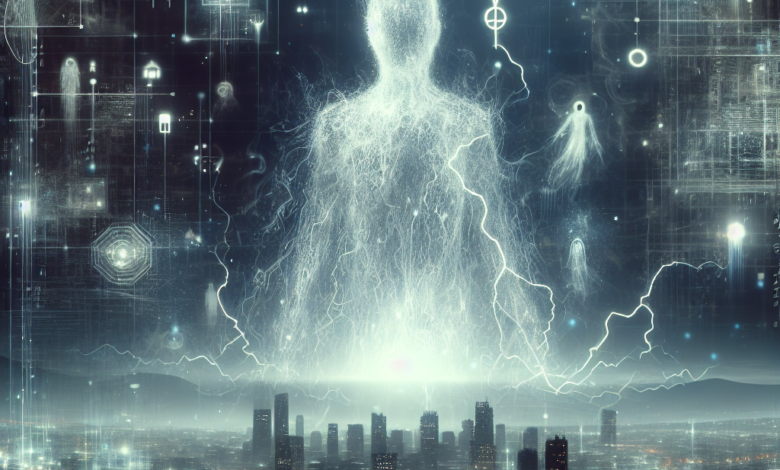
Raucous laughter and clinking glasses hardly faltered as the legend was recounted, the firelight dancing in the eyes of those who lingered too long over their drinks. Somewhere in the urban sprawl, an old television set flickered on, trapped in a perpetual loop of static, broadcasting an eerie signal that was invisible to most. It was said that if one lingered too long in its presence or stared into the swirling patterns of black and white, the ghostly figure would emerge, inviting them into an unspeakable darkness.
There was an intoxicated glamour about the tale, enough to spark the curiosity of even the most sceptical observer. It was claimed that on particularly stormy nights, when the wind howled like a banshee and the rain pounded against the windows as if asking for entry, the static would whisper names. Those names meant something—a personal connection—graves of lost loved ones or long-buried secrets. Yet, most alarming of all was the fate of those who answered its call. They were said to vanish into thin air, leaving behind nothing but the faintest hum of electricity.
One of those captivated by the story was a young woman named Eliza. A journalist by trade, she remained sceptical while being irresistibly drawn into the urban tale, as if The Ghost in the Static was a thread her curiosity could only tug at. She had always been relentless in seeking out the truth hidden beneath the folklore of the city, and this time would be no different. Despite warnings from friends and a growing sense of dread, Eliza resolved to investigate, for borne within her heart was the perennial question of what lies beyond the veil of our everyday reality.
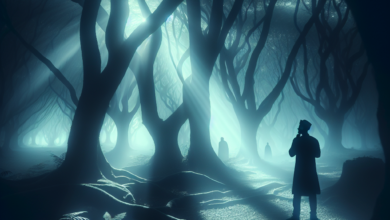
Eliza chose the old estate of Hawthorne House, a crumbling relic of a bygone era known for its dark history. It had been abandoned for years, some said because the original owners had been driven mad by their experiences with the supernatural. The locals perpetuated the whispers that at least one of the old televisions inside remained, a monolithic presence, seemingly untouched by time. Armed with a notepad, a tape recorder, and a head full of dreams of journalistic glory, Eliza pushed open the rusty gate and ventured into the overgrown garden.
The entrance creaked ominously as she stepped inside, her heart racing with anticipation and concern. The air was heavy, laden with the scent of decay and forgotten memories. As she wandered deeper into the house, a sense of foreboding crept up her spine, yet she pressed on, buoyed by sheer determination. The legend demanded to be explored, and what was a life devoid of excitement?
Finally, Eliza located a dilapidated living room, the rotting furniture gathered like mourners around a flickering ghost of the past. And there it was—an old television set, long forgotten and cloaked in dust. Its screen emitted a faint hum, alive yet dormant, a siren call that beckoned her closer. Eliza bit her lip, the thrill mingling with anxiety as she switched it on, a flicker of excitement racing through her. Static filled the room, a cacophony of white noise washing over her, and something deep within her felt a primal shift.
At first, it was merely a riot of pixels, but as the minutes passed, Eliza began to discern shapes within the chaos. Faint outlines began to take form within the static’s fray—uncanny figures that danced in and out of focus, pulling at something within her, a flicker of recognition. She felt the air grow heavy with sorrow, a tremor of grief woven into the fabric of her being. It was a sensation unlike any she had known, urging her to remain.
Wrapping her fingers tightly around her notebook, Eliza focused on the flickering screen, her mind racing with possibilities. Names wove their way through the static, whispered in soft, almost gentle tones. It was disconcerting but alluring, a call from the beyond, as if the very essence of lost souls had become entwined with the electrical hum. Laughter echoed faintly, mixed with quiet weeping, constructing shadows of stories half-told.
Then, in a moment that would forever alter her reality, her own name pierced through the white noise. “Eliza… Eliza…” It rolled through the static like a chilling wind, and her heart raced as recognition flared. Memories surged—her childhood, her family, her dear aunt, who had been lost to sudden illness just years ago. Shock rooted her to the spot, a bolt of electric fear coursing through her veins.
Through the haze, her aunt appeared. She stood across the static, fainter than a dream yet undeniably there; an ethereal visage. “Eliza,” she pleaded, her voice stretched across the dimensions of reality, fragile and haunting. “Help me. Help us.” The desperation in that voice stopped Eliza’s breath.
Eliza’s rationality began to falter; she felt the pull of the static warm her palms as she tried to comprehend the impossibility before her. “Aunt Margaret?” she ventured, her voice barely a whisper. The figure trembled, the static arcing with energy and intensity, the room vibrating with emotion.
“What have you done?” her aunt murmured, the words laced with a wisdom that ran deeper than anything Eliza could grasp.
Panic seeped in as Eliza recalled the tales—the disappearances, the lost souls bound by their stories. Yet her heart ached with love, the kind that transcends even death. “I’m here,” she managed, feeling like a moth to a flame.
“You must let go of what lies behind…” the ghost implored, her features shifting like shadows against flickering lights. “Listen closely.”
As if struck by clarity from another realm, Eliza leaned into the static, capturing every word, every sorrow, every memory her aunt wished to impart. The white noise enveloped her, and, in that moment, she understood. The lost souls were trapped not only because of untold histories but also owing to the burdens left unshared—a cycle that could be broken through voice and remembrance.
But truth can be a heavy burden. Soon the static began to morph, dragging Eliza deeper into an ocean of despair. “No!” she screamed, and the room darkened, her aunt’s figure starting to dissolve. “I won’t lose you again.”
“Tell our story!” her aunt’s voice rang clear, carrying the weight of their shared grief. It surged through Eliza, tearing at the fabric of what she thought was reality until she could barely see the outlines of the world around her.
In that moment of tethering existence, Eliza seized the recorder, speaking both for herself and the lost souls swirling about her. The static pulsed as though responding, the figures gathering like flickering spectral witnesses. “I will remember. I will share your story!” she declared, her voice fierce—a vow murmured against the void.
Suddenly, the room erupted in a storm of static, the shapes swirling, laughing and crying, all focused on her—an expression of hope shimmering through the chaos. A gust of wind swirled, picking up dust and memories around her, and with a final electric burst, the television flickered to black.
Eliza collapsed, gasping for breath, the room now utterly still. The television remained silent, a relic devoid of life, but in her heart, her connection to the ethereal world remained strong. The legends of The Ghost in the Static now felt different; they had morphed from mere cautionary tales into a profound reminder of the need for remembrance, the echo of lives lived, the stories that warranted telling.
Days turned into weeks as Eliza gathered her breath, immersing herself in writing, each word an offering to the souls who yearned for recognition. The city continued to throng with its usual energy, but a quiet understanding lingered beneath the surface, for those who found her stories in print soon realised they weren’t merely about loss; they were about connection, love, and the enduring strength of memory.
And so, under the gaze of flickering streetlights, The Ghost in the Static transformed into a legend reborn—a whisper of solace that danced its way through the cracks of the ordinary. Eliza found a sense of triumph. The veil between realms had been lifted, and the pulse of life continued to echo through the static, forever reminding those who dared to listen that love, indeed, transcends time, history, and even the unknown.