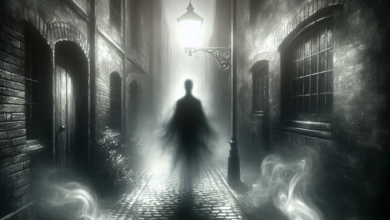
The Whispering Locket

In a small, quiet town nestled in the heart of England stood a quaint antique shop known as “Curiosities & Finds.” The shop was a treasure trove of bygone eras, filled with time-worn furniture, dusty tomes, and trinkets that whispered tales of their past. It was there that a peculiar item caught the eye of Amelia, a twenty-one-year-old art student with a penchant for the unusual.
Amelia had always been drawn to the mysteries of the past, spending hours in the little shop whenever she could. On one crisp autumn afternoon, while rummaging through a drawer filled with tarnished silverware, she stumbled upon a locket. Unlike any she had seen before, it was ornately fashioned with intricate engravings that seemed to ripple and shift like moth wings caught in a gentle breeze. It was cold to the touch, sending a shiver up her spine. Despite her intuition whispering warnings, she purchased the locket, charmed by its elegance and that inexplicable urge to possess it.
The locket hung delicately from a fine silver chain, resting just above her heart. That evening, as amber leaves danced outside her window, Amelia sat alone in her room, staring at her reflection. She felt an odd pull towards the locket, as though it were alive. After a moment’s hesitation, she decided to open it. Inside was a small, faded portrait of a woman with soft features and haunted eyes. Underneath, an inscription read, “To my dearest Eliza, may your heart always know my love.”
As Amelia gazed at the portrait, she heard a faint whisper—a barely audible voice that seemed to echo all around her, as though the very walls conspired to carry the message. “Find me… Find me.” The voice was laced with an ancient sorrow, and though she felt a chill skitter down her spine, curiosity overcame trepidation. She couldn’t fathom where the voice had come from, attributing it to fatigue.
That night, Amelia’s dreams were plagued by visions. She found herself walking through misty woods, the path illuminated by a ghostly glow. She could feel the presence of someone beside her, guiding her deeper into the trees until she reached a clearing, where an old, weathered gravestone leaned precariously. On it, the name ‘Eliza Darrow’ was inscribed, along with dates that revealed the tragic brevity of her life.
The next morning, she awoke with a start, the image of the gravestone etched vividly in her mind. Driven by an inexplicable compulsion to know more, she ventured into the town’s archives. Hours melted into one another while she poured over dusty records, searching for any trace of Eliza Darrow. The deeper she delved, the more she uncovered—a tale of forbidden romance, despair, and betrayal hidden in the folds of history.
Eliza had lived in the late nineteenth century, a time when society’s conventions held women tightly in their grip. She had fallen in love with a young man named Jonathan, betrothed to another due to familial obligations. Their secret meetings had been filled with whispered promises, but society would not allow their love to flourish. Tragically, Eliza had died in childbirth, her untimely demise shrouded in heartbreak, and the locket had found its way into the world, searching for its lost love.
With each revelation, the whispers grew stronger. At times, they beckoned Amelia to a specific place, urging her to find the remnants of Eliza’s lost love. The urgency pressed upon her until she could no longer ignore it; she needed to locate Jonathan, the man who had never let Eliza go.
Amelia’s quest led her to an old cottage at the edge of the woods—overgrown yet undeniably enchanting, much like Eliza’s story. As she approached its weathered door, the whisper echoed once more, “Find him… find him…”
With a pounding heart, she knocked, the sound resonating through the stillness. An old man opened the door, his eyes clouded but wise. The air was thick with memories as Amelia introduced herself and recounted what she had discovered. The old man smiled sadly, realisation dawning on his face.
“I am Jonathan,” he said softly, his voice a mere thread of sound. “Or at least, I once was.”
Amelia felt the weight of history in the air, and as they conversed, a sense of understanding blossomed between them. He told her how grief had followed him through the years, how he had never been able to let go of Eliza. Taking her hand gently, he spoke of the day she had died, how he had visited her grave countless times, believing she could still hear him through the passage of time.
That night, Amelia wore the locket as a talisman, attempting to bridge the gulf between the living and the dead. Jonathan’s stories flowed through her as they shared the night under starlit skies reminiscent of the ones Eliza and Jonathan once adored. As Jonathan recounted tales of sorrow and love, the whispering voice intertwined, echoing their meeting like a ghostly choir.
“I’ve always known you would come,” he said finally, his gaze piercing through time. “Eliza wanted me to find peace, to remember her but to let her go.”
Days turned into weeks, and as the leaves turned from vibrant gold to a muted brown, Amelia became entwined in Jonathan’s memories. She learned of Eliza’s laughter, the way the winds danced in her hair, and how love had flourished amidst societal chains. The locket, now warm against her chest, would whisper late into the night, coaxing Amelia to help Jonathan find closure.
One stormy evening, the winds howled like mournful spirits, and the whispering voice grew frantic, riding the gusts that rattled the windows. “Set me free…” it urged, the tone urgent yet tender.
Amelia felt compelled to act. With Jonathan’s hesitant approval, they made a plan to visit Eliza’s grave together. Armed with flowers and a lantern, they forged their way through the tempest, each step bringing them closer to the heart of Eliza’s story. The rain fell in sheets around them, a shroud of melancholy as they reached the clearing.
The gravestone stood illuminated in the lantern’s soft glow, reclaiming its dignity against the storm. They knelt before it, united in their grief and longing. Jonathan placed his hands on the stone, whispering Eliza’s name, recounting their dreams, their love, and all the years they spent apart.
As Amelia clasped the locket, she felt a surge of warmth, a flicker of life that coursed through her veins. The whispers intensified, merging into a harmonious chorus, “Thank you… thank you…” emanating from the very depths of the earth.
There, in the storm-soaked clearing, the air shifted. The clouds parted for a brief moment, revealing the twinkling stars above. In that sacred space, Jonathan felt the weight lift from his shoulders, while Amelia sensed the locket’s energy pulsating, a recognition finally settling in place.
“We have found her,” Jonathan murmured, his voice breaking. “At last, she is free.”
As the rain began to ease, they stood in silence, the heaviness of the years washing away in the cleansing downpour. They had helped Eliza find her place, connecting the threads of love and loss, weaving them with their shared experience.
In the days that followed, the whispers faded, though the locket remained—a symbol of love that transcended time. Jonathan’s spirit lifted, and a semblance of peace enveloped him. He often spoke of Eliza now, recounting her laughter and warmth, honouring her memory without the weight of regret.
Amelia returned to her art, inspired anew by the story she had uncovered and the connections she had forged. The locket hung in a place of honour in her studio—no longer a haunting remnant but rather a testament to the enduring nature of love and memory.
As for the whispers, they had transformed into a quiet, gentle reminder—a lullaby for lovers lost in time. The locket had served its purpose, and in doing so, it became more than an object; it became a bridge between the past and present, proving that love, indeed, never truly dies.