Unfinished Conversations
When Maisie started working at The Lantern, a modest bookshop perched in the corner of an old arcade, the quaint atmosphere wrapped around her like a soft woollen cardigan. It was a haven of dust motes dancing in sunbeams, shelves crammed with books promising escapes into fantastical realms and deep human truths. Yet, next to the scents of aged paper and vanilla-scented candles, an unsettling undercurrent of something unnameable rippled through the shop’s quiet corners.
It began with a set of handwritten notes tucked within an insipid travel guide, their flowery script jarring against the utilitarian prose. A droplet of ink here, a curling formation of a letter there, spelling out thoughts much too personal for an influencer’s guide to Paris. “I miss you”—it read, a simple declaration, but hollow in its context. The notes detailed conversations, addressing someone by name, and not directing them to the pages so much as the walls of the bookshop.
Her curiosity piqued, Maisie unfolded more of the notes throughout her shifts, always discreetly. They spoke of laughter, shared dreams, confessions of fear, and promises made during clandestine, twilight conversations. Whispers of a woman, roughly her own age, filled the pages: Lucy. Letters dripped with longing and apprehension, culminating in a fevered question: “Will you remember me when I’m gone?”
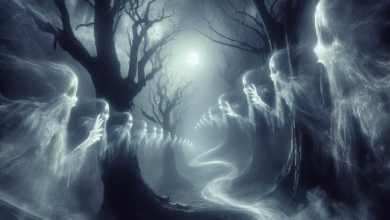
One particularly dusky evening, as the shop neared closing, Maisie experienced her first brush with the supernatural—as if the entire room held its breath. The shop’s overhead light flickered violently, casting sporadic glimpses of the dusty shelves. Instinctively, she glanced down the narrow aisles and through wobbling shelves, but all was still. Then she heard it—a soft, muted giggle. A bright burst of energy, like candlelight teasing a shadow, ignited at the very edge of her periphery—a female figure, ethereal and unnervingly real just beyond the counter.
The moment froze, her heart racing yet entwined with a stab of dread. Yet, as she rushed to investigate, the presence vanished, leaving behind just the rustle of paper and an old Glen Campbell hits record spinning idly in the backroom.
That was her second encounter with Lucy—or whatever she was. The notes became increasingly frantic in their tone. “Please don’t forget me,” they urged. Maisie’s sympathy morphed into trepidation that bred a kind of obsessive curiosity. Why was this woman so desperate?
A week later, while cleaning shelves—dust and cobwebs softening the sharp edges of the old wood—Maisie stumbled upon another item: a photograph that slipped from the pages of a forgotten book, a portrait of Lucy with hauntingly beautiful features, lips curled in a smile that felt as though it emanated light. In her hand, a small memento: a steel locket that glinted even in the shadows.
Maisie opened it, revealing a smudge of hair and a few withering petals—once floral and fragrant. For a moment doubt flickered within her. Would she be the next? But the sorrow drowned out fear, compelling her to understand. She used her breaks to investigate, borrowing from the staffroom computer despite the weariness imprinted on her bones. Lucy Donovan, she discovered, had vanished without a trace ten years earlier, last seen on the very street where the bookshop nestled.
Days stretched into weeks, and the lines between now and then began to dissolve, a delicate painting of a forgotten past. Maisie felt the presence more intimately than before, showing herself more often, entangled in the creaking floorboards, the weathered tomes. Each night, Lucy’s laughter beckoned, and her words filled the air: “Why won’t you answer me?”
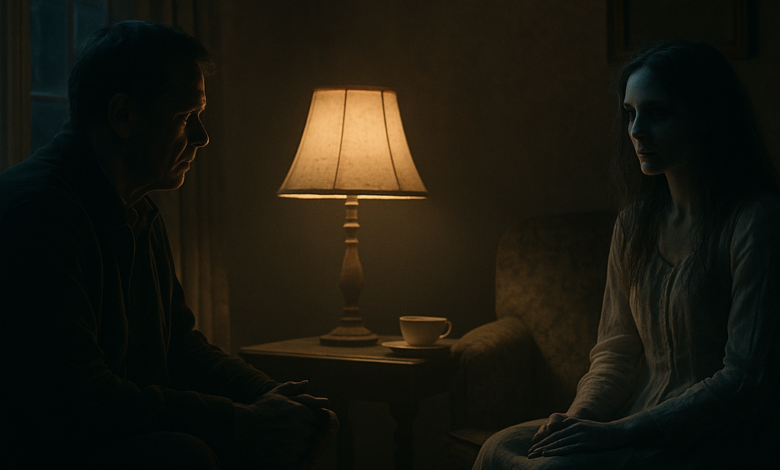
Maisie often found herself speaking to the empty air. “I can’t… I barely know you,” she stammered one twilight shift. The air crackled; Lucy’s image manifested near the shelves—a brief flare of authenticity almost tangible. Elevating horror into an entrancing dance, the ghost pressed her ephemeral face to Maisie’s, her longing palpable like fog wrapping around the air.
“You promise,” Lucy insisted, her voice ardent and urgent, “you’ll remember.”
Maisie started losing track of her days—the humdrum of life outside melted, the echoes of friends’ laughter faded, and her work hours blurred into a consistent haze. She found herself unceremoniously skirted around in gatherings, friends commenting on her odd behaviour as she absented herself further. As thoughts of Lucy piled like neglected laundry, Maisie’s reality became indistinguishable from the intensity of the haunting.
Then came the chilling night when she returned home to find her front door slightly ajar, her flat dismantled as if something had rifled through it, curious yet uncomfortable. The notes seeped into her dreams, the spectre of womanhood lending her warmth while blurring lines of skepticism. Shadows whispered her name.
Then it escalated. Friends began disappearing—one by one, their lives retracted to mercurial memories. Ellie stopped messaging; Ben missed their coffee meet-up for the umpteenth time; even Jamie, her best friend since school, had begun ignoring her replies. It felt intentional, as if Lucy were crafting her own loneliness, blighting everyone who could breathe life into her world.
Frantic, Maisie ran to the shop at the first light, desperate to confront the spectre armed with anger and anguish. “Why have you done this? I don’t know who you are!”
Lucy’s laughter echoed once more—a twisted delight dancing through the aisles. “You are the only one who will listen,” she whispered, gliding towards Maisie, purity mingled with desperation surrounding them like a storm.
“Stop it—I’ll help you, but you can’t take them!” she cried, backing away. The stacks of books towered like giants against her rising tension. “You need to let them go. You don’t understand how to move on!”
With a terrifying grin, Lucy met her with a performance of resolve inscribed in the depths of her eyes—the negotiation had turned dire. The truth pierced through: Lucy had become a tempest that demanded colder manifestations, gripping onto the ties that stole others.
“If you want them back, you will pay a price,” Lucy hissed. “They are part of you now—just as I am.”
In that moment, Maisie felt the terror seep into the marrow of her being, dissolving into acceptance; all her friendships, once radiant, now produced only echoes of absence. Yet, she couldn’t surrender without confronting the spectre’s gnawing desires. The price—the ultimate price—was time.
Desperate, she plunged into the chaos, trying to know Lucy, to share the anguished echoes that propelled her mother to suffocation years before—a failed attempt for salvation.
Eventually, the nights stretched into horizon lines devoid of end, Lucy’s affections manifesting pains, morose and chilling. Her final act washed away the tender remnants of who she was. Late one stormy evening, sunlight snuffed and wind howling at its edges, Maisie felt herself fading at the fringes of identity, stealing all she had known to embrace Lucy’s eternal fantasy.
The next morning, the shop remained as it always had—the bells chimed and patrons drifted in and out amidst their daydreams. But as time puffed along in gentle waves, whispers curled around corners, exchanging gripped breaths for hollow promises. Conversations drifted, yet Maisie was gone—a different shade taking up her place, scattered laughing echoes weaving behind her eyes, promising to linger among the shelves and dust of forgotten conversations, entwined in stories once shared but never finished.