Surgical Instruments of the Unwilling
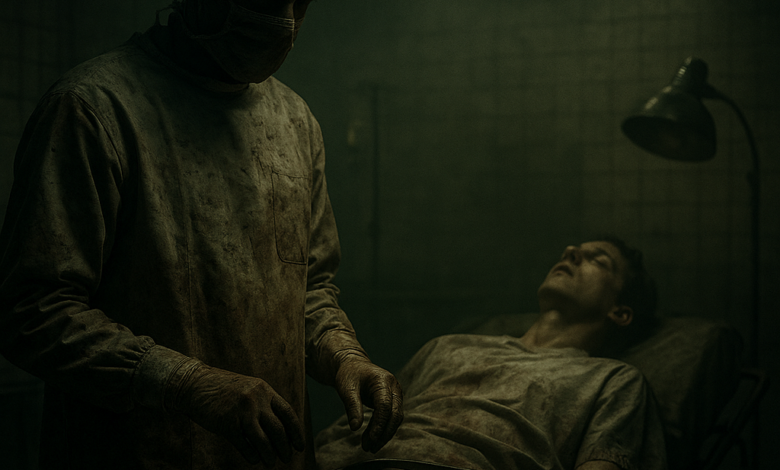
The flat was stifling; the air thick with the acrid smell of antiseptic and a hint of something sharp and metallic. Claudia stood at the window, her palms pressed against the cool glass as she stared down into the dimly lit alleyway below. The rain drizzled gently, casting glistening pools on the cobblestones, but her mind was miles away, drifting in the murky depths of her thoughts. A single health scare had led her into this seedy part of London, away from her boutique practice and into the clutches of an underground clinic that promised immediate treatment at a fraction of the cost.
Yet something inside her churned with unease. Stylish bandages adorned the walls, while rusted instruments cluttered a wooden cabinet, their forms twisted into grotesque shapes. She scolded herself for not trusting her instincts. This place felt wrong, a shadow of a real clinic, a lurking threat wrapped in the guise of a healing touch.
The previous week’s sudden diagnosis had thrown Claudia into chaos. A day spent worrying about her cancer marker readings had melted into desperate searching online, where a forum had offered up this shady retreat. They advertised state-of-the-art procedures with unfathomable affordability. Today she had come to explore her options. What she hadn’t anticipated was the palpable tension weighing down on her as she waited for her turn.
The door swung open and a nurse with a pinched face motioned for her to enter. “Claudia” was printed on a tag pinned to the pocket of her scrubs. She glanced at the clock; it was almost six. The clinic should have closed by now. Uneasiness fluttered in her stomach.
Inside, the faint hum of fluorescent lights stung her senses. The doctor, a stooping figure in a lab coat too long for him, stood by a surgical table strewn with instruments. His glasses glinted in the harsh light. “Ah, Claudia!” he beamed, his voice too cheerful for the crumbling surroundings. “I’m glad you could make it.”
As he talked, she could hear her own heartbeat thumping in response to the ominous tone of his words. “You’ve heard about our methods, I trust?” His eyes sparkled in a way that set her on edge. She nodded, fingers gripping the seat of the chair she sank into. He leaned forward, his smile stretching—an unsettling spectacle.
“Regrettable expenses,” he said, “they can deter the most urgent cases. But you don’t have to worry about that here.” He gestured vaguely to the gleaming instruments behind him, “We have a means of delivering high-quality care without the constraints of traditional methods. We enhance the body’s own ability to heal.”
She tried to respond, but her voice trailed off as he lifted a scalpel, the blade glinting dangerously in the overhead light. The sight sent a jolt of panic through her. Panic that doubled as he continued speaking about cost-cutting techniques that included unconventional surgeries. His words dripped insidiously, wrapping around her like a constrictor.
Then came the moment that carved a dread-filled chasm in her stomach. The doctor approached with a mocking semblance of tenderness. “I’m afraid there’s no room for hesitation in your situation. Your tests show us that there are no options left. You need this.”
Something in Claudia broke. Her instincts screamed at her to flee, to tear away from the facade of this distorted sanctuary. “Wait,” she blurted, “I need a second opinion. I can’t just—”
But the doctor laughed, a horrible, mirthless sound, and within seconds, she found herself pinned in her chair by two assistants, their hands like claws digging into her arms. “There’s no time for second opinions,” he said, a glint of something grotesque in his eyes. “We must operate now. Think of it as giving an old watch a new battery. You’ll thank us for it later.”
Claudia recoiled, her mind racing. Desperation clawed at her throat. She twisted against her captors, but they were immovable, their grip like iron. “Let me go!” she wailed, lungs bursting with fear. But all she could muster in response was a furious, silent unyielding.
Ignoring her protests, the doctor reached for a nearby tray of instruments, flicking through them like a child selecting toys. “We have just the right tools for you,” he remarked casually, selecting a tool that set her teeth on edge—a multi-pronged implement that looked far too much like something one would use for probing rather than healing.
Suddenly, the door swung open, and two figures lurched in, wide-eyed and out of breath. One was a nurse, brandishing a clipboard; the other, an older man with spectacles that hurriedly scanned the room. “Doctor! You need to stop! We have a complaint from the previous patient!”
“Not now!” The doctor shot back, his tone cutting through the air like a knife. Claudia looked at the newcomers with desperate eyes, silently pleading for rescue.
The man didn’t seem to hear her—a frantic gaze flicking between the doctor and the two assistants, then back again. “We can’t process another patient till this one leaves!”
In that brief moment of chaos, the tension snapped. Claudia seized the chance, summoning all her strength. She arched backward, throwing herself against one of the assistants and crashing into the doctor. Instruments clattered to the floor, echoing in the sterile space. Freedom had a taste, bitter and metallic.
She stumbled towards the door as the room erupted in confusion. “Get her!” the doctor yelled, mask slipping into rage. Panic spurred her legs, launching her into the cold, confining hallway as adrenaline surged through her veins.
Pounding against the grimy metal staircase, she hurtled down, careening toward the entrance but stopped short—a figure, a patient, draped lifelessly on a gurney in the waiting area. Their face was pallid, eyes wide, paralyzed in terror. The sight pierced her heart, echoing the doctor’s words: there was no time for second opinions. In their eyes, she recognised the truth; this was a trap.
With resolve, she dashed towards the exit, pulse hammering. Behind her came angry voices, footsteps clotting in pursuit. She burst out into the alleyway, rain drenching her as she fumbled for her phone, fingers slipping on the glass. In her frantic hurry, she called the police, but as she ran deeper into the shadows of the rain-soaked night, she felt them close in on her once again—those malevolent hands, not leaving her.
The intention behind her fears crystallised; they wanted her unwillingness. Her helplessness would feed the machine. The very things she sought to escape were wrapping around her like a fresh bandage, and with every decision, she slipped further into their web.
Claudia’s heart sank as she plunged deeper into the alleys, the city seemingly turned against her, the walls closing in. She realised, in those momentary seconds, that there would be no true escape, that she would carry the nightmare alive within her. And as the sirens echoed distantly, she felt it grip her tighter—the tightening renewal of her own panic, the instruments of the unwilling collecting in whispers, ready for when she would finally succumb.