
Inhabitants of the Unseen Corpse
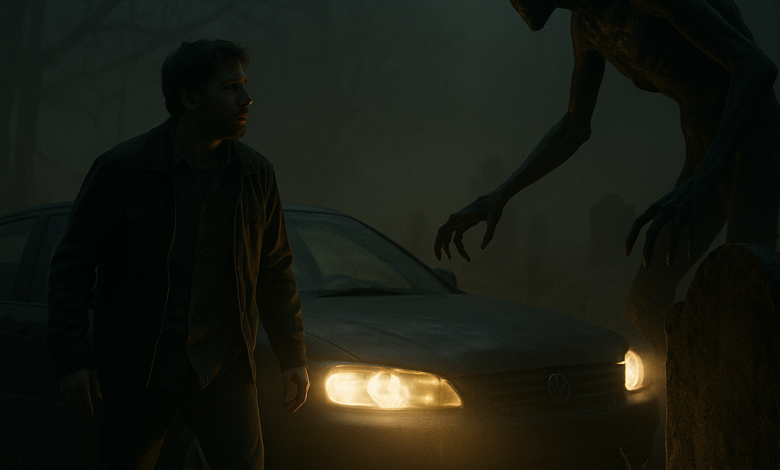
The smell had been the first thing Judith noticed when she arrived at the small, English village of Braithwaite. A sickly-sweet, decaying odour pervaded the air, distinct from the usual dampness and earthy scents of the countryside. As she parked her car and stepped out, it clung to her, unsettling and heavy. Judith had come to visit her ailing grandmother, who lived alone at the far end of the lane, but the oppressive atmosphere made her hesitate.
Determined to shake off the unease, she made her way towards her grandmother’s cottage, the quaint stone structure appearing untouched by time. The gardens were overgrown, and the path was lined with weeds that curved sinisterly as if encouraging her to look away. When Judith knocked, the sound echoed almost too loud, but the only response was a faint rustle from within.
“Gran?” she called, pushing the door open. The earthiness of the room wrapped around her like an unwanted embrace, and she felt a shudder run up her spine. The dim light illuminated her grandmother reclining in an armchair, thin and frail, but Judith quickly realized something was amiss. Gran’s eyes were glazed; their usual warmth replaced by a haunting void.
“Judith?” her grandmother managed, her voice a hoarse whisper that cracked like old parchment. Judith rushed to her side, noticing the discolouration of Gran’s skin, a mottled brownish hue creeping up her arms. It was as if her very flesh had begun to rot.
Instinctively, Judith reached out and touched her grandmother’s hand. Gran flinched, retracting her arm with a suddenness that shook Judith. “I’m fine, it’s just… it’s just the fever,” she reassured, but Judith could see the pallor of fear in her eyes.
A soft scratching sound broke the frail tranquillity. Judith turned towards the window and saw a flock of crows in the nearest tree, their beady eyes trained on her like tiny black orbs. It felt wrong, their gaze somehow predatory.
“Gran, what’s going on?” Judith pressed, her heart pounding in her chest. “You look unwell. It’s more than just a fever—”
“They’ve come back,” her grandmother breathed, her brow furrowing deeply. “I tried to fend them off, but it was too late.”
“Who? What are you talking about?”
“Not who,” Gran said, almost to herself. “What.”
Judith left her grandmother as the scratching grew louder, claw-like against the wood. She stepped outside, the sight of the crows unsettling, but more so was the silence that engulfed the village. No dogs, no distant laughter, just the unnerving cacophony of avian clamor.
The following days unfolded in a blur. Gran didn’t improve; instead, the skin on her arms darkened, fissures appearing and sometimes something that looked like a dried root would poke through. Other villagers had begun to vanish beneath opaque whispers. Supplies in the shops dwindled, and Judith, trying her utmost to care for her grandmother, felt the grip of panic increasingly tighten.
She avoided the window when she could. The crows had a terrible way of watching, growing more audacious each day. More than once, she’d caught glimpses of darker shapes darting at the edges of her vision, always just out of reach. The edges of her reality felt frayed, and the pervasive stench in the air only seemed to worsen, laden with a sense of rot and despair.
One night, Judith awoke to a new noise—a scratching at the door. Her heart raced, and she drew the blankets tighter around herself, refusing to believe that something might come for her.
But when the scratching turned into a frantic pounding, it became impossible to ignore. Gathering her courage, she crept towards the door, her breath hitching as she turned the handle. Judith swung the door open, the cool night air wrapping itself around her legs like the fingers of something long lost.
Nothing stood there, but the crows had gathered en masse, blackening the sky in formation. Their wings flapped softly against the velvet night, filling her ears with an eerie rhythm.
The night wore on, punctuated by the whispers of the thin branches of the trees outside, which somehow sounded less like rustling and more like hissing. Judith felt eyes upon her, a haunting, suffocating feeling wrapping around her just like the vines that had taken to crawling up Gran’s walls.
The next day, Judith decided to confront the village’s mystery. She headed toward the local library, hoping to glean information about the disappearances. The librarian, a silver-haired woman with anxious eyes, spoke to her in hushed tones. “It’s the inhabitants,” the librarian fretted, glancing nervously around. “Parasites. They infect the living before taking over completely.”
“Parasites?” Judith echoed, the term sending a chill down her spine.
“They enter through the wounds… they feast on the dying flesh. The crows… they scatter their eggs.”
“What do you mean, eggs?” Judith exclaimed, her mind racing as she instinctively thought of Gran’s discoloured skin. The librarian pressed her fingers to her lips, urging silence.
“It’s too late for some of them, child. You must help your grandmother, but beware of the crows,” she whispered before retreating to her records.
Judith rushed back home, fear gripping her heart. There had to be something she could do. She couldn’t let Gran become one of them. Bringing herbs from the shops to ward off the crows, she prepared a poultice, desperate to soothe the flesh that was still in Gran’s existence.
Yet, each day proved more challenging. The crows pecked and clawed at the roof, and those eyes, those soulless orbs that seemed to penetrate her very being, never left. On the fifth night, Judith noticed the crows shifting as if coordinating a shrouded plan. The scratching continued at the doors, now relentless and desperate.
When she trudged out towards the garden for fresh air, a furious screech erupted from above. Judith realised it was more than a warning; the crows were swooping lower, losing their patience. They poured like black ink, their wings blotting out the stars.
It happened all at once: the door slammed behind her, isolating her just outside as the flock descended with an urgency that brought forth an overwhelming dread. They didn’t attack—no, they circled above like a dark cloud, each successive wave drawing nearer. Judith could feel the eyes upon her, not just the birds’, but something else in the air—a hungry focus.
The thought of Gran’s deteriorating condition surged through her mind. She had to act. Returning inside would mean deteriorating flesh for her grandmother, and Judith knew if she didn’t break this cycle somehow, they would lose her forever.
In the harrowing moments of her resolve, she recalled the librarian’s warning: find them at the source. Judith dashed towards the woods that framed the village, where a small cave lay hidden beneath intertwining roots. It was said to house the remnants of the parasites.
As she reached the entrance, the smell was unbearable, but she plucked a brave stride and stepped inside. The walls dripped with moisture, and the darkness swelled around her, enlivened by the strange pulse of life. The crows’ shrieks charged through the air outside, clamouring as she stumbled deeper, seeking the heart of it all.
There it lay, a mass of twisted roots and wretched husks, oozing a nefarious sweetness. Judith’s stomach turned as she understood: this was the source of the infestation, feeding on the living while providing a grotesque sustenance to the crows above. It sealed the fate of those outside—their flesh no more than a banquet for those unseen.
Gritting her teeth, she used the poultice she had prepared and covered the surrounding areas, hoping that perhaps, just perhaps, it would drive the creatures away. But as the cave pulsed with a deeper thrum, heralding the birth of something sinister, a stench surged at the cave’s mouth—the crows broke through, roaring towards her.
They were upon her in an instant, and amidst their frantic wings, she understood—with chilling clarity—that she had become the final piece they required.
Returning home would mean forever shifting her boundaries. She screamed, but her voice was lost among the cacophony, muffled by their haunting chorus. Judith lunged towards the exit, breathless, desperate for freedom.
As she fled into the night, she felt it—something cold and viscous—clutch at her leg, and she gasped in horror. The crows began to settle. They were dragging her down back into the lurking embrace.
Judith fought her way free, pulling against the inevitable; but victory was hollow as she felt the warmth of her own flesh dim under a million eager eyes, compelled by hunger. The cries of the crows became a symphony of despair, their haunting final notes twisted, echoing deeply in the night.
In Braithwaite, new inhabitants would emerge amid the ceaseless whispers of the unseen corpse, the once vibrant village now a shell of its former self, cradled by the ever-hungry caws of undying, parasitic life.


