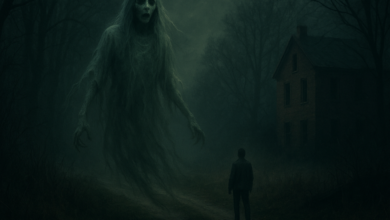
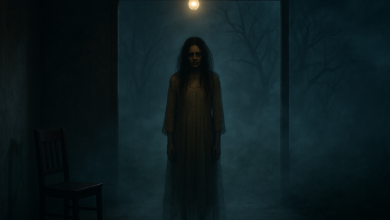
Beneath the Floorboards, They Wait
The day Raven Richards decided to renovate the old flat, she felt a surge of purpose. Her life in The Archway, a crumbling relic of 1960s architecture, had become stagnant. The cracked walls and peeling paint told stories of neglect, but Raven envisioned a bold new chapter. As a freelance designer, she relished the thought of transforming the tired interior into something bright and inviting.
Yet on the very first day of her project, a chill settled over her. While unearthing splintered floorboards in the living area, she stumbled upon a collection of tattered letters stuffed beneath. The envelopes, yellowed with age and sealed with faded wax, bore no return address but were plastered with ink that had run in places. Intrigued, she grabbed one and broke the seal. Inside was a letter filled with wild, desperate scrawls—the handwriting shaky and unsteady.
I see them, she read. Beneath the floorboards, they wait. The message sent a shiver down her spine, almost as if a cold hand had curled around her heart. Raven cherished her solitude, but the unsettling notion of something hidden beneath her feet burrowed into her mind, gnawing at her new sense of control.
As the days passed, daily routines turned dizzying as she tried to make sense of the letters. Each uncovered envelope tempted her into late-night readings. They chronicled the life of someone named Lydia, who had lived in the flat decades ago. The letters contained feverish ramblings of figures lurking in the darkness, and a world beneath the wood she felt compelled to ignore yet could not dismiss.
Every visit to the flat became shadowed by a tugging anxiety. Objects began to disappear—her tools once left scattered about now vanished without explanation. A breeze—imperceptibly cool—whispered through the windows even when they remained firmly closed. It began with slight movements: a chair out of place or a picture crooked on the wall. Yet nothing prepared her for the day she awoke to find all her furniture rearranged.
Raven gasped, heart racing. The couch faced the wall, the dining table sat in the corner, and the rug twisted askew. She tried to convince herself it was a prank—the results of sleepless nights and creative fatigue—yet the air crackled with something tangible. She rushed from the flat that morning, the sounds of her own footsteps echoing angrily.
Days turned into weeks, and Raven’s excitement ebbed further. The house no longer felt like a refuge; it transformed into a den of spectres. Friends noticed the change. ‘You’ve been acting a bit off lately, love,’ said Clara, her closest confidante, as they sat in a small café. ‘Maybe you should take a step back, go for a holiday.’
But Raven shook her head; the flat had become a challenge she couldn’t abandon. In her mind, she believed finishing the renovation would somehow placate whatever tempest had stirred beneath the floorboards. Yet the more she fought through fatigue and dread, the more the spirit’s influence poured into her life.
By the end of the month, the letters had revealed a history she could not ignore. Lydia—for all her assumptions of madness—had been a designer like Raven. She described shadows flitting just out of sight, and the sensation of being watched while she worked. The letters unfurled tales of a gradual assimilation into her own dark thoughts. ‘I’ll soon join them,’ one letter concluded, the scrawl nearly illegible, ‘I hear them calling me.’
Raven’s routine overfaded; her identity began to slip as holes formed in her memories. Clara remarked that Raven had begun to repeat herself. Conversations became snippets, and important projects she had completed felt like dreams. Unbeknownst to her, the spirit of Lydia wasn’t just a haunting presence but something more malevolent, reaching into Raven’s very essence, pulling at strands of her identity.
With each passing day, Raven’s reflection in the mirror grew dimmer. One cold night, she stumbled upon the ominous plan to gut the entire living space in pursuit of a fresh start. It wasn’t long before she found herself back on the floor, peeling away wood from below, convinced answers would illuminate her path forward.
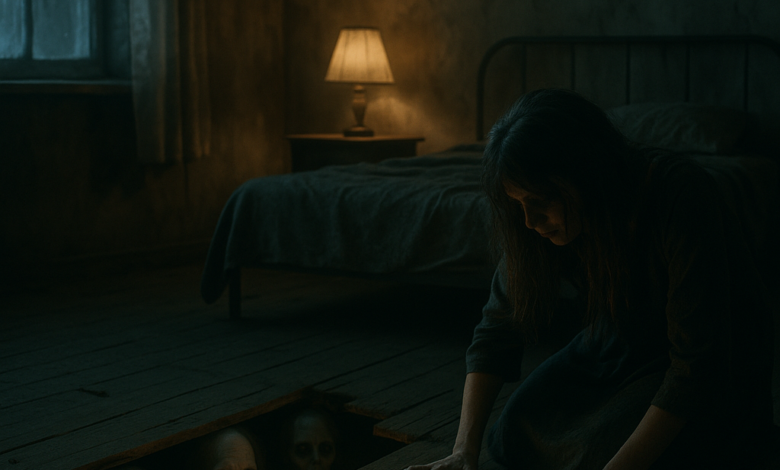
That was when the real terror began. As she pried a final board free, a rancid stench wafted up at her—a rotting scent that gripped her throat. It forced her to recoil, but curiosity drove her to look below. In the darkness, she saw a ribbon of pale, ghastly figures faintly illuminated. Their hollow eyes devoid of life blinked back at her, mouths twisted into grotesque silent screams.
Overwhelmed, Raven scrambled backwards, but something cold seized her ankle. Panic surged within as she felt the fingers crawl up her leg, cold paranoia sinking deeper. Focusing on escaping, she yanked free, but an image flashed in her mind—a chaotic jumble of faces she didn’t recognise, yet felt intimately tied to her.
And suddenly, time began to distort. The room warped around her, splintered into paralyzing realms of half-formed memories, and she glimpsed the fading remnants of a life unchosen. Raven’s scream echoed within her, challenging the darkness that sought to consume her, but as night engulfed the flat, she felt pieces of herself splintering off, lost into the void of the figures, lost into Lydia’s fate.
The horror culminated that very night. Unable to lay her head down peacefully, Raven turned on her scratching nails, ripping through the wooden boards, desperate to resist the pull of Lydia’s madness. But the weight of relentless whispers coaxed her with promises of revelation, urging her to stay. Lydia did not linger like other spirits. She fused, intertwined with Raven’s consciousness, insisting she too could belong in the eternal grey that awaited.
Fragments of identity twisted, as with every digging, words faded from Raven’s lips. By dawn, she was no longer herself, nor could she recapture the essence she had once infinitely loved. Lydia had subsumed the very core of her being—chained to the remnants of the dark designer. The flat fell silent, empty save for the wood that continued to groan, a new presence draped in the warmth of her newfound insanity.
Months passed before anyone noticed not Raven, but a ghostly imitation had taken her place—a shadow dwelling within the renovation that had become a neglected grave. Clara and the others felt her absence weighted heavily; the flat, a tomb sealing the secrets of two lives entwined in a macabre tapestry of loneliness and yearning, remained unchanged—underlined by the buried echoes of letters that revealed a tale woven into the floorboards, never to rest.