Few modern horror figures are as instantly recognisable as Candyman: a hook-handed spectre, a name that functions like a dare, and a legend that seems to grow stronger the more people whisper it. He began life not as a genuine piece of folklore but as a fictional creation by Clive Barker, before being transformed by film into one of the most durable urban-legend monsters of the 1990s and beyond. What makes Candyman memorable is not simply the body count he leaves behind, but the way he fuses ghost story, social fear, tragic backstory and the dangerous seduction of myth.
Origins in Clive Barker’s fiction
Candyman first appeared in Clive Barker’s short story “The Forbidden”, published in the mid-1980s and later collected in Books of Blood. In Barker’s original version, the character is not yet the fully developed figure later associated with Chicago, nor is he given the same complete identity and history. He is, above all, a supernatural intruder attached to a decaying urban landscape, summoned by disbelief as much as by belief. Barker’s story already contains the essential machinery that would make the character endure: a ritual invocation, a mirror, a deadly hook and the unsettling idea that urban legend can generate its own reality.
The story grew from Barker’s interest in the kinds of tales that circulate among children and teenagers, especially warnings about strangers and lurking predators. Rather than presenting Candyman as a conventional monster from old superstition, Barker created something more modern and unstable, a figure who feels like folklore in formation. That was a crucial part of his power. He did not belong to the distant past, but to the city, the rumour mill and the spaces where ordinary life and dread overlap.
From short story to urban legend
The real leap in Candyman’s cultural life came with the 1992 film Candyman, directed by Bernard Rose. The film did not simply adapt Barker’s story. It reimagined the character as a tragic, racially charged urban legend rooted in Chicago, and it gave him a memorable identity: Daniel Robitaille, a talented Black artist murdered by a mob after an affair with a white woman. That backstory is one of the most important changes in the transition from page to screen, because it shifts Candyman from an abstract supernatural killer into a figure shaped by historical violence, racial terror and the persistence of trauma.
The 1992 film also helped define the character’s most enduring rule: say his name five times while looking in a mirror, and he appears to kill you. This is the kind of simple, repeatable ritual that travels well in popular culture, because it feels immediately shareable. It also makes Candyman resemble other mirror-based dare legends, but the film gives the premise a stronger emotional and social dimension. The ritual is not just a spooky game. It is tied to belief, dread, grief and the community’s need to make sense of violence.
Appearance and manner
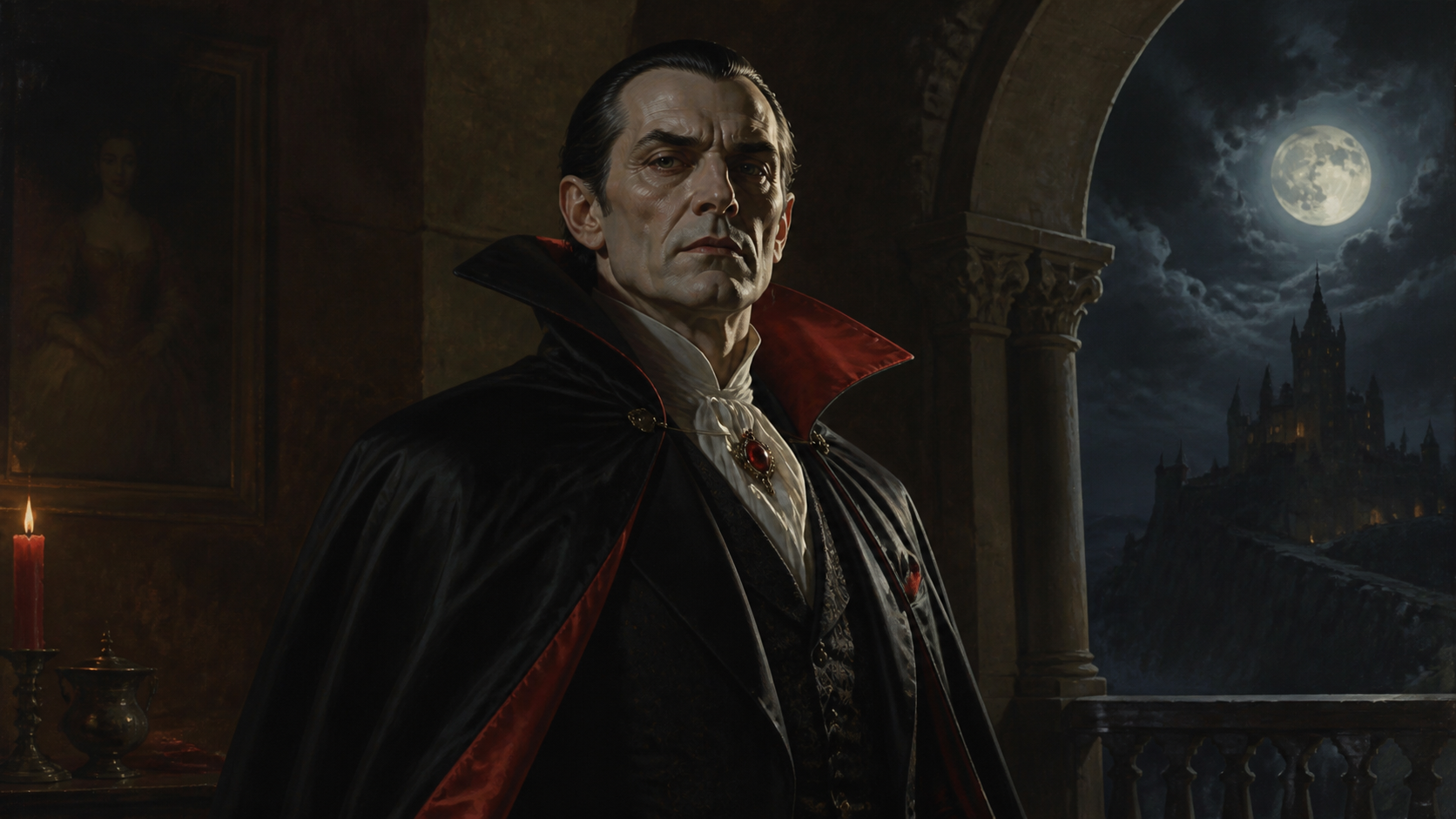
Candyman’s look is one of the reasons he lodged so firmly in the imagination. He is usually presented as an elegant, almost theatrical figure, wearing a long coat and carrying a prosthetic hook where one hand should be. He is not a shambling corpse or a masked brute. He is articulate, composed and strangely courtly, which makes him more unsettling than many slashers or revenants. He speaks with calm assurance, often as though he were performing a role he knows by heart.
The hook matters because it is both weapon and signature. It replaces the hand and becomes a symbol of mutilation, menace and transformation. In film, the hook is usually accompanied by bees, which have become part of Candyman’s visual mythology. The insects evoke sweetness turned poisonous, especially in the 1992 film’s depiction of his murder by a mob that covers him in honey before his death. Bees are also one of the reasons the character feels less like a standard ghost and more like a legend with sensory force. The buzzing announces him before he is fully seen.
Unlike many monsters, Candyman is attractive as well as terrifying. That is deliberate. He has the glamour of a tragic figure, and his menace is sharpened by his charisma. He can appear as a lover, a murderer, a martyr or a myth, sometimes all at once. That ambiguity is central to his appeal and to the unease he creates.
The film mythology: Daniel Robitaille
Spoiler notice: the following section refers to major story elements from the films.
In the 1992 film, Helen Lyle, an academic researching urban legends, becomes obsessed with the Candyman story while studying life in Cabrini-Green, a Chicago housing project. As she digs deeper, the legend and reality begin to overlap in increasingly dangerous ways. The film’s brilliance lies in how it uses investigation as a pathway into horror. Helen wants to analyse the legend, but the act of examination itself seems to feed it.
Daniel Robitaille’s backstory is essential to the film’s emotional weight. Born into a prosperous Black family, he becomes an artist, falls in love with a white woman, and is brutally punished by a lynch mob. His right hand is severed, he is smeared with honey and stung to death by bees. That murder turns him into a revenant of racial violence, and the film’s greatest achievement is to make the supernatural inseparable from the history of American brutality. Candyman is not just a ghost story villain. He is what remains when a society tries to erase the evidence of its own crimes.
The film also deepens the legend through the idea of repetition. Candyman survives by being spoken about, feared and re-enacted. He is a creature of public memory, and the film makes that memory dangerously contagious. Helen’s investigation, far from dispelling the myth, helps to spread it. This gives the story a self-fulfilling quality that feels both folkloric and modern. In the world of the film, the legend is not merely told. It is performed into being.
Later films and changing continuities
The character returned in Candyman: Farewell to the Flesh (1995) and Candyman: Day of the Dead (1999), both featuring Tony Todd. These sequels continued to associate him with a tragic, generational curse and with the idea that the legend can attach itself to new places and new families. As with many horror franchises, however, the continuity became looser as the series continued. The films are best understood as part of a shared mythology rather than as a perfectly consistent narrative line.
The 2021 film Candyman, directed by Nia DaCosta and produced with Jordan Peele among its creative team, reworks the concept again. It returns to the Chicago setting and to the relationship between gentrification, memory and local myth. The film presents Candyman less as a single fixed being than as a recurring force that can absorb different names and deaths. That idea expands the legend while preserving its essential shape: a killer whose existence is sustained by community trauma, storytelling and the refusal to let the past stay buried.
This later interpretation does not replace the earlier films so much as extend them. Across the franchise, Candyman remains tied to the same basic mechanism, but the meaning of the legend shifts. At times he is a singular tragic ghost, at others a broader emblem of suffering and remembrance. That flexibility has helped the character remain relevant across different eras of horror.
What Candyman can do
Candyman’s abilities vary somewhat between versions, but certain traits recur. He appears and disappears in ways that suggest supernatural mobility rather than physical movement alone. He can kill with extraordinary precision using his hook, and he often seems to intrude into dreams, reflections and private spaces. The mirror summons is especially important because it turns an everyday object into a portal of threat. The idea that a person might invite him in simply by testing the legend gives the character his most chilling edge.
In the films, Candyman can also seem to manipulate perception. He appears to his chosen victims, vanishes from police attention, and seems to exist partly through collective fear. This makes him less like a conventional slasher and more like a haunting or possession narrative with a body. He is not vulnerable in the way a mortal killer would be, because his power depends on myth, memory and dread. Destroying him is therefore not just a matter of physical force, but of confronting the story that sustains him.
Why the legend works
Candyman is frightening because he operates on several levels at once. He is a ghost, but also a murderer. He is a legend, but also a human tragedy. He is intimate, because he speaks directly to his victims, and public, because his existence depends on rumour spreading through a neighbourhood and beyond. That combination makes him unusually adaptable. He can function as a personal nightmare, a social allegory or a revenge figure, depending on the version being told.
He also taps into a particularly strong horror mechanism: the fear that language itself can summon danger. Saying his name five times is a childlike dare, but it is also a ritual with the logic of superstition. It asks the participant to cross the line between curiosity and invocation. In that sense, Candyman is about the peril of testing what should remain unspoken. The legend transforms speech into a trap.
Another reason he endures is that he is not simply monstrous in appearance. His voice, his elegance and his tragic history complicate the usual distance between audience and villain. He can be pitied, feared, desired and rejected in the same scene. That emotional complexity gives him a depth many horror icons lack. He is memorable because he is not only a killer in a hook-hand. He is a story about violence returning in a form that cannot be ignored.
Cultural impact
Candyman’s influence extends well beyond the films. He has become one of the clearest examples of a modern urban-legend horror icon, a figure whose mechanics are simple enough to repeat in playground folklore yet rich enough to support serious readings about race, class, urban decline and the afterlife of atrocity. The character has also endured because he bridges traditions: he belongs to Gothic tragedy, slasher cinema, ghost story folklore and social horror all at once.
His most famous traits have become instantly legible shorthand in popular culture. The hook, the mirror, the bees and the repeated name are now part of the wider language of horror. Even people who have not seen the films often know the basic premise. That is the mark of a successful modern monster. He becomes a story people know before they know where it came from.
Candyman remains effective because he feels both invented and inevitable. Barker’s original idea was sharp enough to survive translation, and the films gave it emotional and historical force. The result is a horror figure who is not merely remembered for his kills, but for the unsettling way he makes legend itself feel alive. He is memorable because he is what happens when myth, memory and murder all answer to the same name.