Carnival of Souls is the 1962 American horror mystery directed by Herk Harvey, a spare, uncanny film about a young woman who survives a car crash and then finds herself increasingly isolated, drawn towards an abandoned lakeside pavilion, and haunted by figures that may be real, remembered or something in between. Its horror sits in the psychological and supernatural overlap, with a dreamlike, liminal quality that sets it apart from the more forceful monster and shock pictures of its era. The film’s appeal lies in the way it turns ordinary spaces into places of dread, while keeping the story rooted in a recognisable, human vulnerability rather than elaborate spectacle.
The Film File
- Original release year: 1962
- Director: Herk Harvey
- Writer: John Clifford
- Principal cast: Candace Hilligoss as Mary Henry; Frances Feist as Mrs. Thomas; Sidney Berger as John Linden; Art Ellison as the Reverend Powell; Stan Levitt as C. B. Jensen; Herk Harvey as the man
- Approximate runtime of the version discussed: 78 minutes
- Country of production: United States
- Relevant horror subgenres: psychological horror, supernatural horror, ghost story, cult horror
Behind the Screams
Carnival of Souls grew out of the industrial filmmaking world rather than the studio horror machine. Harvey worked for Centron Corporation in Kansas, making educational and industrial films, and the feature was produced independently on a very small budget. The film was shot in three weeks, largely in Lawrence, Kansas, with a key stretch filmed at Saltair, the abandoned amusement park on the shore of the Great Salt Lake in Utah. That site was not a random backdrop but the project’s creative spark: Harvey had seen the decaying pavilion and asked Clifford to turn the image into a feature screenplay. Clifford wrote the script quickly, and the finished film kept that sense of stripped, concentrated invention.
The screenplay is generally credited to John Clifford, though Harvey clearly shaped the concept and the film’s tonal goals. Contemporary and later accounts from the film’s own preservation and reissue materials consistently note the artistic ambition behind the production, with the filmmakers aiming for something more stylised and European in feel than the average low-budget American horror picture. The often repeated description that Harvey wanted “the look of a Bergman and the feel of a Cocteau” reflects that aspiration, but what matters more than the slogan is how the film translates it into practice: austere locations, minimal incident and a sense that the world itself has become unreliable.
There is no need to inflate the behind-the-scenes lore. The notable facts are already unusual enough: this was Harvey’s only feature, made by filmmakers whose day jobs lay elsewhere, and driven by the visual memory of a deserted amusement park. That background helps explain why the film feels so unshowy yet so singular. It does not behave like a polished studio horror production, and that rougher, more personal shape is part of its identity.
Into the Dark
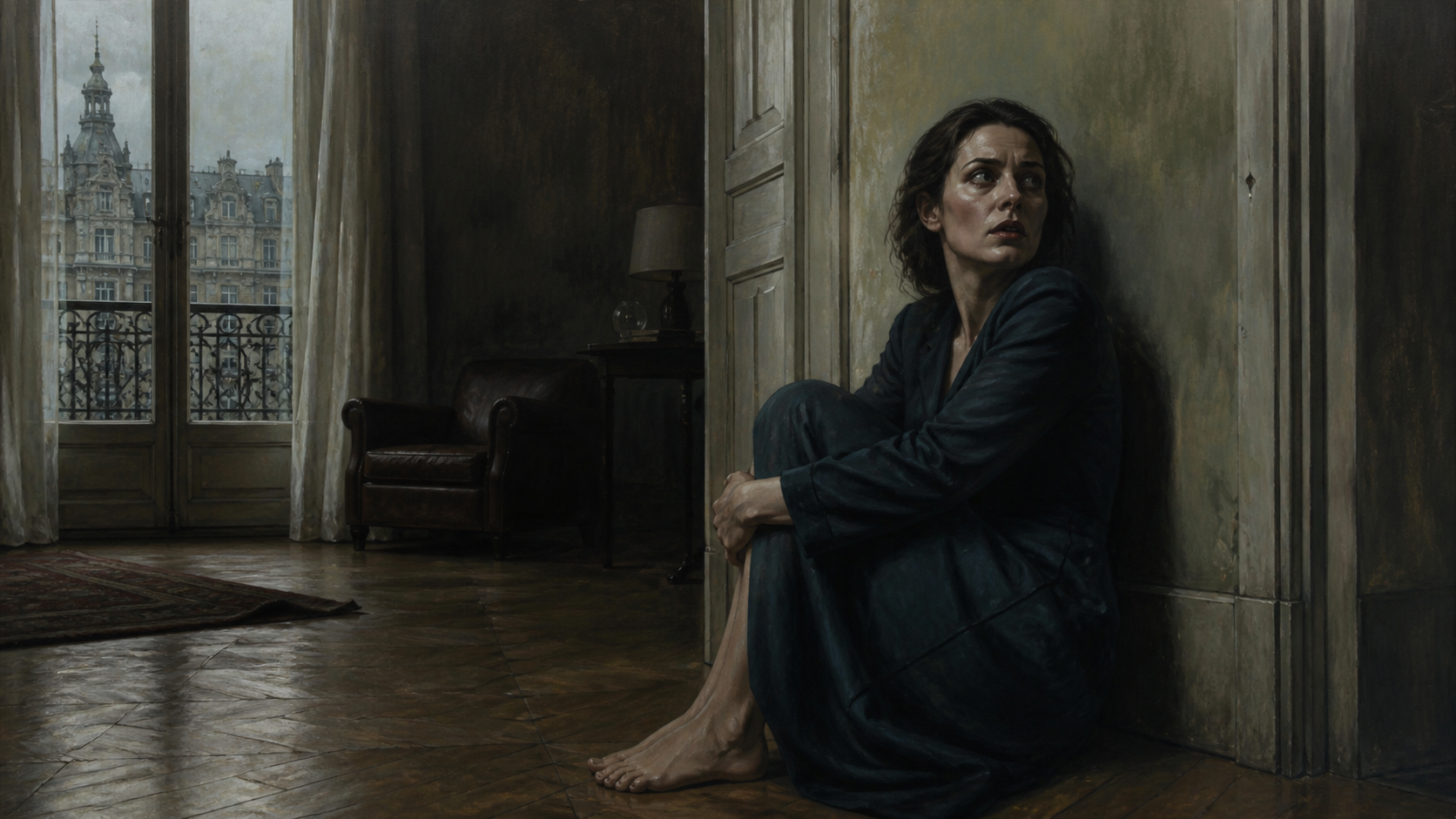
The film centres on Mary Henry, who emerges from a traumatic car accident seemingly unscathed but increasingly detached from the world around her. She leaves Kansas for a new job as a church organist in Utah, hoping to restart her life cleanly, yet the trip and everything after it carry the residue of the crash. Even before the supernatural material becomes overt, Mary is isolated by her own reserve, by the blankness of the landscape, and by the uneasy sense that she is no longer fully part of ordinary social life.
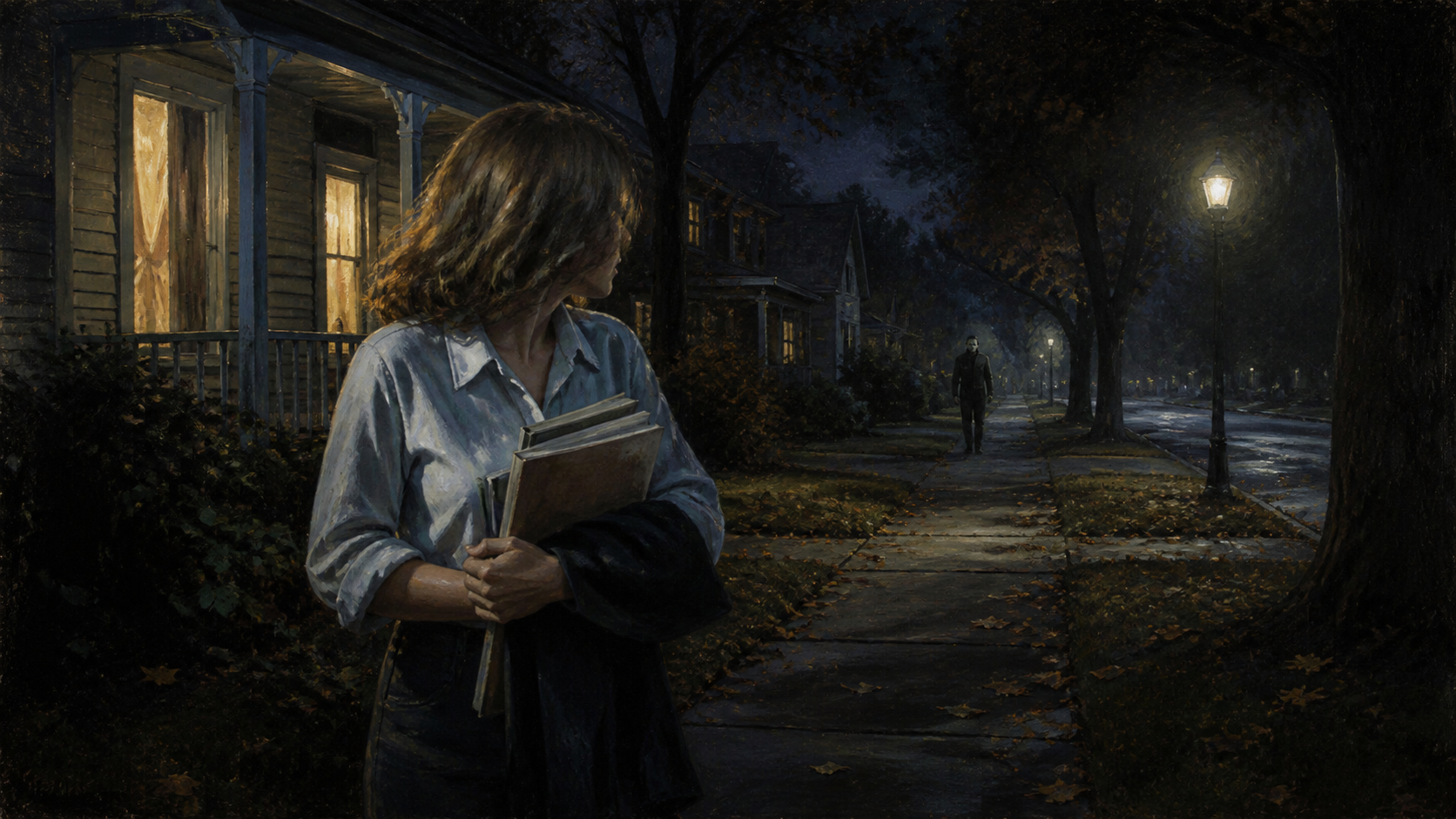
As Mary settles into her new surroundings, she begins to encounter a pale, enigmatic man and experiences increasingly troubling gaps in her connection to other people. The abandoned pavilion by the lake becomes a recurring magnet in the narrative, an image of dereliction that keeps exerting pressure on her movements and her mind. The story proceeds less as a sequence of jolts than as an accumulation of dislocation: Mary tries to work, to socialise and to explain herself, but the film steadily suggests that some boundary has already been crossed and cannot be crossed back.
Spoilers ahead: the following paragraphs discuss major plot developments.
The film eventually makes clear that Mary’s apparent survival is more fragile than she believes. She is haunted not just by visions but by the possibility that she has been cut loose from the living world altogether. The spectral figures around the lake are not simply random scare devices; they are tied to her condition and to the film’s ending, which confirms that the carnival-like gathering on the shore is less a hallucination than the final image of her transition out of life. The conclusion gives the story its bleak force, because Mary’s struggle is not to defeat a monster but to understand, too late, what has happened to her.
What Gets Under Your Skin
What lingers most is the film’s atmosphere of estrangement. Rather than building terror through elaborate creature effects or constant shocks, it relies on the uneasy friction between mundane American spaces and a world that seems to have slipped a little out of alignment. Salt Lake City, the lake shore, the empty pavilion and Mary’s interiors all feel observed from a slight distance, as though reality has thinned but not quite vanished. That gives the film a quiet, persistent unease that suits its premise far better than overt sensationalism would have done.
The performances help sustain that effect. Candace Hilligoss plays Mary with a withdrawn, almost defensive composure that keeps the character from becoming merely passive. The film benefits from that severity. Mary is not written as a conventional screamer or a wide-eyed innocent, and Hilligoss’s reserve makes her seem both self-possessed and frighteningly vulnerable. Around her, the supporting performances lean into a matter-of-fact, slightly stiff quality that can read as awkward in a conventional drama but feels right here, because it leaves the film suspended between lived-in realism and uncanny unreality.
The visual design is one of the film’s great assets. Its black-and-white photography turns blank roads, water, windows and derelict structures into shapes of unease, and the famous abandoned pavilion is not merely a spooky location but a visual idea that organises the whole film. The sound design and organ music are equally important, not because they constantly announce danger, but because they keep threading a thin, mournful strain through the story. The result is horror by accumulation: the film does not nag at the viewer with repeated scares, but it keeps deepening the same anxiety until that anxiety feels inevitable.
There are limits to its method, but they are largely the limits of its chosen form. The pacing can feel deliberately diffuse, especially if you come to it expecting a more conventional 1960s fright narrative. Some viewers may also find the performances stylised to the point of distance. Yet those qualities are inseparable from the film’s impact. It works because it refuses easy emotional signalling and because it keeps Mary’s experience suspended in uncertainty until the final movement. As a horror film, that is less about volume than about precision.
The Film’s Afterlife
Carnival of Souls did not begin as a major commercial success, but it developed a strong cult reputation after its initial release, especially through late-night television and revival screenings. Later reassessment has been substantial: it is now regularly discussed as a landmark of American independent horror, and its survival and restoration history have helped cement that status. The film’s influence is often traced less through direct remakes than through its mood, its use of liminal spaces and its interest in a protagonist whose psychological and spiritual condition cannot be easily separated.
Horripilations Verdict
A singular, low-budget ghost story whose restraint becomes its strength, Carnival of Souls is eerie, intelligently shaped and far more unsettling than its modest origins suggest.
What works
- Dreamlike atmosphere
- Candace Hilligoss's controlled lead performance
- Distinctive use of locations and sound
What holds it back
- Deliberate pacing may feel distant to some viewers
- Stylised performances can seem mannered outside the film's logic