
Echoes of the Mutant Dawn
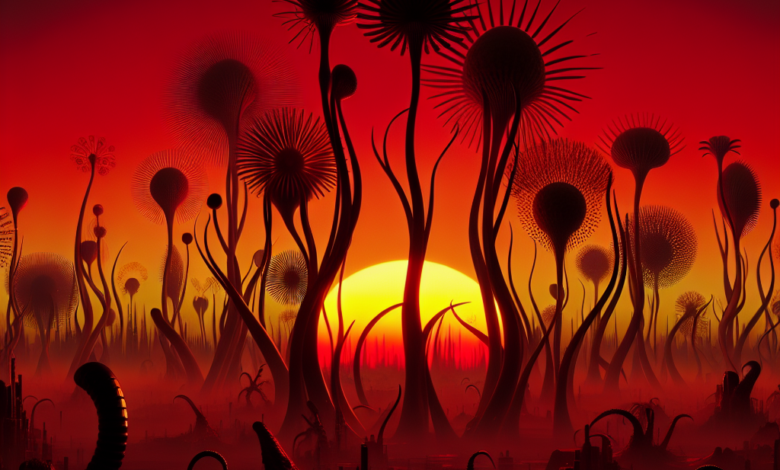
In an age where nature reclaimed its throne, the remnants of human civilization lay scattered across the vast expanse of what was once urban sprawl. Tall grasses engulfed the cracked pavement of deserted roads, while wildflowers pushed through the skeletons of long-abandoned buildings. Yet within this verdant tapestry, whispers of the past would soon awaken, bringing forth the terrors that slumbered beneath the overgrown thickets. This was the world of the Mutant Dawn, where the echoes of silence could often ignite fear.
Beneath the surface, a transformation had long been taking shape. The Great Fallow—a phenomenon born from the reckless pursuits of mankind—had transformed the creatures that inhabited the earth, warping their forms into grotesque reflections of their former selves. Yet there remained some vestiges of humanity’s legacy, a dwindling remnant clinging to existence amid the chaos. It was among these survivors that the story of Caleb Dawson unfurled.
Caleb had not always been a lone wanderer. Once, he had belonged to a small enclave that dwelt in the ruins of Bath, a semblance of community governed by the fragile threads of survival. They had worked together to cultivate the land, foraging for food, and learning to keep the monstrous echoes of the woods at bay. But as the seasons turned and the sun dipped lower in the sky, discord blossomed amongst them. Resources grew scarce, and suspicion grew rampant. It wasn’t long before Caleb found himself ostracised, driven away from the only home he had ever known.
His memories of laughter around a shared fire and the warmth of human connection became drowned in the haunting sounds of the forest. The beasts of the Mutant Dawn stirred beneath the canopy, their howls peeling back the veneer of civilised remnants. Each night, as darkness descended, he heard their echoes—writhing whispers of the past that curled like mist through the air, reminding him of the humanity lost to desperation.
He had ventured into the heart of the Pennines, a rough-hewn expanse dominated by rocky outcrops and dense thickets, in search of what he hoped would be a shelter from the chaos. The trees loomed like watchful sentries, their gnarled branches weaving together to block the moonlight, casting the forest floor into an abyssal gloom. As he pressed deeper, it felt as though the forest inhaled with each step, the ground beneath him soft and treacherous. It was in these eerie realms that stories of the weavers—the creatures of myth believed to have birthed the very echoes of the dawn—had long taken root within the minds of the folk in Bath.
Caleb forced these thoughts aside, knowing well that tales often stemmed from fears and insecurities. He had always been a rational man; he relied on logic and hard evidence rather than spectres of the imagination. But reason began to fray as the wind howled through the trees, a mournful dirge that reverberated against the hopelessness growing within him. The woods were alive with the sound of movement, rustling and scratching, drawing closer with each heartbeat. Caleb clutched the knife hanging from his belt, its blade shining faintly in the dying light.
Then he saw it.
At first, it was merely a flicker—a figure darting between the twisted trunks with uncanny speed. But as it revealed itself, the laughable notion of it being a mere trick of his mind dissolved into shock. The creature was a grotesque parody of a wolf, its emaciated frame stretched to unnatural proportions, its eyes glimmering like shards of obsidian. Patches of beaded, iridescent scales glimmered amidst its brutish fur—akin to the man-made toxic symbols of a world long gone. The scent of decay wrapped around it, almost palpable in the night air.
Caleb felt his pulse thunder in his ears, instincts screaming for him to flee. Yet some morbid curiosity tethered him to the spot, drawing his wide eyes deeper into the creature’s gaze. There was intelligence in those obsidian depths—a haunting echo of something once noble. As the beast stalked closer, its back arched, resembling a macabre representation of its ancestors, all harrowed muscles and primal grace. Caleb swallowed hard, forcing himself to retreat slowly, maintaining eye contact, in the hopes that the creature would lose interest.
But as if perceiving his intentions, the wolf-like creature lunged, a cacophony of branches splintering beneath its weight. Caleb sprinted through the underbrush, adrenaline racing through him, the thudding of his heart drowning out the sounds of the woods. He felt his feet slip as the ground grew treacherous, roots grasping at him like hands of the forest, trying to pull him back to the dark heart of despair. Just as he thought he’d escaped, the creature erupted beside him, nearly colliding full force.
In that instant, Caleb felt his breath hitch—the vulnerable recognition that perhaps he wasn’t merely an aimless wanderer, but a vessel of collective fear. He realised that he was not alone, even if he was surrounded by primordial beasts and echoes of the days before. The weaver—the myth—had taken corporeal form now, threading itself into the very fabric of his being.
As the wolf-like creature slowed, Caleb found himself drawn to it for reasons he couldn’t comprehend. There was something majestic yet tragic in its bearing—a reflection of the relationship once held between man and nature, warped by abandonment and neglect. A strange calm began to wash over him, as if he could hear the murmurings of the forest itself, slowly revealing the tapestry of the weavers’ narratives encapsulated within the echoes.
Maybe the creatures were not just aberrations, but custodians of the past, protectors of a world now forgotten. Caleb watched, captivated, as the wolf creature stopped its pursuit, its heavy breaths punctuating the still air. The forest around him transformed as the echoes quieted, leaving space for understanding—the message now clear. Life in all its forms adapted to survive, even when the starkness of adaptation bore little resemblance to its origins.
In that moment of clarity, Caleb understood the wisdom of the weavers. They were not merely monsters lurking in the shadows but harbingers of the unwritten tale that humanity had abandoned. With a cautious step, he approached the creature, knife still gripped tightly, yet his heart soared with a sense of duty. Here before him lay the potential for a connection—one that could bridge the chasm between man and the wild, even in this new world immersed in echoes of dread.
“Perhaps we are not so different,” he murmured in the hushed glade, crossing into the realm of mutual understanding. The creature tilted its head, nostrils flaring as it analysed the human before it, the barrier that once defined predator from prey slowly beginning to dissolve.
Caleb knelt, extending his hands toward the beast, wondering if some modicum of humanity could be reawakened within this maelstrom of nature’s wrath. Perhaps the dawn could herald not just darkness but renewal, weaving together the stories of past and present.
And in that silent communion under the dense canopy, encompassed by whispers of the Mutant Dawn, Caleb found the courage to stand against the haunting narratives of despair. The echoes around him ceased their mournful wail, replaced with something stronger and more profound—the realisation of coexistence.
Here in the woodland where shadows danced and memories lingered, the tale of the weavers merged with his own, forging something entirely new from the fragmented threads of existence. It was not merely survival; it was a rebirth, as enduring as the roots that sprawled beneath the earth, laced with secrets long forgotten, yet ripe with potential.
Together, they would face the dawn, not as enemies, but as fellows in the fragile balance between man and beast, existing in the timeless echoes of the world that once was.


