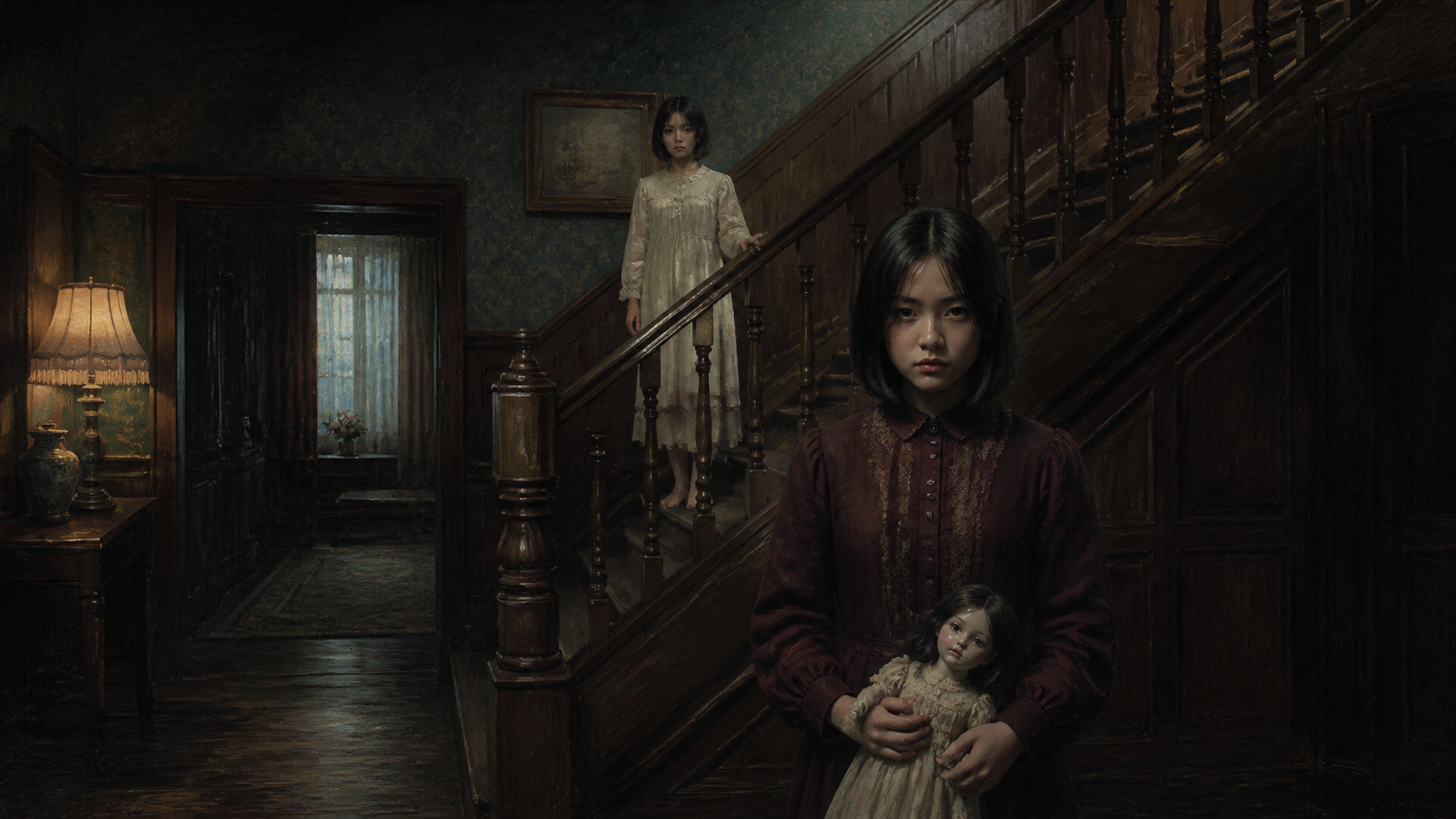
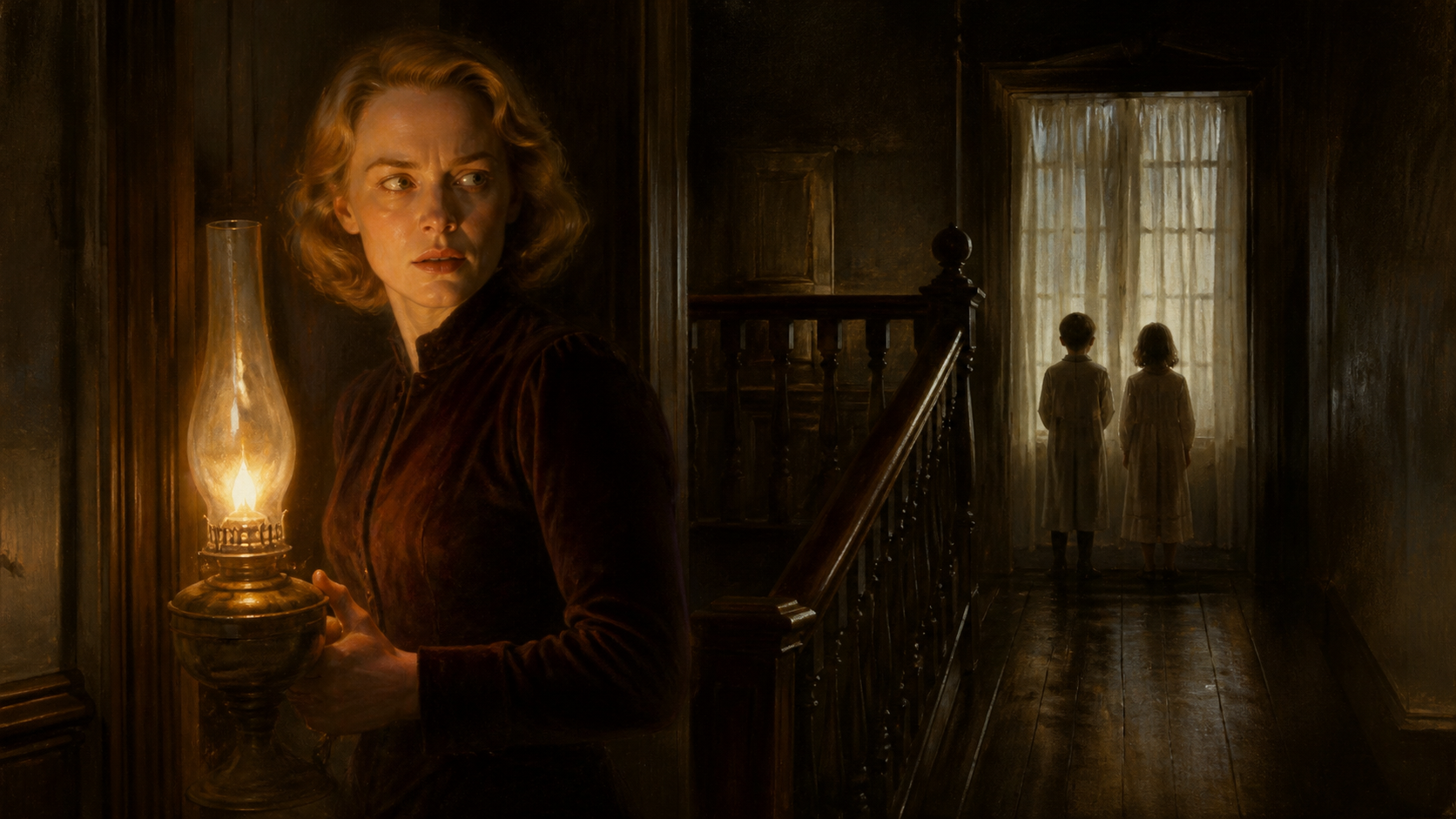
Ringu is a 1998 Japanese supernatural horror film directed by Hideo Nakata, adapted from Kōji Suzuki’s 1991 novel Ring. Its central hook is disarmingly simple and still potent: a cursed videotape begins a chain of deaths, giving the story a near-urban-legend logic that blends investigation, dread and the creeping suggestion that technology itself can carry a contagion. What makes Ringu distinctive is the way it turns a high-concept curse into something restrained and clinical, letting unease gather through procedure, implication and a steadily tightening deadline rather than through noise or excess.
The Film File
- Original release year: 1998
- Director: Hideo Nakata
- Credited writer: Hiroshi Takahashi
- Principal cast: Nanako Matsushima as Reiko Asakawa; Hiroyuki Sanada as Ryūji Takayama; Rikiya Ōtaka as Yōichi Asakawa; Miki Nakatani as Masami Kurahashi; Yuko Takeuchi as Tomoko Ōishi; Hitomi Satō as Yuka Ichise; Sato Hitomi as Masami Kurahashi; Rie Inō as Sadako Yamamura
- Approximate runtime: 96 minutes
- Country of production: Japan
- Relevant horror subgenres: supernatural horror, mystery horror, psychological horror
Behind the Screams
Ringu did not emerge from nowhere. It is the best-known screen adaptation of Kōji Suzuki’s novel, but it also sits within a broader chain of earlier versions and related material, including a 1995 television adaptation of the same source. Nakata’s film keeps the novel’s core premise while streamlining its investigative structure for a feature-length thriller and sharpening the audiovisual gimmick at its centre. The result is less a faithful transcription of every plot point than a disciplined reworking designed for mounting dread.
The film was made in Japan and released in 1998, with Nakata and writer Hiroshi Takahashi shaping a version that foregrounds the curse as both a mystery and a media object. That emphasis matters because the tape is not just a MacGuffin, it is the horror mechanism. The film’s setup depends on an ordinary domestic technology becoming a carrier of threat, which was especially resonant in the late 1990s, when home video culture was already familiar enough to feel mundane and therefore vulnerable to corruption.
One of the most striking creative decisions is the film’s controlled approach to the supernatural. The production does not treat the curse as a matter for full disclosure or grand mythology in the early stages. Instead, it allows fragments of information to arrive through journalism, private inquiry and local lore. That structure makes the film feel like an investigation into a buried pattern rather than a conventional haunted-house narrative. The best-known visual element, Sadako’s imagery, is also handled with remarkable economy. The film withholds explanation long enough for the iconography to settle into the viewer’s memory before the plot begins to unpack it.
The adaptation also alters the protagonist in ways that shape the film’s tone. Reiko Asakawa is a journalist and single mother, which gives the story a practical, contemporary frame and a domestic urgency that the novel handled differently. Her work, her private life and the threat to her child are all pulled into the same worsening situation. That tightening of roles is one reason the film feels so efficient: the investigative storyline is not separate from the emotional stakes, but bound to them.
Into the Dark
Reiko Asakawa, a reporter, begins looking into the deaths of several teenagers who seem to have died after encountering the same mysterious videotape. The case starts as a rumour and a curiosity, then hardens into something measurable once she discovers that the tape appears to leave a one-week time limit attached to anyone who watches it. She brings in her ex-husband Ryūji Takayama, a university lecturer with an interest in the paranormal, and the two begin tracing the tape’s origin through the islands, households and institutions linked to a long-buried tragedy.
As the investigation develops, Ringu becomes less about solving a puzzle than about the collapse of normal safeguards. Phones ring, records are checked, rumours are followed, and every practical step only makes the supernatural threat feel more immediate. The film’s tension comes from the friction between rational inquiry and an impossible mechanism that behaves like a physical law. Reiko and Ryūji are not simply trying to identify a ghost; they are trying to determine whether knowledge itself can save them from a deadline that has already started.
Spoilers ahead: the following paragraphs discuss major plot developments.
The search leads to the story of Sadako Yamamura, whose past has been shaped by fear, violence and the suppression of evidence. Reiko and Ryūji learn that the cursed images on the tape are connected to Sadako’s psychic power and to the manner of her death. The film gradually makes clear that the tape is not random vandalism or a prank but a kind of vessel in which the dead and the wronged have been recorded, distorted and released into the world.
The crucial revelation is that the curse is not ended by understanding it. Reiko and Ryūji uncover the link between the tape, Sadako’s remains and the mechanism by which the curse propagates, but the film refuses the neat closure that might follow from a solved mystery. Ryūji dies after his involvement in the curse catches up with him, while Reiko survives by passing the tape on to her father and then copying it for another person. The awful logic of the ending is that survival depends on transmission. The curse is not broken, only delayed, and that final move gives the film its most unsettling moral shape: knowledge helps, but only if it can be handed to someone else.
What Gets Under Your Skin
Ringu is effective because it understands that dread often lands harder when the film seems almost reluctant to flaunt it. The atmosphere is chilly, but not in a decorative way. Nakata’s direction keeps returning to ordinary spaces, corridors, living rooms, offices and seaside terrain, and that grounded setting makes the supernatural material feel invasive rather than spectacular. The horror is not that the world is strange from the start, but that the strange can enter the most familiar places without warning.
The storytelling is similarly measured. The film spends much of its running time on investigation, conversation and inference, which means the scares are earned through accumulation. That slower method can be mistaken for understatement, but the film is not empty of incident. It simply places its shocks carefully, so that the few moments when the curse breaks through feel more alarming than a more aggressive approach might have managed. It also helps that the script ties the mystery to family life. Reiko’s responsibility towards her son is not an ornamental subplot; it is the reason the investigation feels urgent rather than abstract.
The performances support that controlled design. Nanako Matsushima gives Reiko a useful combination of professional composure and mounting alarm, so that the character remains credible as both journalist and worried parent. Hiroyuki Sanada plays Ryūji with a dry, somewhat detached intelligence that suits the film’s partial reliance on scepticism. Miki Nakatani, in a less central but still important role, adds texture to the social world around the investigation. The cast are not asked to deliver heightened melodrama; they have to inhabit a story in which the eerie keeps intruding on the everyday, and they largely sell that pressure without overstatement.
Visually, the film is strongest when it uses its images with restraint and precision. The contrast between the plain textures of the present and the grainier, more alien quality of the tape’s imagery is one of its key formal ideas. The cursed footage feels decayed, scrambled and contaminated, which gives the horror a material quality. Rather than relying on a barrage of explicit effects, the film lets the image itself become suspect. That is a subtler and more durable kind of unease than simple shock.
The sound design and music also do a great deal of work. The film does not drown itself in constant sonic attack. Instead, it uses sound sparingly enough that small cues can land like warnings. This is a horror film that is often most frightening when it appears to be listening for something. When the supernatural finally forces its way into view, the contrast is sharper because the film has spent so much time in a register of controlled quiet.
As horror, Ringu is less interested in gore than in contamination, repetition and the sense that a curse can behave like a piece of bad information moving from one person to another. That concept gives the film a nasty conceptual edge. It is not merely about death arriving in seven days, but about the fear that danger can be recorded, duplicated and spread. The film’s best ideas are those that make modern media feel unstable rather than reassuring.
The Film’s Afterlife
Ringu became one of the defining titles in the international boom in Japanese horror cinema, and its reputation grew far beyond its original domestic release. It also generated a substantial franchise, with sequels and related works extending the curse in different directions, while the 2002 American remake The Ring brought the concept to an even wider audience. That later remake is part of why the film remains so widely recognised today, but the original still stands on its own terms as the leaner, colder and more ambiguous version of the idea.
Contemporary reception has tended to emphasise the film’s atmosphere, its formal control and the strength of its premise. Over time, it has come to function as a reference point for supernatural horror built around technological unease and slow-burn investigation. Its influence is not just in specific images, but in the broader confidence that a film can build real fear from an apparently simple mechanism if the storytelling is disciplined enough.
Horripilations Verdict
A shrewdly controlled supernatural horror film that turns a cursed videotape into a genuinely unnerving piece of modern folklore. Its sparse style, strong central performances and chilling visual idea outweigh any temptation to overexplain.
What works
- Elegant premise with memorable mythology
- Restrained direction that lets dread accumulate
- Strong lead performances and image-making
What holds it back
- A few supporting turns and exposition passages are functional rather than striking
- Viewers wanting explicit payoff may find its restraint frustrating