The Silent Witness
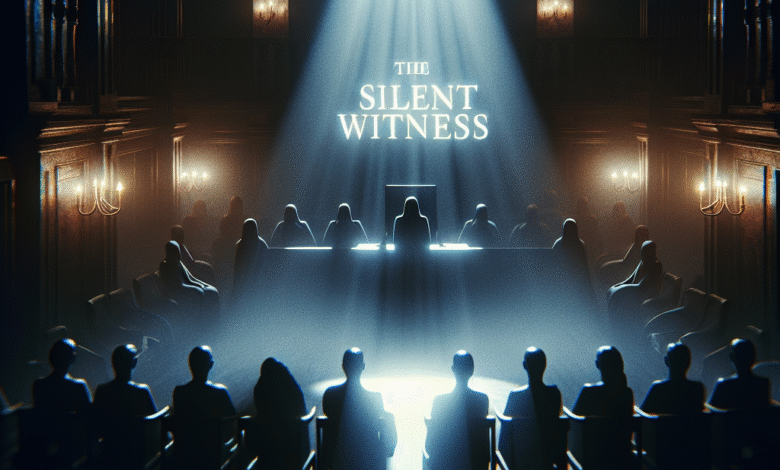
In the small, quiet town of Dunsfold, time seemed to have stopped. With its cobblestone streets lined with thatched cottages, historic stone churches, and ancient trees whispering tales of the past, the town had an air of untouched charm. However, beneath this picturesque surface lay a chilling legend that persisted through the years, known only as The Silent Witness.
It all began when Mary Tresham, a local girl of considerable beauty and intelligence, mysteriously vanished one autumn evening in the early 1960s. Mary was the light of the village, known for her frequent outings to the local bookshop and her laughter echoing through the town’s winding lanes. Her sudden disappearance sent shockwaves through Dunsfold; whispers of foul play and dark forces crept into conversations over warm cups of tea.
Days turned into weeks, and the search for Mary became the focus of the entire region. The villagers rallied together, scouring every inch of the surrounding woods, fields, and even the river that ran through town. In those initial days of despair and hope, everyone believed that their combined efforts would bring Mary home. But as the leaves fell and the first frost covered the ground, hope waned, and darkness set in.
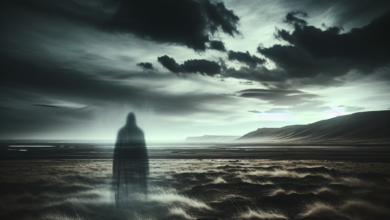
Months later, as the town gradually returned to its routine, an unusual figure began to emerge in the shadows. Villagers began to speak of a woman dressed in a long, flowing black coat, her face obscured by a wide-brimmed hat. They called her The Silent Witness. Some claimed she was an apparition, haunting the area where Mary had last been seen. Others insisted she was watching over the town, a guardian spirit forever bound to the unsolved mystery of Mary Tresham.
As the years rolled by, the legend only grew. Accounts emerged of the eerie spectre of The Silent Witness appearing to those who had dared to speak against their neighbours, punishing those who harboured secrets. They said she materialised at dusk, her footsteps muffled as she glided from the edge of the woods towards the heart of the village. Those who encountered her described an overwhelming sense of dread, a sensation that their very souls were being scrutinised. Yet, she never uttered a single word; hence her name.
The children of Dunsfold, with their wild imaginations, spun tales far grander than the hushed whispers of adults. At night, huddled around flickering candles, they spoke of The Silent Witness: how she would follow unrepentant wrongdoers to teach them a lesson, how her eyes gleamed with an ethereal glow, revealing nothing but the darkness held inside each person she observed. To them, she was both a frightening ghost and a spectral avenger, a paradox of fear and justice.
Tommy, a brave lad of about ten, decided one winter’s evening that fear no longer held sway over him. “She’s just a story,” he proclaimed to his friends, his cheeks red from the cold. “I’ll prove it! I’ll stay out by the old oak tree where she’s said to appear and share a few words with her.” His friends, both nervous and envious of his bravado, reluctantly agreed to join him.
That fateful night, amidst the twinkling stars, they gathered under the ancient oak, shivering in their thick woollen coats. The wind howled, and the trees seemed to sway as if they chattered among themselves, warning the children against their folly. So, they huddled closer, sharing their bravest tales in hushed voices, waiting for midnight, the witching hour.
As the clock struck twelve, a heavy silence enveloped them, pierced only by the rustling leaves. Then, in that stillness, a shift in the air rang through their bones, sending shivers down their spines. They turned to see a figure emerging from the shadows—a woman, garbed head to toe in black, with the billowing coat flowing around her like dark smoke. The wide-brimmed hat obscured her face, but her presence was palpable.
“Who’s there?” Tommy called out defiantly, his voice wavering. The figure paused, leaning slightly, as though assessing them. The friends held their breath. She took a step closer, and his heart raced. Yet, she remained silent, a statue of dread rooted in the dark.
Without warning, a sudden gust of wind whipped through the clearing, rustling the leaves and sending the children tumbling backward in fright. Tommy had never felt fear like this before, the adrenaline propelling him back towards the safety of the village. The others followed suit, running away with cries echoing through the still night as they abandoned their encounter.
The next day, Tommy found himself restless, plagued by questions. Was it the ghost they had heard about? Had he truly come face to face with The Silent Witness? He tried to dismiss it all, but he was haunted, not just by the memory of the encounter but by the unnatural feeling that something was wrong. The town had an undercurrent of tension; secrets nestled in every nook and cranny, waiting to be exposed.
Days turned into weeks, and Tommy noticed an unsettling shift in the dynamics of Dunsfold. Whispers grew louder than ever, dark secrets spilling from hidden corners. Old rivalries resurfaced; friendships crumbled. Some claimed to feel The Silent Witness observing them. The village became a web of fear, where keeping one’s own secrets was paramount, shelters against the unyielding truth.
Tommy’s curiosity transformed into an obsession. He spent hours in the village archives, pouring over records of unsolved mysteries and old articles about Mary Tresham’s disappearance. He was determined to uncover the truth, convinced that solving her mystery could rid the town of its rampant fear, thus silencing The Silent Witness once and for all. However, the more he dug, the more the villagers recoiled.
Mrs. Hastings, the local historian, noted his fervour with intrigue but warned him one fateful afternoon, “You tread where you shouldn’t, Tommy. Some truths are best left buried.” That warning looped in his mind, but he pressed on, driven by an insatiable need to know.
Finally, he stumbled upon a yellowed newspaper article tucked away in a dusty corner. It spoke of an old legend predating Mary’s disappearance—of a woman wronged, betrayed by her lover, ultimately resulting in her tragic death. With no remorse, her spirit was said to have followed those more fortunate in love, seeking justice or, perhaps, revenge on the living. The author had ended the piece with a foreboding statement: “She is the Silent Witness, observing while the world turns blind.”
As he pieced it all together, a chilling realisation emerged. Mary Tresham had been known for her kindness, her warmth; it was impossible to think anyone would harm her intentionally. Had jealousy driven someone to commit an act that left the village forever tainted? The more he considered the various villagers, the clearer it became that the truth was intertwined in a tapestry of covering up, perhaps starting with those who proclaimed innocence the loudest.
He recalled faces familiar to him—friends who wore smiles that masked shadows lurking beneath. With every revelation, the once close-knit community revealed itself as a patchwork of bitterness and enmity. A darker aspect of Dunsfold emerged, one ruled by fear and old wounds, where friendship had transformed into rivalry forged by jealousy.
Then came a diary, belonging to none other than Mary Tresham herself, discovered in a hidden alcove of her old bedroom. Within its pages lay tales of youthful love, friendships, and the shadows of darker secrets that lingered amongst her peers. As he read, one name kept cropping up—Eleanor. Eleanor, Mary’s closest friend, had grown distant in recent months. Jealousy had morphed into possessiveness, and Mary, oblivious to the growing tempest, had unknowingly walked herself into a tragedy.
Fueled by revelations, Tommy sought out Eleanor, finding her alone on a quiet street, wearing that same long black coat. “You know what happened to Mary!” he confronted, voice shaking with emotion.
Eleanor turned, her eyes glistening like glass, revealing nothing and yet everything. “I didn’t mean for it to go that far… I just wanted her to see.”
In that moment, he grasped the depth of the village’s turmoil: it was less about The Silent Witness and more about the unwillingness to address their shared injustices, fears, and regrets.
As Dunsfold grappled with the resurgence of its past, Tommy understood that the spectre of The Silent Witness wasn’t just about the triumph of the supernatural but the manifestation of the villagers’ own collective guilt and buried truths. It became apparent that she wouldn’t simply fade away with the unearthing of Mary’s story. Instead, she would continue to linger, embodying the shadows overlooked.
From that day forward, the townsfolk spoke of the haunting presence as though it were part of their lives—not merely an observer, but a reminder to unearth the truths cloaked in the darkness. The Silent Witness became synonymous with self-reflection, an ever-watchful entity urging them to confront the secrets threatening to tear them apart.
And in that small, quiet town of Dunsfold, as life carried on amidst the ghosts of the past, one thing was undeniable: until they chose to face their own truths, The Silent Witness would always be nearby, keeping a watchful eye upon them.