Count Orlok
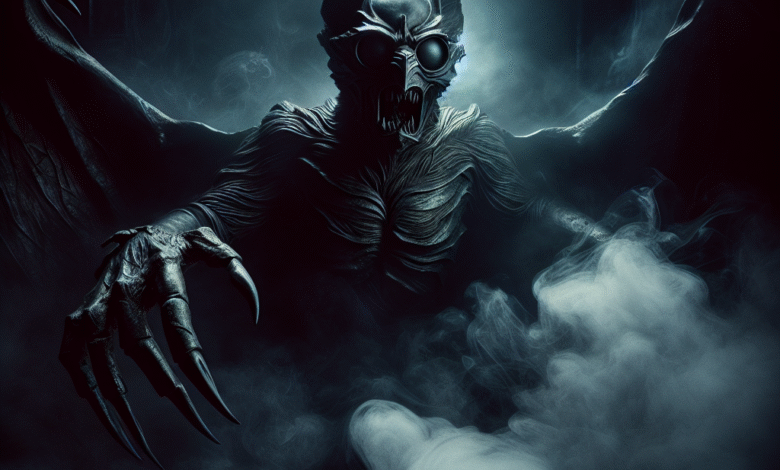
Count Orlok: The Eerie Legacy of a Timeless Vampire
In the shadowy annals of supernatural horror, few figures loom as large and as menacing as Count Orlok. This eerie character, whose twisted visage and ghastly persona haunt our collective consciousness, is not just a product of fiction but a terrifying symbol of our deepest fears regarding the unknown and the predatory nature hidden within humanity.
Origins and Historical Background
Count Orlok first emerged from the desolate pages of literature in Bram Stoker’s groundbreaking novel, Dracula, published in 1897. However, it was F.W. Murnau’s 1922 silent film Nosferatu that immortalized Orlok as a creature of nightmares. Murnau’s adaptation, while an unauthorized retelling of Stoker’s work, transformed the vampire mythos by introducing a grotesque, rat-faced entity that differed vastly from Stoker’s suave and charming Count Dracula. Orlok was a harbinger of plague and pestilence, embodying the fears of the early 20th century—a time rife with moral decay, disease, and the encroachment of industrialization on the natural world.
Historically, the character draws upon various folkloric elements surrounding vampires, particularly the Eastern European myths of the undead and malicious spirits. The title of "count" itself suggests a noble heritage, yet Orlok’s appearance—a gaunt figure with elongated fingers and protruding incisors—presents a grotesque parody of nobility, pointing to the fear of a corrupted aristocracy lurking behind the closed doors of opulence.
Sightings and Legends
Legends surrounding Count Orlok are sparse but sinister. Rumors often describe sightings of a tall, shadowy figure flitting through the misty streets of pre-war Germany, evoking a sense of foreboding that was palpable in the wake of the First World War. Tales of vampiric beings were not uncommon during this era; the socio-political unrest spurred rampant superstition and a frantic search for scapegoats, often blaming the plight of the nation on “vampires” of various kinds.
The official Count Orlok legend has evolved mainly through the lens of film and literature, yet certain urban legends hint at a deeper connection between the character and real historical figures—specifically, the ghastly social elites who participated in power struggles and exploitative practices. The depiction of Orlok as a vampire preying upon the innocent mirrored the fears about the real-world elite siphoning energy and resources from the masses.
Appearances in Popular Culture
Count Orlok’s spectral influence has traversed the vast expanse of popular culture. The eerie visuals of Nosferatu took the horror genre into unexplored territory, paving the way for countless adaptations and reinterpretations of vampire lore. Orlok’s ghastly appearance has resonated through various films, books, and even gaming worlds.
In film, the character has inspired a collection of works, including the 1979 remake of Nosferatu directed by Werner Herzog and Shadow of the Vampire (2000), which whimsically posits that the actor playing Orlok was, in fact, a real vampire. Orlok’s chilling influence also weaves its way into modern cinema; his unsettling aura can be felt in films like What We Do in the Shadows (2014), where shadows of Orlok’s character flicker through the humor-laden narrative.
In literature, comics, and graphic novels, Orlok has made appearances in various forms, allowing writers to reinterpret the character for modern audiences while preserving that innate sense of dread. Perhaps one of the more playful adaptations emerges in Neil Gaiman’s The Graveyard Book, where a nod to Orlok serves almost as an homage to the archetype of the vampire.
Video games have not shied away from Count Orlok’s spectral legacy either. He appears in titles such as Castlevania and Bloodborne, where the design and traits of Orlok-inspired vampires are used to evoke fear in players. These instances reflect the character’s evolution while maintaining the core identity of a predatory, unseen terror lurking in the dark.
A Creepy Fun Fact
Here’s a spine-chilling morsel for those brave enough to delve deeper into the legacy of Count Orlok: Urban legends whispered among horror aficionados suggest that when Nosferatu was released, some viewers claimed to have experienced physical symptoms akin to vampirism, such as heightened sensitivity to light and an aversion to sleeping at night. While these tales are often dismissed as mere folklore, they underscore the powerful impact of Orlok on the human psyche—reminding us that fiction can blur the lines of reality in haunting ways.
Count Orlok, with his sinister origins and multifaceted appearances across media, presents a grotesque taking of the vampire mythos. He is not merely a monster of legend but a reflection of societal fears. As long as there are shadows on our walls, the legend of Count Orlok will continue to haunt our imaginations.