Whispers in the Woods: Chronicles of the Chupacabra
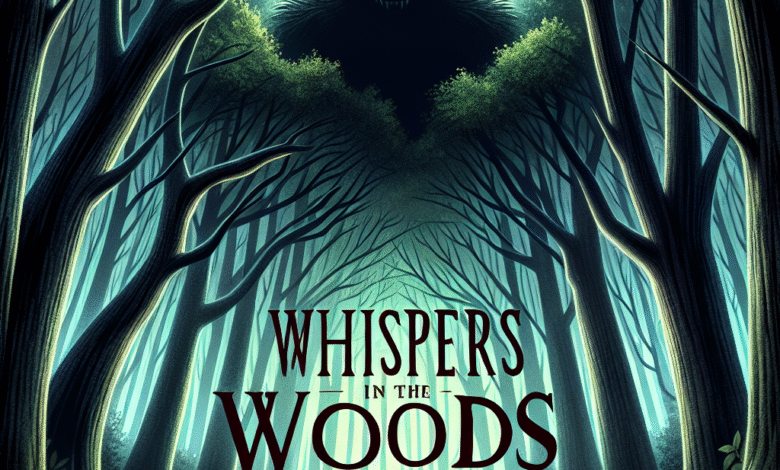
In the shadowy recesses of the outskirts of a quaint village named Eldermere, the trees loomed like ancient sentinels, their gnarled branches entwined as if conspiring in hushed tones. The whispers in the woods had become the stuff of local lore, tales that slipped from the lips of the old and cautious, echoing around the flickering embers of evening fires. It was said that something lurking just beyond the bramble was both terrifying and strangely compelling, a creature that had cemented itself into the tapestry of resident fears and folklore. They called it the Chupacabra.
It all began with the sheep. The quiet village had always prided itself on its pastoral tranquillity, but the arrival of the mystery sent ripples of fear throughout the community. Subsequent nights would reveal livestock found bloodless, drained of life and vitality, their lifeless bodies sprawled grotesquely upon the dewy grass. The initial despair morphed into apprehension, then into outright panic, as whispers of the Chupacabra—the “goat-sucker”—filled the air.
Sophia Mayfield, a spirited young woman with a lust for adventure, was drawn to the tales as moths are to flame. As the daughter of Eldermere’s veterinarian, she was imbued with a deep sense of curiosity and a passionate need to unravel the mysteries of the world. The men in the village laughed at the notion of a creature stalking their fields; indeed, they scoffed at the idea of a predatory monster haunting their midst. Yet Sophia felt a pull, a calling to delve deeper into the fading echoes of fear that had become a reality for those living in Eldermere.
With a small pack slung over her shoulder, filled with a torch, a notebook, and some meagre rations, she slipped into the woods one crisp autumn evening, lulled by the golden light spilling between the leaves. Night began to settle, casting artefacts of shadows, each more sinister than the last. What would she encounter? Sophia’s heart raced with exhilaration and trepidation. She could almost hear the voices of her neighbours, warning her to return, but her resolve was as unyielding as the towering trees.
As she ventured deeper into the woods, the air grew thick with an unsettling quietus. The sounds of nocturnal creatures diminished as if the very wilderness was holding its breath. Every rustle of the underbrush felt amplified, and every snap of a twig sent electric shivers racing down Sophia’s spine. It was then that she sensed it—a palpable energy, a tiny ripple that seemed to dance across her skin. An instinctive wariness surged in her chest.
Pushing forward, she came to a clearing where moonlight cascaded down, illuminating the crystalline dew atop the grass. Here, she decided to rest, scribbling observations in her journal, the words flowing as freely as her thoughts. However, just as she was about to close her notebook, a low growl disrupted her solitude. The sound, primal and hollow, seemed to vibrate through the earth itself, causing the hair on the back of her neck to stand upright.
Silence enveloped her once more, but it was a silence laced with tension, as if nature itself awaited the arrival of something extraordinary. Brave but cautious, Sophia rose to her feet, clutching her torch as a shield against the unknown. She scanned the periphery of the clearing, her heart beating like a war drum against her ribs.
Then she saw it.
Emerging from the cocoon of shadows, a figure lurched into the silver glow of the clearing. It was small yet formidable, an emaciated creature cloaked in dark, scaly skin, its eyes gleaming ominously. The Chupacabra was more grotesque than the villagers had described, its spine running rigidly down its back, reflecting the moonlight, giving it an eerie, spectral glow. Its mouth, more akin to a hollow maw, opened and closed rhythmically, revealing rows of jagged teeth that appeared more suited to tearing flesh than providing sustenance.
In that moment, fear waned as awe took its place. Sophia felt an instinctive tug of empathy for the creature, sensing its own loneliness and desperation. As the beast approached, hunger etched into its features, it paused. Sophia’s inherent softness was akin to a natural antidote for its ravenous disposition. With a shaky hand, she aimed the torch’s beam towards it, illuminating a countenance that, despite its monstrous form, bore a tragic elegance.
“Hello,” she whispered, her voice trembling yet warm.
The creature halted, its eyes narrowing as if weighing her presence against an impulse to flee. It growled again, but this time, it wasn’t a threat. Sophia observed its muscular frame, coiled with tension but not aggression. She realised that while it was, indeed, a predator, it was also a creature guided by instinct and yearning. Perhaps it hunted not out of malicious intent but necessity—the cruellest aspect of nature.
In the heart of the clearing, they stood in a strange alliance, two souls drawn together by curiosity and the emptiness that can often linger in the corners of the world. Sophia extended her hand slowly, her fingers brushing against the cool night air, as if proffering peace. The Chupacabra blinked, and for a heartbeat, the age-old dance between fear and fascination hung suspended in the frost-laden air.
It took a tentative step forward, and in that moment, Sophia felt her heart swell, filled with resolve. While the village painted it as a monster, she resolved to confront her community’s misconceptions. The Chupacabra was not merely a beast of folklore but a creature with its own story, one that intersected with the human world, longing to belong in a landscape it had haunted.
Sophia dared to speak again, “You don’t need to feed on them. There are other ways to survive.”
She spent hours in that clearing, speaking to the Chupacabra, telling it about the world beyond the woods, weaving tales of verdant fields and blooming flowers, of wild berries and streams that teemed with life. As she shared her anecdotes, the creature seemed to soften, its stance loosening, the tension evaporating from its frail body.
But as dawn approached, a sense of urgency pierced the tranquil atmosphere. Sophia understood that she would not be able to keep it hidden away; the villagers would stir once more, driven by fear and ignorance. She respected their boundaries but fervently believed that this creature’s story was worth sharing, that the hum of its existence was entwined with their own.
With a heavy heart, she said, “I have to go now. But I’ll come back. I promise.” She turned, leaving footsteps that felt like an intricate dance of hope. The Chupacabra watched her retreat, anticipation flickering in its once-murky eyes.
In the days that followed, Sophia fought an internal battle. Each evening drew her back to the woods, where she and the creature began to communicate beyond words—a relationship cultivated in exchanged glances and quiet understanding. Stories grew between them; she introduced it to the magic of night-blooming jasmine and the laughter of villagers. She observed the Chupacabra more closely, documenting its habits and behaviours, hoping to dispel the lingering fear that shrouded its existence.
Word of renewed livestock attacks resurfaced once more, the community in turmoil. As sheep were slaughtered, fingers pointed wildly at Sophia, who defended the Chupacabra fiercely, desperately attempting to persuade them of its innocence. But the village was resolute in its fears, its myths too deeply entrenched to dismantle.
One fateful night, as moonlight bathed the clearing in ethereal silvers, Sophia stood resolutely beside the Chupacabra, ready to reveal the truth to the villagers. With a group of them hastily armed with pitchforks and torches, they marched towards the heart of the woods, their anger palpable. The Chupacabra stood beside her, the familiar growl resonating, but this time it was directed at the villagers—not with malice, but a defensive instinct that echoed the rage of the misunderstood.
“Stop!” Sophia shouted, her voice cutting through the tension. “This creature is not your enemy! It only seeks to survive, just like you and me!”
The villagers hesitated, caught between disbelief and a budding understanding as they observed the harmony between the girl and the creature. For the first time, they saw the Chupacabra not as a monster, but as a reflection of their own fears and insecurities.
It took time, but slowly the atmosphere shifted. The villagers began to accept that fears could be confronted, that empathy could potentially change narratives. They set aside their pitchforks and torches in favour of the understanding that Sophia had fought tirelessly to cultivate.
As harmony returned to Eldermere, the whispers in the woods morphed into something entirely different—tales of courage, compassion, and the bond that had formed between a girl and a monster. They discovered that sometimes, true beasts were not the ones who roamed the woods but rather those who allowed misconceptions to vilify.
And so, Sophia Mayfield continued to visit her friend in the shadows of the forest, tending to the Chupacabra and crafting a friendship that would endure. Both were creatures of the night—one yearning for acceptance, the other learning that some monsters could simply be misunderstood. Together, they forged a new story, one birthed from whispers in the woods and nurtured by the light of understanding.