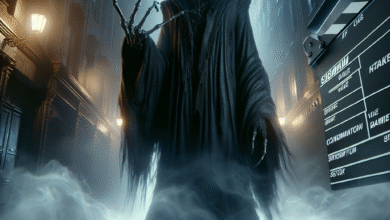
Xenomorph (Alien)

The Xenomorph: Unveiling the Terror Beneath
In the chilling corridors of science fiction, few creatures evoke terror as effectively as the Xenomorph. With its slick ebony exoskeleton, elongated head, and inner jaw ready to strike, this extraterrestrial entity has infiltrated our collective consciousness since its unsettling debut in Ridley Scott’s 1979 film Alien. Birthed from the dark recesses of imagination and the depths of space, the Xenomorph may originate from the confines of Hollywood, but its cultural impact runs hauntingly deep.
Origins: The Sinister Birth of the Xenomorph
The Xenomorph, often referred to simply as an “Alien,” was conceived by artist H.R. Giger. Inspired by the surreal and nightmarish visions of his dreams, Giger’s designs fused biomechanics with organic horror, birthing a visage that could disturb even the most stone-hearted. The creature’s lifecycle is as grotesque as its appearance: beginning as an egg, it hatches into a parasitic larva known as a facehugger. The facehugger latches onto a host, implanting an embryo that eventually erupts from the chest in a ghastly display, leading to the birth of a fully formed Xenomorph.
This lifecycle symbolizes an unyielding horror—the culmination of parasitism and predation wrapped in a dangerously alluring package. Giger’s creature was not just a monster but a metaphor for the deep fears of invasion and corporeal violation, resonating with societal anxieties of the late 1970s surrounding technology, disease, and the unknown.
Cultural and Historical Background: An Embedment in Fear
Though the Xenomorph has no roots in folklore, it has become an archetype of modern nightmares. The character draws upon the primal fear of the “Other,” an alien that embodies our deepest fears about invasion and loss of control. With the advent of the Cold War, the dread surrounding extraterrestrial life morphed into paranoia, and Giger’s design fanned these flames.
Film and literature have always utilized monstrous figures to explore societal anxieties, and the Xenomorph is no exception. In a post-Vietnam landscape, fear of the unknown was palpable. The Alien franchise morphed this fear into cultural commentary, with sequels exploring themes of motherhood, corporate greed, and the battle for survival against an unfeeling universe.
Sightings and Legends: The Metaphysical Stalkers of Shadows
While the Xenomorph is a fictional construct, its sightings have been reported throughout various media and narratives. Paranormal enthusiasts have likened the Xenomorph’s attributes to historic tales of “chupacabras” and “Greys”—notorious shapes of extraterrestrial lore. Both share an aspect of unearthly predation that fits neatly into the narrative of abductions and alien presence.
Moreover, fan theories abound regarding rumored sightings of the Xenomorph within the context of military exercises or covert government projects. Could the government be hiding an actual Xenomorph and experimenting with this fearsome creature? Though there’s no irrefutable evidence, urban legends burgeon where imagination reigns free.
Appearances in Popular Culture: Cinema, Games, and Beyond
Since its inception, the Xenomorph has terrorized audiences across multiple platforms. The original Alien film, and its sequels, especially Aliens (1986) directed by James Cameron, propelled the entity into pop culture superstardom. From the iconic scenes of the Xenomorph lurking in the vents, poised to unleash its fury, to the strong feminist tropes embodied by leading character Ellen Ripley, the franchise has sparked conversation and admiration.
The creature’s adaptability extends beyond film; it haunts comic books, novels, and video games. The Alien vs. Predator series sees it cast against the fierce Predator, creating a narrative tension that ignites debates across fan bases. Video games like Alien: Isolation draw players into a nightmarish world, allowing them to navigate the pulse-pounding tension of survival while avoiding the relentless hunt of the Xenomorph.
Conclusion: Urban Legends and Creepy Fun Facts
The unnerving allure of the Xenomorph lies not just in its fearsome appearance but in the philosophies and fears it represents. As we peer into the depths of this monstrous being, one unsettling fact resurfaces: in its design, Giger integrated elements of sexuality and death—turning the very act of procreation into a grotesque ordeal. The Xenomorph serves as a titan of horror, a reminder that the true monsters often lie not just in the darkness of outer space, but within ourselves.
And here’s the creepy fun fact: Many fans believe that the facehuggers of the Xenomorph share a striking resemblance to the insect world, particularly with regards to parasitic wasps that implant eggs into living hosts. The life cycle of a parasitic wasp is equally as disturbing—making you question what lies beneath the surface of our planet and the worlds beyond, for the most terrifying monsters may not be far removed from the reality of nature’s cruel designs.
So, the next time you gaze at the stars, consider what lurks in the darkness. You may not only dread the silent abyss but also the creatures it may hide within.