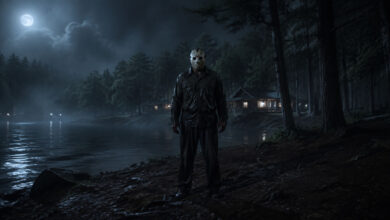
Slender Man

The Haunting Shadow: Unveiling Slender Man
In the dim corners of the internet, where the line between reality and fiction blurs, a chilling figure looms—Slender Man. This enigmatic entity has become an unsettling symbol of the modern age, captivating imaginations and spawning a myriad of tales. With whispered origins rooted in digital folklore, Slender Man transcended the screen, infiltrating our cultural landscape and leaving behind a trail of intrigue and terror.
A Digital Birth
Slender Man emerged from the depths of online creativity in 2009, thanks to a Something Awful forum competition. The challenge was simple: create paranormal images through photo manipulation. One participant, Eric Knudsen, known online as “Victor Surge,” introduced the world to Slender Man—a tall, faceless figure draped in a black suit, with elongated limbs that seemed to stretch impossibly. The imagery was eerie, accompanied by captions suggesting Slender Man’s predatory nature towards children, drawing them away into the woods.
Thus, Slender Man was born as a modern myth, emerging simultaneously from the dark recesses of internet culture and collective imagination. What started as a costume design in a meme spiraled out of control, giving rise to a legend that would terrify and fascinate countless individuals.
Folklore and Cultural Resonance
Despite its digital roots, Slender Man resonates with ancient folklore surrounding malevolent spirits. Many cultures are steeped in tales of shadowy figures that haunt the vulnerable—often taking form as creatures that lure children into danger. The Slender Man’s eerie resemblance to figures like the “Hill Man” or even the “Grinning Man” suggests that our fascination with tall, disquieting figures is as old as time itself.
These archetypes often serve as cautionary tales, warning against the dangers lurking in the woods or the unknown. In this regard, Slender Man embodies both our primal fears and the anxieties of a new generation, reflecting concerns about technology, isolation, and the impact of digital narratives on reality. His lore became a chilling cautionary tale—an allegory of how easy it is to lose oneself in the virtual void, and how that void can sometimes reach back into the tangible world.
Sightings and Legends
Throughout the early 2010s, the legend of Slender Man grew exponentially, with reports of alleged sightings flooding forums, YouTube, and social media. Some claimed to see him lurking in the woods, a shiver-inducing specter that thrived in darkness. More than mere stories, these sightings fed a growing mythology—inviting enthusiasts and believers to partake in amateur investigations and seek out Slender Man’s haunts.
One disturbing incident occurred in 2014, when two teenage girls in Wisconsin attempted to sacrifice a friend to appease Slender Man. The attack shocked the nation and sparked debates about the influence of the internet on young minds. This tragic event highlighted the profound psychological impact Slender Man had unwittingly enacted, blurring the line between fiction and reality. As communities grappled with the aftermath, Slender Man transformed from a digital villain into a real-nightmare that highlighted the vulnerabilities of youth in today’s digital society.
A Cultural Phenomenon
Slender Man’s influence has not been limited to lurid legends and online discussions. He has transcended niche forums to invade the wider realms of media and pop culture. The iconic figure has appeared in numerous films, books, and video games—each with variations portraying his sinister, elusive nature.
The 2015 film, Slender Man, sought to capitalize on the legend’s notoriety, striking fear into the hearts of viewers while also igniting debate about the responsibility of filmmakers in the depiction of traumatic events. In addition, countless indie games like Slender: The Eight Pages and Slender: The Arrival harnessed the creature’s chilling nature by embedding players within eerie forests, where the tall figure prowled, forever just out of sight—an embodiment of fear.
Books like Slender Man by Anne K. Schwab add another layer, expanding the mythos with craftily woven narratives that explore the terrible consequences of delving too deep into legends. Each creation builds upon the previous, forming a tangled web of fear, curiosity, and endless story arcs.
A Final Chilling Thought
As we navigate the chilling legacy of Slender Man, it becomes clear that he is more than an urban legend borne from the depths of the internet; he is a mirror reflecting our collective fears and the perils of an increasingly disconnected world.
Here’s a creepy fun fact: Did you know that some die-hard fans have organized "Slender Man" trails? These eerie improvised excursions take brave thrill-seekers deep into the woods, where enthusiasts reenact encounters with the infamous entity, illuminating the haunting spaces he is said to inhabit. This blend of thrill-seeking and folklore not only immortalizes Slender Man but also fosters community—a chilling testament to a creature that continues to inspire fear and fascination long after the screen goes dark.
In essence, Slender Man is not merely a monster but a phenomenon that continues to haunt our culture, reminding us of the shadows that linger both online and away from the glow of our screens.