
Mokele-Mbembe
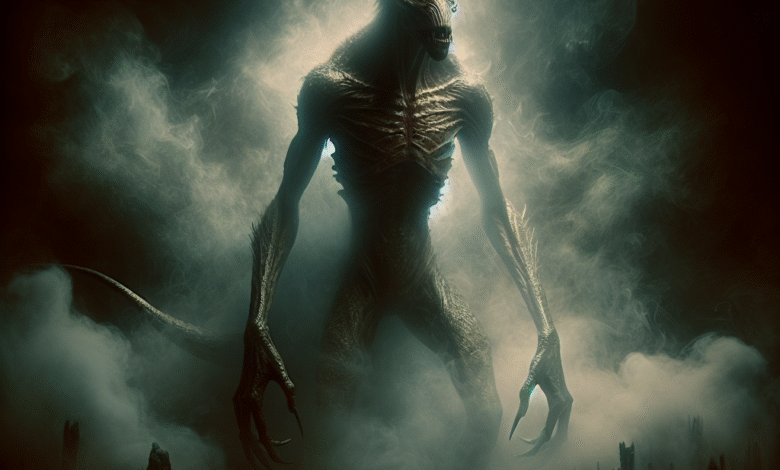
Mokele-Mbembe: The Last Dinosaur of the Congo
In the lush and enigmatic depths of the Congo River Basin, where the air hangs heavy with humidity and mystery, a creature older than time itself is rumored to lurk: the Mokele-Mbembe. This imposing being, often described as a living dinosaur, has captivated the imaginations of adventurers and cryptozoologists alike. With a heritage steeped in folklore and whispers of encounters that chill the spine, the Mokele-Mbembe holds a unique place within a tapestry of myth that blurs the lines between reality and the supernatural.
Origins and Cultural Background
The name “Mokele-Mbembe” translates to “one who stops the flow of rivers” in the Lingala language, an indigenous tongue spoken in the Congo. Local Pygmy and Bantu tribes have told tales of this colossal creature for generations, often depicting it as a herbivorous dinosaur reminiscent of a sauropod. The creature is said to be as large as a hippopotamus but possesses an elongated neck and a long, powerful tail, which it uses to create ripples in the water as it swims stealthily through the murky rivers.
This beast is not merely a relic of prehistory but rather a significant figure in local mythology. Storied encounters often depict Mokele-Mbembe as both a protector and a harbinger, embodying the natural world’s unpredictable spirit. It is said that should anyone attempt to disrupt the waterways or ecosystems of its habitat, they might awaken the beast’s wrath, leading to dire consequences.
Sightings and Legends
The modern fascination with Mokele-Mbembe can be traced back to the early 20th century when reports of sightings began to surface. In 1910, French explorer Pierre Savorgnan de Brazza claimed to have encountered a creature resembling a prehistoric reptile in the Congo. As expeditions to locate the beast multiplied throughout the decades, reports remained tantalizing yet elusive. Locals would recount tales of enormous footprints along riverbanks and mysterious disturbances in the water that hinted at Mokele-Mbembe’s presence.
Repeated attempts to document Mokele-Mbembe have designated parts of the Congo as its habitat. Most sightings describe the creature basking in the sun or disrupting river currents before vanishing into the depths. However, skeptics argue that these sightings are merely exaggerations or misidentifications of known species, like hippos or crocodiles, that have been distorted by local legends and cultural storytelling.
Popular Culture and Media Representations
Mokele-Mbembe has transcended folklore, stepping into the realm of popular culture. It captures the imagination of filmmakers, authors, and gamers across various media. Movies featuring cryptids and mysterious creatures have frequently referenced this enigmatic entity, often adapting its mythos to fit fantastical narratives.
One notable appearance is in the film The Dinosaur Project (2012), where adventurers embark on an ill-fated expedition into the Congo in search of dinosaurs; Mokele-Mbembe serves as a looming figure of danger. The creature has also been alluded to in literature, such as in Cryptozoology A to Z by Loren Coleman and Jerome Clark, wherein it is placed alongside other legendary creatures like Bigfoot and the Loch Ness Monster.
In video games, titles like ARK: Survival Evolved have incorporated Mokele-Mbembe into their ecosystem as mystical creatures players can encounter, blurring the line between folklore and the interactive experience of adventure gaming.
The Creepy Fun Fact
As enticing as the legend of Mokele-Mbembe is, it comes with whispers of unease. One particularly eerie urban legend among local tribes recounts the Mokele-Mbembe’s ability to absorb the souls of those who encounter it. According to lore, once viewed by human eyes, the creature can take possession of one’s spirit, leading to a slow descent into madness or an overwhelming desire to return to the rivers where it resides—an everlasting call back to nature that is impossible to resist.
Some tales also warn that those who seek Mokele-Mbembe for fame or fortune will find themselves misled by false trails and nightmarish illusions conjured by the creature. This dark twist to the legend serves as a cautionary tale: sometimes, it is best to let sleeping beasts lie.
Conclusion
The Mokele-Mbembe embodies all that is mystical and terrifying about the unknown. It serves as a reminder of the wild places that still hold secrets, and whether it exists in reality or remains a figment of our imagination, its haunting legacy invades both folklore and modern media. As rivers flow quietly through the dense forests of the Congo, one must wonder: what other secrets lie hidden beneath the surface, and should we dare to unravel them? The echoes of Mokele-Mbembe linger, a spectral promise of adventure, danger, and the ethereal dance between man and myth.


