Nosferatu
Nosferatu: The Eternal Darkness
In the shadowy fringes of horror lore, amidst the swirling mist of the unknown, one name resonates with chilling clarity—Nosferatu. This entity, often interwoven with the fabric of folklore and cinema, haunts our imaginations, embodying our deepest fears of the night. But what lies beneath the surface of this palpable dread?
The Origin of Nosferatu
The term "Nosferatu" springs from the Romanian "Nosferatu," which means “the undead.” While the word itself may seem enigmatic, it embodies a notion that has existed for centuries: that of the vampire, a creature born from our primal fear of death and the unknown. The modern conception of Nosferatu can be traced back to Eastern European folklore, particularly in Romania and Bulgaria, where tales of the undead began to flourish.
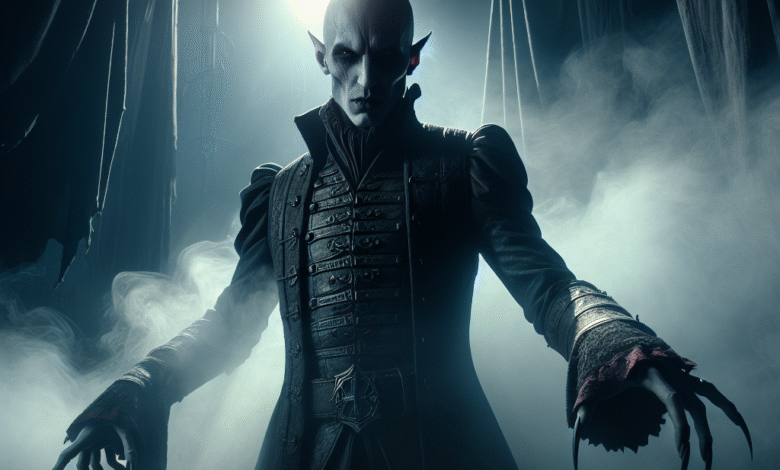
These early legends describe a being that feeds on the life force of the living, possessing an insatiable thirst for blood. Often depicted as a pale figure with exaggerated features, the Nosferatu was not the suave seducer immortalized later in literature but rather a grotesque and ghastly vision aimed to terrify.
The most notable early depiction of this monster arose in the early 20th century through the groundbreaking 1922 silent film Nosferatu, directed by F.W. Murnau. The film, an unauthorized adaptation of Bram Stoker’s Dracula, effectively crystallized the modern image of the vampire into the public consciousness. The character Count Orlok, played by Max Schreck, is an eerie figure with pointed ears and pronounced fangs, a far cry from the romantic allure of contemporary vampires.
Cultural and Historical Background
In the context of history, Nosferatu has often been linked to societal upheaval and illness. The rampant spread of diseases in the past, particularly during epidemics such as the Black Death, bred fear of the unknown that manifested in superstitions about the undead. Villagers would conduct rituals to protect themselves from what they believed were vampires preying on the living.
Throughout history, reports of "vampyres" surfaced in various cultures, often predicated on misunderstandings of disease and death. People in desperate times would dig up graves to find bodies apparently untouched by decay, fueling myths of the undead rising from their graves.
Legends of Nosferatu can be found in various forms across cultures, sometimes referred to as the "strigoi" in Romania or the "Rakshasa" in India, each embodying local fears and superstitions. As the centuries passed, the Nosferatu became a bridge between folklore and fiction, transforming from rural terror into a staple of urban gothic literature.
Sightings and Legends
Countless sightings and legends have woven a tapestry of terror around the Nosferatu. In places like the Carpathian Mountains, locals recount stories of encounters with pale figures lurking in the forests and watching them from the shadows. These tales often involve community gatherings where families share accounts of loved ones taken by the Nosferatu, marking homes with protective symbols drawn in chalk or salt.
One chilling account comes from the early 1900s in Transylvania, where villagers claimed to have hunted and disposed of a vampire terrorizing their community. According to the story, a town elder spoke of witnesses seeing a creature that would vanish into the night whenever approached. Such folklore reinforced a communal bond against the darkness but also stoked fear and paranoia.
Appearances in Popular Culture
Nosferatu’s legacy can be traced through a myriad of expressions in popular culture, solidifying its influence on the vampire mythos. Murnau’s Nosferatu remains iconic, inspiring a lineage of films portraying vampires through various lenses—from the charming to the monstrous.
In literature, the Nosferatu has influenced writers like Anne Rice and Stephen King, who weave its legacy into their complex narratives. Works like Interview with the Vampire depict vampires as bleak reflections of humanity, merging horror with existential themes, a departure from the pure terror of traditional Nosferatu.
Video games, too, have embraced this entity, featuring it in titles like Castlevania and The Elder Scrolls, where players confront the supernatural with thrilling challenges. These adaptations channel the essence of Nosferatu, emphasizing its historical roots while crafting new tales of horror and adventure.
Conclusion: A Creepy Fun Fact
As you ponder the legacy of Nosferatu, here’s a sinister fun fact: In Romanian lore, there exists a belief that a Nosferatu could be identified by its inability to cast a shadow or reflect in mirrors. This chilling detail enhances the ghastly portrait of the Nosferatu: a figure forever trapped in the shadows, ever so close yet eternally unreachable.
As you wander through the dimly lit streets at night, keep your senses sharp; who knows what specters lie just beyond your view? The Nosferatu may not be as far removed as myth would have you believe—after all, in the dark recesses of urban legends, truth often hides, waiting silently for its next victim.